
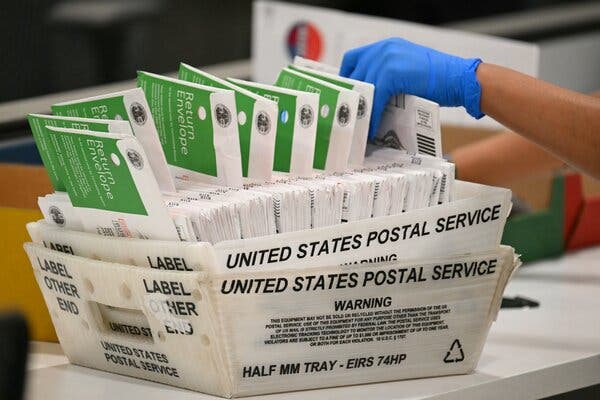
President Trump has once again criticized mail voting, raising unfounded claims of widespread fraud. Despite these accusations, courts have repeatedly blocked his efforts to limit the practice ahead of November’s midterm elections.
Many of Trump’s assertions continue to be without substantial evidence. For example, he described mail-in ballots as “inherently corrupt” during a televised address. However, both election officials and extensive research show little support for his claims.
Statistics from the Heritage Foundation’s election fraud database reveal fewer than 300 verified cases of fraudulent mail voting over 43 years. In contrast, Brookings Institution found just four incidents of fraud among 10 million ballots in 2025.
It’s important to note that Trump’s motivations aren’t limited to fraud prevention. He acknowledged in March that stricter voter ID laws targeting mail ballots, often now utilized more by Democrats, could influence election outcomes in favor of Republicans.
Historically, Republicans have benefited from mail voting. According to John C. Fortier, an election expert at the American Enterprise Institute, absentee ballots were predominantly a Republican tool in the late 20th century.
This context underscores the political shifts in mail-in voting practices and the complexities surrounding legislative attempts to alter its accessibility.