
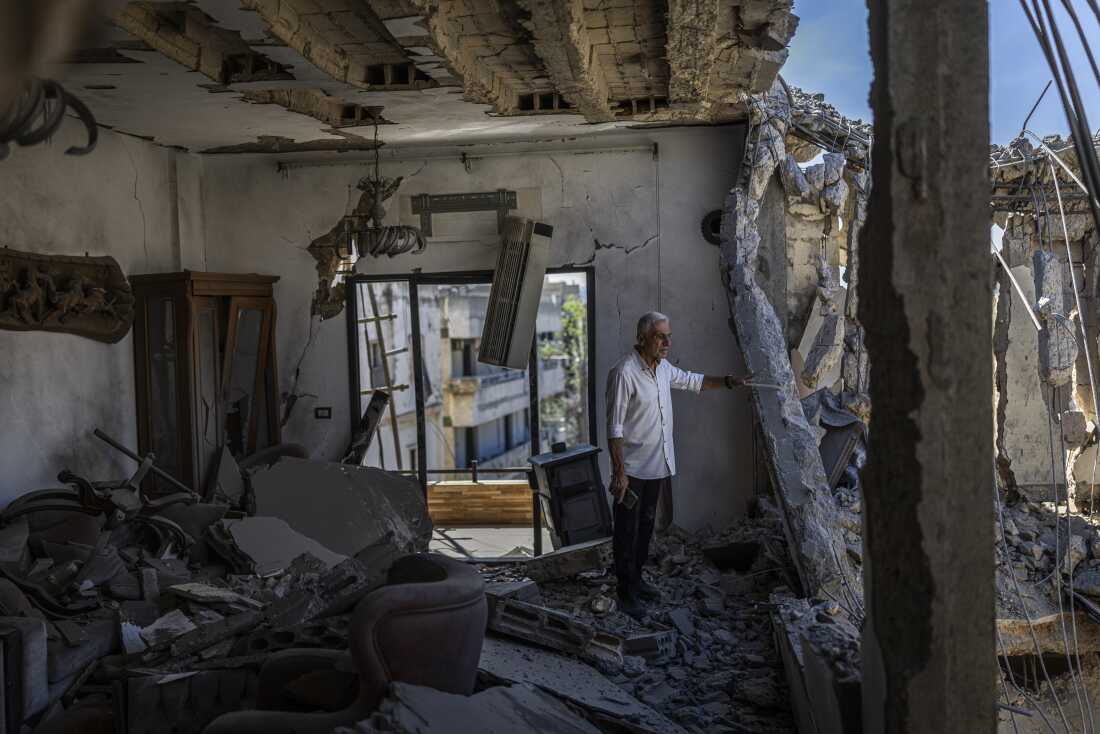
In Nabatiyeh, Lebanon, Najib Ayyad surveys the extensive damage to his apartment. This home, poised with a view of the significant Beaufort Castle, now occupied by Israeli forces, holds deep personal value for him. “You see the castle?” he asks, acknowledging how vulnerable his position is under Israeli surveillance. Ayyad, once commuting to his parliamentary work from here, now stays in Beirut with his daughter, his apartment in ruins.
On a visit in June, Israeli artillery smoke encircles Nabatiyeh, a city desperately trying to recover from war’s devastation. Israeli drones hum overhead. The relentless destruction leaves traces of residents’ attempts to resume life. Ayyad returns only to gather remnants for his children, navigating a building plagued with debris and no electricity.
Historic and Strategic Importance
Nabatiyeh serves as an administrative hub for Hezbollah, the Iran-backed militant group intricately tied to the fabric of southern Lebanon’s cities and villages. Israeli attacks, allegedly targeting Hezbollah, also inflict severe civilian damage. As of late, 4,200 people have died since the conflict began in March, including women and children.
Nabatiyeh, once a significant Ottoman-era trade center, saw its covered market, echoing Ottoman history, devastated by recent bombings. Mayor Abbas Fakhreddin highlights not only security concerns but the impracticality of residents returning without essential services.
Enduring and Rebuilding amidst Devastation
Across from the shattered market lies Hanan Hamadi’s small store, her resolve emblematic of the city’s spirit. Hamadi and her mother returned from Beirut to clear debris and restock the store, underscoring a desire to normalize amidst chaos. A young local, affected by his father’s injury, finds relief in Hamadi’s generosity—a small testament to community resilience.
Hopeful amidst ruins, Hamadi’s family always planned to rebuild better. Yet, they still mourn neighbors like the Basma family, lost in an airstrike with no nearby military targets, described by Amnesty International as a possible war crime.
Paramedics: Resilience in the Line of Fire
Nabatiyeh’s paramedic unit, their station a converted house, operates amid Israeli strikes marked by camaraderie and dedication. Among them, Jude Sleiman, son of unit commander Mohammad Sleiman, lost his life delivering aid, his commitment reflective of the paramedic ethos.
Software developer Ali Rida, now a full-time volunteer paramedic with dreams of Christmas in New York, embodies the driven spirit waiting for airstrikes to subside. Mohammad Sleiman notes the unprecedented civilian suffering in this conflict and the toll on paramedics, yet their resolve persists despite countless personal losses.