
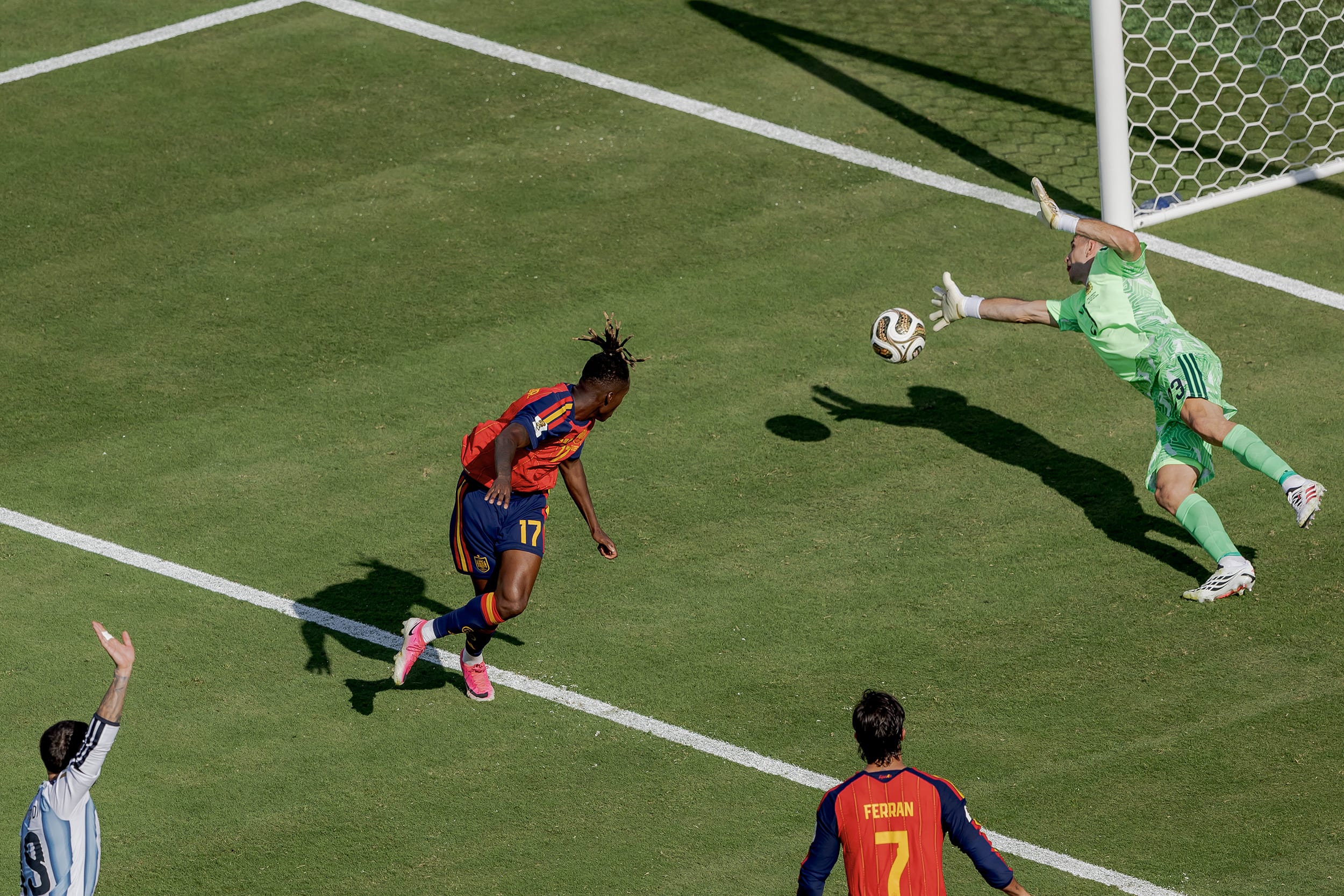
Spain Claims Second World Cup Title via Late Goal
Spain has secured its second World Cup title, defeating Argentina 1-0 in a tense final at MetLife Stadium, New Jersey. Ferran Torres emerged as the hero, scoring the decisive goal in the 106th minute. This victory echoes Spain’s first World Cup win in 2010 when Andrés Iniesta scored the winning goal.
Spain’s Chance for Consecutive Wins
With Argentina’s defeat, the quest for a team to achieve back-to-back World Cup victories remains elusive—last accomplished by Brazil in 1958 and 1962. Spain now looks ahead to 2030 for a chance to achieve this feat. Previously, the defending champions bowed out in the 2014 group stage.
Messi’s Future in International Tournaments
Lionel Messi, widely regarded as one of the greatest footballers, stated this would be his last World Cup since he will be 43 by the 2030 tournament. Yet, there’s speculation he might still compete in the next Copa America in 2028.
Dominance in Defense and Play
Spain’s triumph was marked by a commanding defensive performance, not conceding any shots on goal by Argentina throughout the final. The team allowed only one goal during the entire tournament, showcasing their defensive prowess. Playing with ten men, Argentina was unable to break through, with Torres’ extra time goal sealing their fate.
Argentina’s Missed Opportunities
During the match, Argentina had fleeting moments of potential. One such instance was a corner from Messi reaching Giuliano Simeone, whose shot went high. Opportunities like these slipped away as Spain maintained pressure and control.
Key Events of the Match
– In the 115th minute, Spain’s Mikel Merino made a crucial stop on a Messi shot but sustained an injury, requiring temporary removal from the game.
– Following a brief water break, Spain’s Nico Williams set up Torres for the leading goal. Williams’ efforts came after his attempt earlier in the extra time was disqualified due to a foul.
– Emiliano Martínez was pivotal for Argentina, making eleven saves and exemplifying resilience against Spain’s repeated attacks.
Extra Time and Dramatic Moments
The regulation time ended scoreless, bringing the match into extra time, a phase Argentina had to navigate with a player deficit after Enzo Fernández’s red card. The match’s intensity remained, with both teams showcasing strategic shifts to gain an upper hand.