
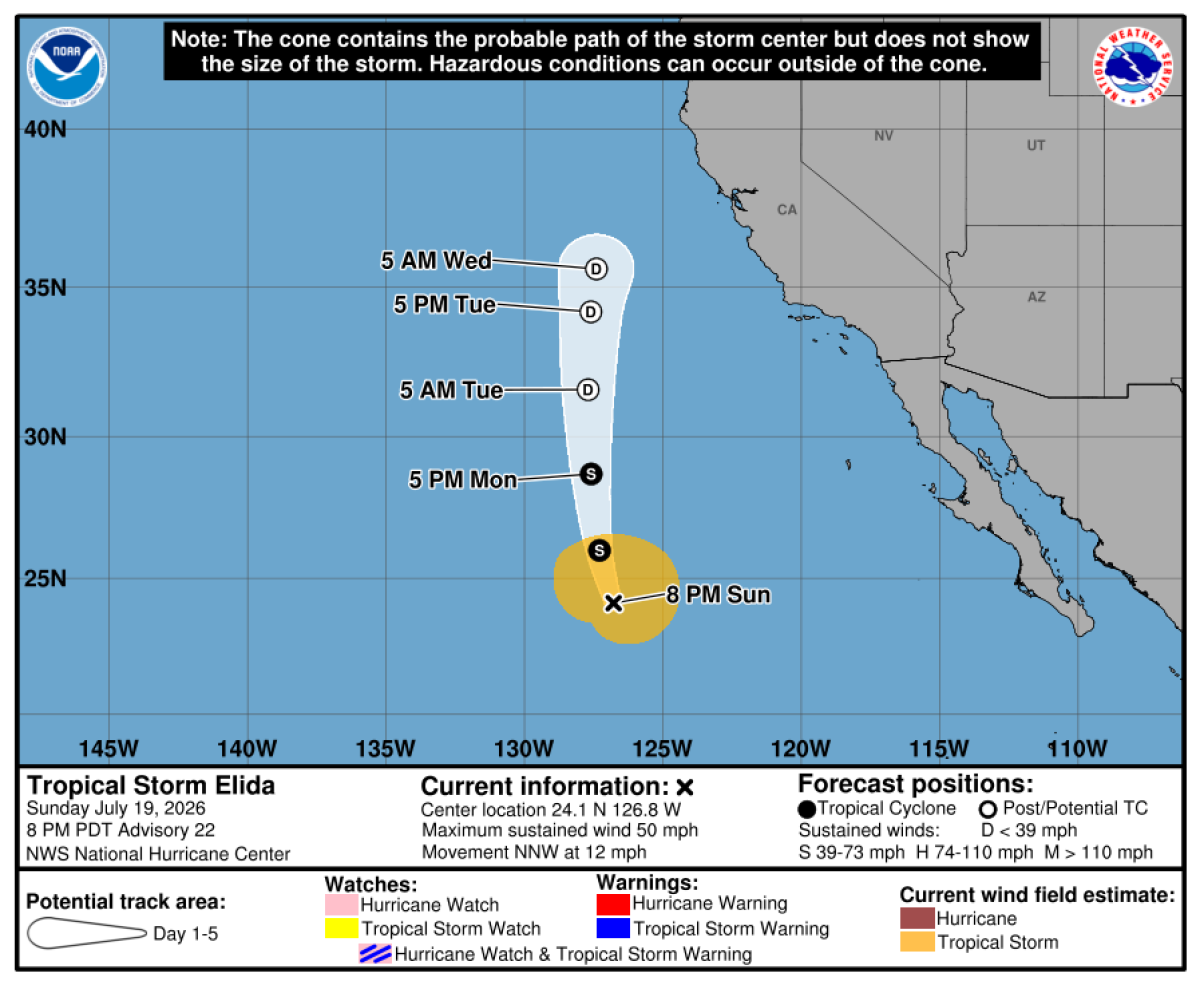
Southern California residents should prepare for a week of intense weather conditions, as a dangerous heat wave and high coastal waves are expected. The National Weather Service attributes these threats to high pressure moving from the east and Tropical Storm Elida moving north in the Pacific Ocean.
Heat Wave Details
The heat will intensify starting Tuesday, lasting seven days. By the weekend, temperatures could pose a major heat risk. Areas affected include the Inland Empire, parts of Orange County, and San Diego County’s valleys and deserts. Specific temperature forecasts include:
- Lancaster: 105 degrees
- Canoga Park: 103 degrees
- Santa Clarita: 98 degrees
- Covina: 95 degrees
- Downtown Los Angeles: 89 degrees
- Santa Barbara and Thousand Oaks: 86 degrees
- Long Beach: 85 degrees
Expect temperatures in the Inland Empire and parts of San Diego County to exceed 100 degrees later in the week, with the desert areas surpassing 110 degrees. Meteorologist Sebastian Westerink also warns of possible critical fire weather conditions, particularly due to sundowner winds in southwestern Santa Barbara County, which could spread fires rapidly.
Coastal Hazards
Heading to the beach for relief may be risky. Tropical Storm Elida has already increased surf conditions, particularly on south-facing beaches. Wave heights range from 4 to 8 feet, with Orange County beaches seeing waves between 4 to 6 feet, occasionally reaching 8 feet. While waves may decrease slightly by mid-week, Tropical Storm Fausto could re-elevate them.
Meteorologist Rachel Kennedy notes that Elida’s northward path is unusual, with remnants of the storm influencing weather along the San Francisco Bay Area, potentially bringing sprinkles and lightning in some parts.
Impact of Marine Heat
Southern California is experiencing increased humidity influenced by current marine conditions and Tropical Storm Elida. The state’s coastal waters are notably warm, with temperatures at beaches like San Clemente reaching 76 degrees. The National Oceanic and Atmospheric Administration reports these sea surface temperatures as some of the highest recorded for this time of year.
Heat Safety Tips
Meteorologist Carol Ciliberti advises limiting outdoor work during peak heat and taking frequent breaks in shaded areas. Staying indoors in air-conditioned environments is recommended, along with never leaving children or pets in vehicles.
Record Heat
The January-to-June period has been the hottest on record for California and several other states, including Texas and Arizona. Climate scientist Zachary Labe attributes continual high temperatures to human-caused climate change.