
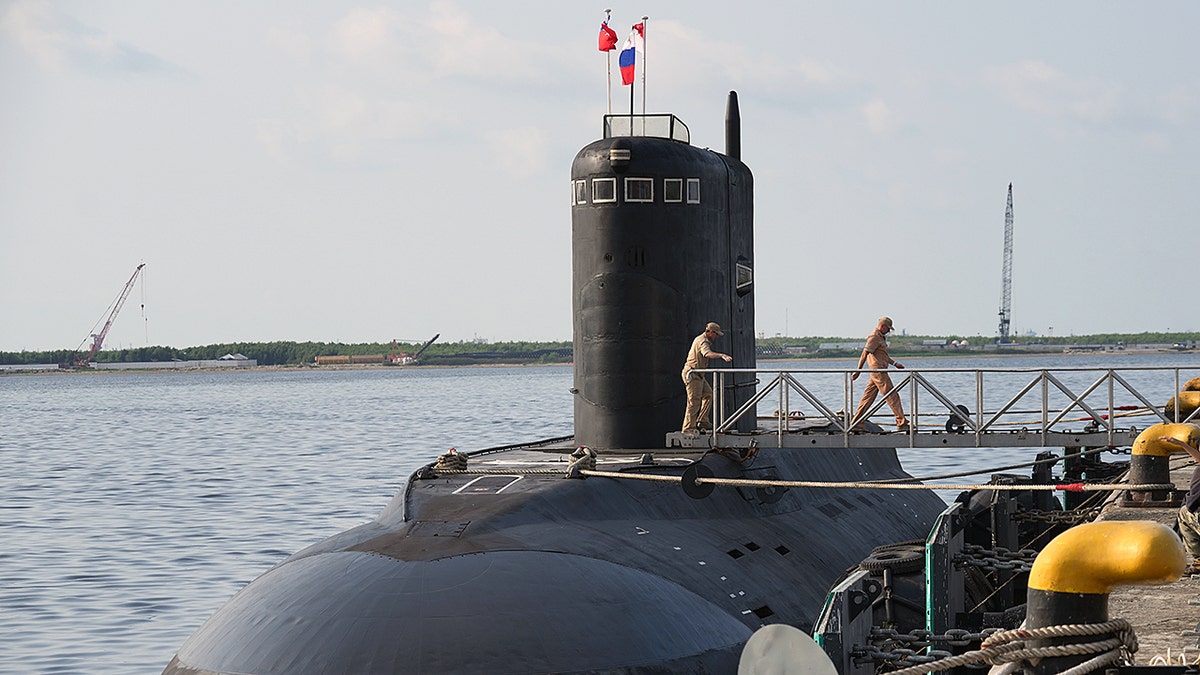
Russia’s new-generation, nuclear-powered submarines are creating pressure on NATO’s northern defenses as the alliance works to secure the Arctic and North Atlantic approaches to North America. A former NATO commander alerted that President Vladimir Putin is accumulating new super weapons and capabilities in the region, posing an emerging threat.
Russia’s intensified military activity includes the heavily militarized Kola Peninsula, where Moscow has expanded infrastructure such as airfields and ports to bolster its position along the Northern Sea Route. This area also extends through the Greenland-Iceland-United Kingdom Gap, known as the GIUK Gap.
NATO’s Allied Joint Force Command Brunssum stressed on September 2 that the expanding Russian submarine threat in the region is ‘serious.’ According to a post by NATO Allied Joint Force Command Brunssum, ‘Something is moving beneath the surface.’
Russia is expanding and modernizing its submarine force, with the Kola Peninsula remaining a key hub for the Northern Fleet. Among them are new-generation nuclear-powered SSGNs, which bring serious long-range strike and sea-denial capabilities into the High North,’ NATO Allied Joint Force Command Brunssum noted.
The command underscored that these submarines are a serious challenge. They remain invisible beneath the waves but under surveillance by NATO, which is closely monitoring the developments.
Retired Gen. Philip Breedlove clarified the difficulty NATO faces. He said submarines are challenging to track and pose a significant threat because they can reach within striking distance of any nation in the Atlantic.
Breedlove added that submarines could approach coastlines close enough to launch ballistic and cruise missiles, leading to significant security concerns for both the United States and NATO allies. These developments require NATO to adapt its surveillance strategies to deal with the potential for quieter submarines.
Breedlove criticized Russia’s Yasen-M-class nuclear-powered submarines, which possess advanced acoustic-quieting and sonar capabilities. These submarines can carry a variety of missiles, including long-range cruise missiles, anti-ship missiles, and hypersonic anti-ship cruise missiles, while remaining undetectable, according to Russian Navy officials.
Yasen-M-class submarines can accomplish all naval objectives in global waters while staying invisible,’ Russian Navy Commander-in-Chief Fleet Adm. Alexander Moiseyev stated, as reported by TASS.
Breedlove warned that Putin could be using advanced submarine developments to distract from challenges in Ukraine, announcing new weapons and capabilities that the West might struggle to match.
NATO has bolstered its northern defenses due to Russia’s increasing military actions and the Arctic’s strategic importance. In February 2026, NATO initiated Arctic Sentry, aimed at better coordinating allied activities in the Arctic.
NATO further strengthened its northern posture with Forward Land Forces Finland, a multi-national force led by Sweden to enhance deterrence along NATO’s northeastern flank.
The economic potential of the Northern Passage is significant, with trade routes offering faster transportation between Europe and Asia. However, Russia aims to control these waters. Russia is upgrading its Arctic infrastructure for greater control over the Northern Sea Route, while Moscow criticizes NATO’s buildup, warning of increased military activity posing a threat to regional stability.
Russian Foreign Minister Sergei Lavrov warned of potential risks to security due to military activity in the Far North, which could lead to conflict. He cautioned that such activities might trigger dangerous incidents, with potentially severe consequences.
Emma Bussey formerly worked at The Telegraph with the U.S. overnight team and is now a breaking news writer for Fox News Digital.