
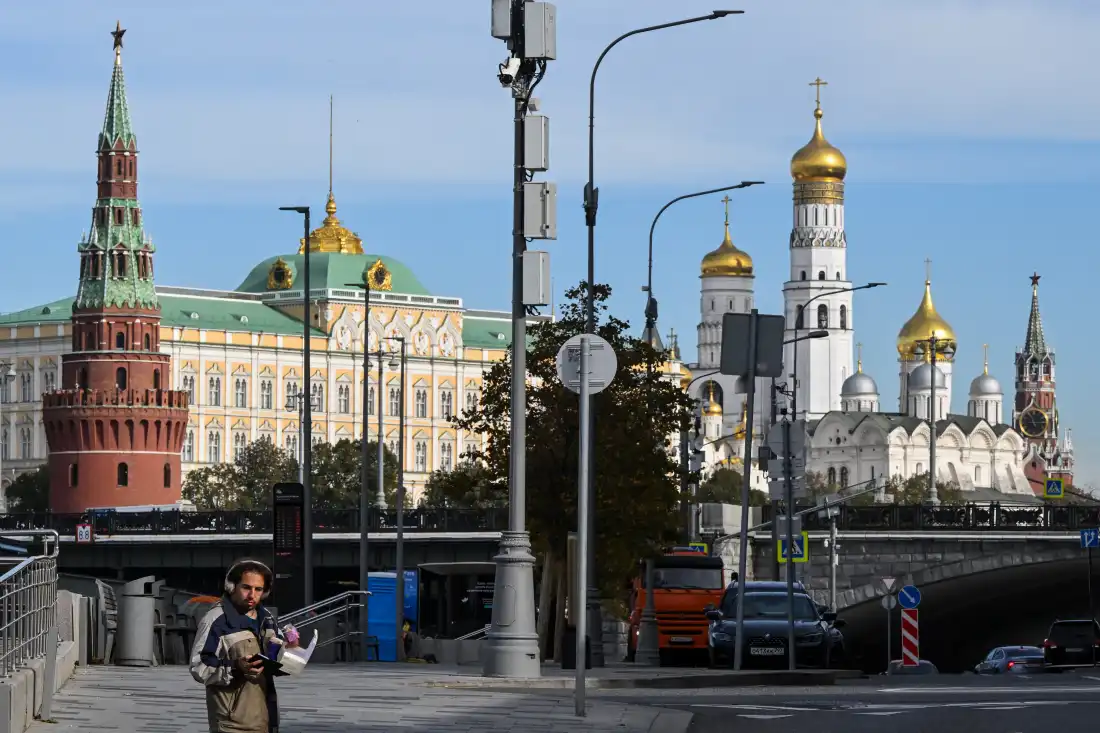
In central Moscow, a pedestrian gazes at his smartphone with the Kremlin as a backdrop. Researchers monitoring online influence operations indicate that Kremlin-backed groups are deploying tactics aimed at spreading distrust and discord, particularly in U.S. elections and globally. These strategies involve the dissemination of false information about Democratic candidates, AI-manipulated videos, and fake posts mimicking credible news outlets, all designed to sway American voter opinions.
According to Darren Linvill, co-director of Clemson University’s Media Forensics Hub, these Russian operations primarily aim to undermine U.S. support for Ukraine. The playbook is straightforward. Russian entities plant false narratives on social media or fake news sites, hoping they gain traction. These are then amplified by state media, automated bots, or paid social media influencers.
A recent example involved a fabricated claim against a Democratic Senate candidate. Linvill and other researchers linked these activities to Russian operatives known as Storm-1516. This group is notorious for creating deepfake videos using real actors with AI-modified faces. They spread these videos through social media accounts, which often masquerade as being U.S.-based using virtual private networks to obscure true origins. One such video quickly amassed 857,000 views before being flagged and removed by the social media platform X.
Similar operations were evident in the 2024 presidential election cycle, where Storm-1516 spread unfounded allegations against Democratic vice presidential nominee Tim Walz. The group fabricated stories of ballots for President Trump being destroyed.
Intelligence officials, including Rep. Jim Himes and Sen. Mark Warner, have noted these attempts at voter influence. Though Russia’s preference for certain U.S. political figures is known, there’s no evidence of interference with the actual voting process. The focus remains on stirring controversy and manipulating public sentiment, not altering vote counts.
Russian influence is also evident in elections across Europe, including France and Germany. These operations mirror those in the U.S., employing AI-generated content and impersonations of public figures. Researchers warn that as election day approaches, such misinformation campaigns will continue to intensify, with efforts targeted at voting and ballot processing narratives.
These influence operations are likened to dark money political action committees (PACs), as described by Lisa Kaplan of Alethea. The goal is less about changing minds and more about exploiting existing divisions to prompt strong emotional reactions from the electorate. Kaplan emphasizes the importance of being aware of these campaigns and questioning their effectiveness in swaying public opinion.