
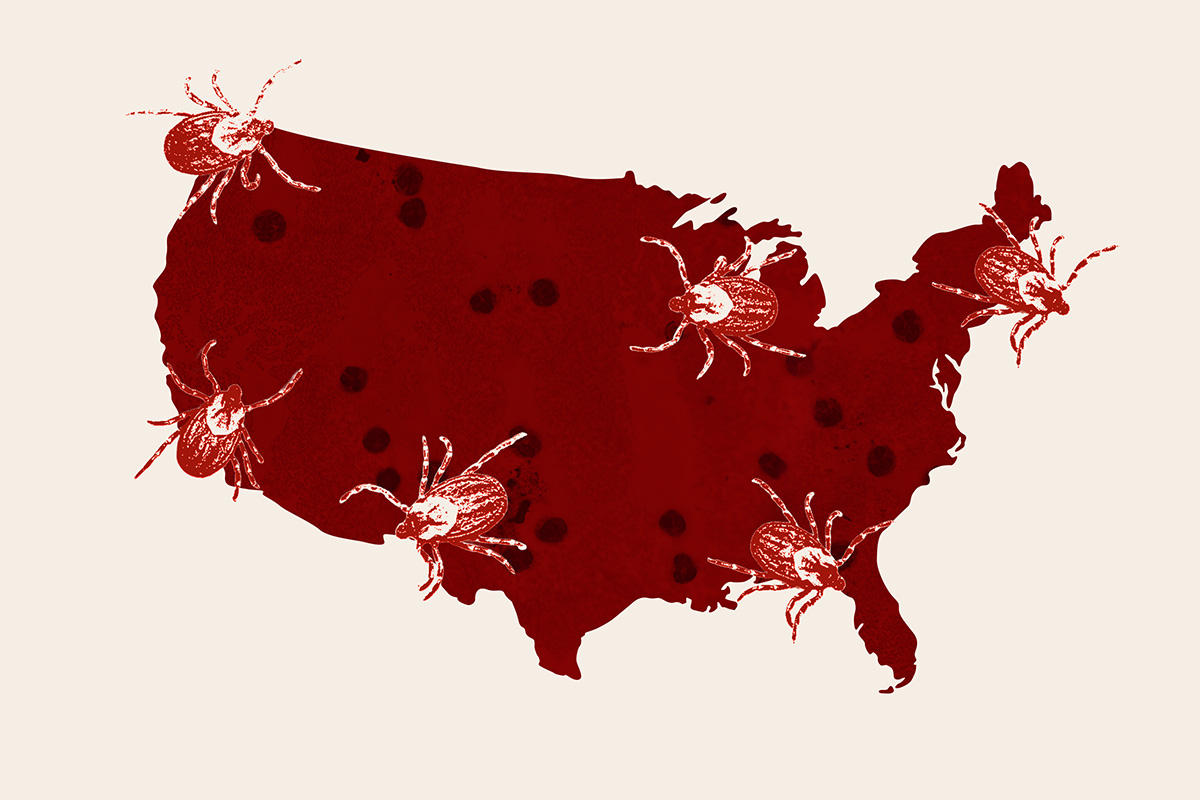
As temperatures rise, ticks are becoming more prevalent, spreading diseases unfamiliar to many Americans. Dr. Natasha Wyndham Hanners, an infectious disease specialist, notes an increase in vector-borne illnesses, partially due to climatic shifts and expanding insect regions. Worldwide travel and advanced diagnostics are also uncovering new organisms.
Recent research highlights orthonairoviruses’ ability to evade the immune system, with public health experts monitoring pathogen-carrying ticks in North America. These findings suggest a changing landscape for tick-borne diseases in the U.S.
Three Tick-Borne Threats
Anaplasmosis: Spread by the blacklegged deer tick, causing fever, headache, chills, and muscle aches without the Lyme disease-associated rash. Diagnosis often requires blood tests due to its subtle symptoms.
Orthonairoviruses: This tick-borne virus family includes Crimean-Congo hemorrhagic fever virus, capable of severe illness due to its immune system-evasive proteins.
Nairoviruses: An emerging group, including orthonairoviruses, identified in Pacific Coast ticks, though human infection remains uncertain.
Immune Evasion by Viruses
A study by University of California, Riverside researchers revealed orthonairoviruses’ suppression of immune detection. They focused on ovarian tumor domain proteases (OTUs), which remove immune-signaling molecules, preventing the immune system from identifying infections.
The study examined enzymes from various nairoviruses, discovering the Pacific Coast tick virus (PCTNV) demonstrated high efficiency in evading immune signals. The potential human exposure requires further investigation.
Scott Pegan, study author, emphasizes awareness not only of tick bites but the tick species, as different ticks may carry diverse diseases.
Spreading Diseases
Alongside nairovirus emergence, anaplasmosis is extending its reach. Dr. Craig Bober warns about anaplasmosis, transmitted by deer ticks without the Lyme disease rash, necessitating blood tests for accurate treatment.
Healthcare professionals are also observing the rapid spread of the Asian longhorned tick, established in states like New Jersey, known for carrying the SFTS virus.
Preventive Measures
Doctors advise outdoor enthusiasts to wear long sleeves, tuck pants into socks, use EPA-approved repellents, and treat clothing with permethrin. Showering shortly after returning indoors can remove unattached ticks, and thorough body checks, especially in concealed areas, are recommended.
For tick removal, use fine-tipped tweezers, pull directly upwards, and clean the bite area. Consult a physician, particularly if symptoms appear.
Reference: Gonzalez, D. S., et al. (2026). Insights into the Structure and Function of the OTU Protease Virulence Factors from Emerging Human Nairoviruses. ACS Infectious Diseases. https://doi.org/10.1021/acsinfecdis.6c00320. Contact Newsweek editors on this story: Kara Dolman and Emma Lee-Sang