
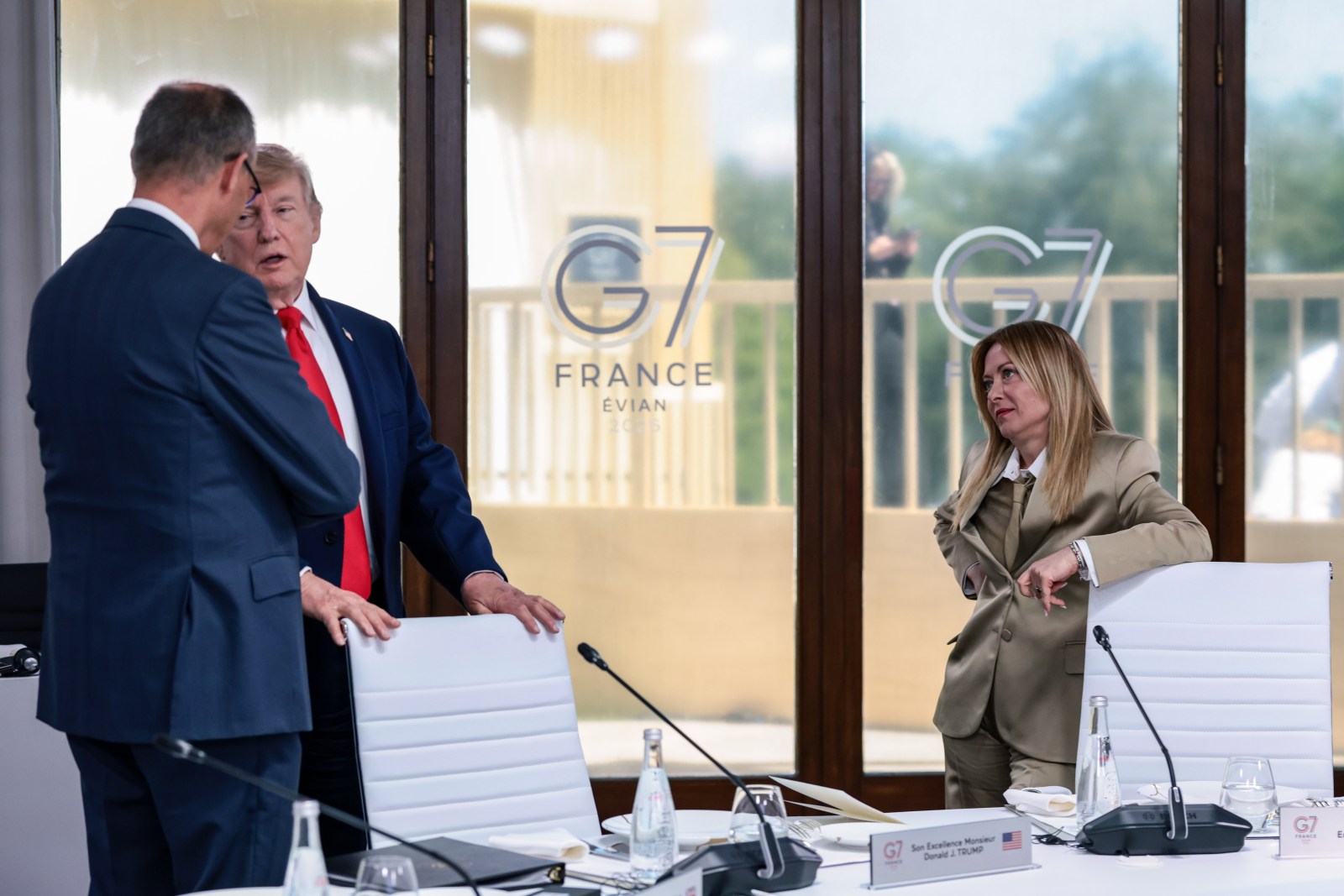
Europe’s right-wing and populist leaders are distancing themselves from President Donald Trump. Many of these leaders were once closely aligned with Trump. Differences over key issues like the U.S.-Israel conflict with Iran, attempts to acquire Greenland, and tariffs on European allies have created a divide between Washington and some of Trump’s closest overseas partners.
Strain in Trans-Atlantic Relations
These shifts reflect notable policy disagreements and political challenges. European leaders face risks when they appear too aligned with Trump. A recent incident illustrated this: Trump claimed Italian Prime Minister Giorgia Meloni begged for a photo at the G7 summit. Meloni denied this, leading to the cancellation of a visit by Italy’s foreign minister to the U.S.
Nathalie Tocci from Johns Hopkins mentioned that the break between Meloni and Trump widened when Trump criticized the pope, whom Meloni supported.
Italy’s Stand Against the US Approach
Italian Prime Minister Giorgia Meloni, previously a key European ally for Trump, now opposes U.S. policies on Iran. Italy has denied U.S. access to the Sigonella air base in Sicily for military operations related to the conflict. This move is seen as a step to avoid getting further involved in the unpopular war and to address domestic issues like rising energy costs.
Tocci suggests that Meloni might avoid further conflict by maintaining a low profile. Although institutional relations between Italy and the U.S. will persist, a close political relationship with Trump seems unlikely.
France’s Refined Stance
In France, the far-right National Rally party has adjusted its stance on Trump’s policies. Marine Le Pen criticized Trump’s foreign policy as “erratic,” while party president Jordan Bardella warned against U.S. “imperial ambitions,” particularly with actions in Greenland and Venezuela.
The party advises caution in aligning too closely with Trump to avoid alienating voters in upcoming elections.
Germany’s Divergent Views
Criticism in Germany arises from both the populist right and the center-right. The far-right Alternative for Germany (AfD) condemned Trump’s foreign policy and suggested withdrawing U.S. troops from Germany. Chancellor Friedrich Merz openly criticized Trump’s Iran policy, claiming the U.S. was “humiliated” in negotiations. Trump’s response threatened reducing U.S. military presence in Germany, potentially impacting NATO’s strategy in Europe.
Broader Political Implications
Even Trump’s strong allies have shown concern. In the UK, Nigel Farage warned that U.S. threats regarding Greenland were perceived as hostile, though he has not entirely distanced himself from Trump.
The situation reveals a broader trend. While Trump’s influence was initially beneficial to Europe’s nationalist movements, it has become politically challenging in some areas. European right-wing parties face a balancing act. They share views with Trump on nationalism and immigration but must appeal to domestic voters wary of foreign policy entanglements.
What Lies Ahead
The current fractures do not indicate a complete severance between the U.S. and Europe’s right-wing movements. However, they signal a notable shift. Trump continues to engage with some nationalist leaders, retaining ideological connections on key topics. Yet, divergences over issues like Iran, trade, and territorial control reveal clear limits to these partnerships when U.S. actions clash with European political contexts.