
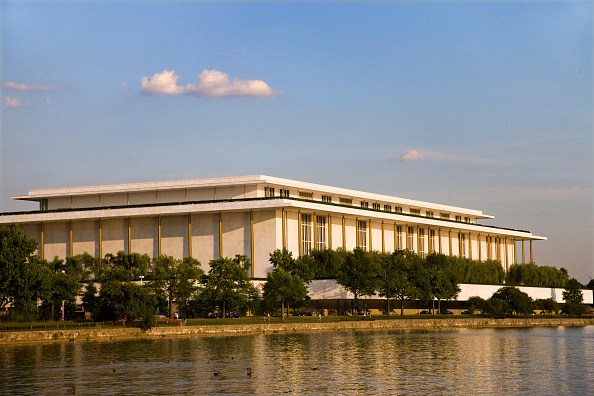
Photos showing the aftermath of the removal of weeping willow trees outside Washington’s Kennedy Center surfaced on social media, sparking renewed inquiries. A Kennedy Center spokesperson confirmed that the willows were removed in October 2025 as they posed a safety hazard.
Background and Statements
Kennedy Center Executive Director, Matthew Floca, testified earlier this year that most weeping willows originally designed for the center had been removed due to decay. Misinformation continued to circulate, erroneously linking the removal to President Donald Trump. Floca clarified that he and Trump did not discuss the willows or their replacement directly, suggesting instead that weeping cherry trees might serve as a suitable substitute.
“President Trump and I haven’t specifically talked about the weeping willows or the replacement,” Floca stated. “I think that a weeping cherry tree would be perfect.”
Newsweek contacted the White House for comments, which were referred back to the Kennedy Center.
Court Proceedings
In a May 29, 2026, court opinion, U.S. District Judge Christopher R. Cooper referenced Floca’s testimony during an April 29 hearing. The lawsuit was initiated by preservation and architecture groups opposing the Kennedy Center’s planned renovations.
Cooper mentioned that the majority of the original willows had been removed due to decay. Floca reiterated his belief that “weeping cherry trees” would be a fitting replacement. Despite concerns about altering the center’s historic character, Floca testified that changing from a weeping willow to a cherry tree was not significant. Cooper questioned this assessment, given the historical importance of the center’s design elements.
Reasons for Tree Removal
According to Floca’s testimony, most willows were removed due to decay. Reports highlighted their short lifespans, as they were planted in shallow beds over concrete, leading to decay and instability. Forbes reported that a tree fell during a storm, and others were visibly failing before their removal in October 2025.
Legal Dispute Over Renovations
The removal of trees was part of a larger legal challenge over proposed renovations at the Kennedy Center. Preservation groups sought to halt renovations pending necessary reviews and approvals.
In his opinion, Cooper raised concerns about changes already made and potential alterations to historic features. The Kennedy Center’s columns and willows were key contributors to its historic status, according to the D.C. State Historic Preservation Office.
The columns had been repainted white from gold, and plans included replacing willows with a different species.
Historical Significance of Willow Trees
Willow trees were part of the Kennedy Center’s original landscape design from its opening in 1971. The Cultural Landscape Foundation noted a 1965 planting plan that included willows, among other trees. They were planted in raised planter boxes overlooking the Potomac River.
Although historical records confirm the willows’ significance, they do not establish whether the trees removed in October 2025 were the original specimens.
Trump’s Involvement
Trump served as the chairman of the Kennedy Center’s Board of Trustees from February 2025, playing a significant role in its renovations. Despite his involvement, Floca testified that they had not discussed the willows or their replacement.
Plans released by Trump showed cherry trees in areas formerly occupied by willows. The renovation plans are still being contested legally, with the Justice Department arguing for urgent repairs to avoid potential demolition.