
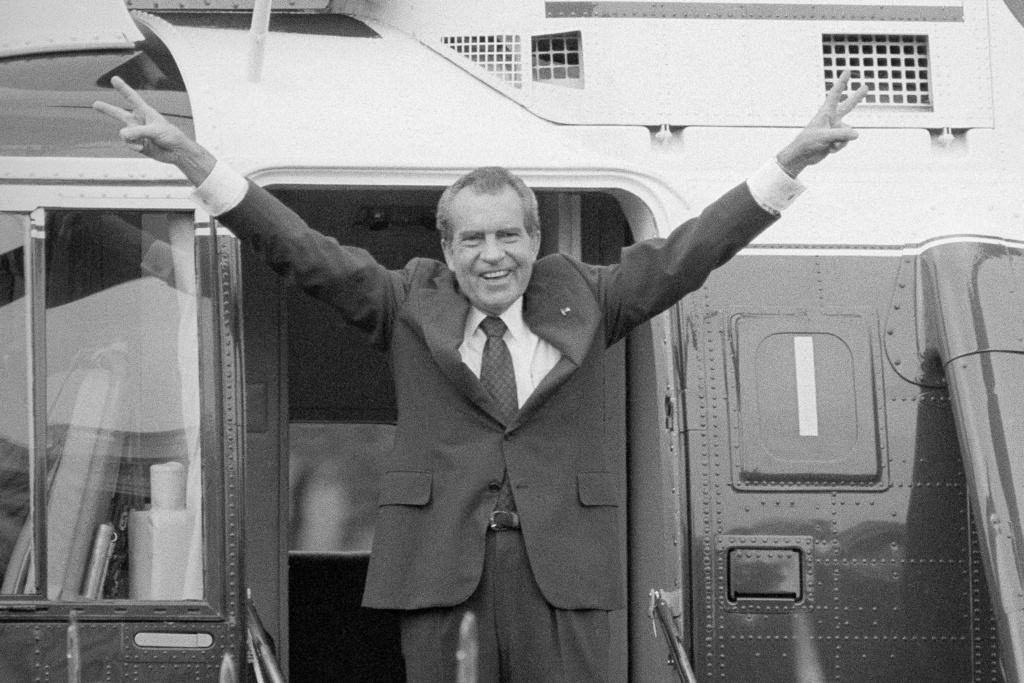
On August 9, 1974, Richard M. Nixon resigned as President of the United States amid impending impeachment due to the Watergate scandal. Watergate’s consequences extended beyond the resignation, prompting significant legislative changes aimed at ensuring government integrity.
Congress responded by passing several key measures:
- The Federal Election Commission was established to regulate political contributions.
- The Freedom of Information Act was strengthened to enhance public access to government information.
- The Sunshine Act required public meetings of federal agencies.
- The Ethics in Government Act was enacted to uphold government integrity.
- Inspector general offices were created to detect and prevent waste, fraud, and abuse.
- The Congressional Budget and Impoundment Control Act was passed to prevent presidents from withholding allocated funds.
Watergate eroded public trust in federal governance but also reinforced the need for checks and balances. It underscored the critical role of Congress in preventing abuses similar to those revealed during the scandal.
James Madison, among the Founders, was wary of tyranny and emphasized the separation of powers as a guard against it. Watergate reaffirmed the necessity of this principle as Congress emerged as a check against presidential overreach.
When evidence surfaced implicating Nixon, the bipartisan Watergate Committee was formed to investigate. Although initially hesitant, the Republican members shifted their stance as clear evidence emerged.
Congress performed its constitutional duty by upholding democratic principles and preventing tyranny. As we mark 2026, the 250th anniversary of the Declaration of Independence, it is crucial to remember Watergate’s lessons.
A journal entry by James McHenry quotes a dialogue with Dr. Franklin: “A republic,” Franklin confirmed, “if you can keep it.” Watergate highlighted the importance of a resilient, independent Congress to maintain our republic.
Linda Gustitus, director of the Washington Office of the Carl Levin Center for Oversight and Democracy, reflects on these lessons. With over 20 years of experience working on oversight investigations, she emphasizes the enduring need for strong congressional oversight.