
Seventeen candidate pairs for governor and lieutenant governor competed on Tuesday, aiming to advance from the primaries for the November general election in Alaska. They seek to replace Republican Governor Michael Dunleavy, who is term-limited. Former state Rep. Jonathan Kreiss-Tomkins and his running mate Zac Johnson emerged on top, with former Democratic state Sen. Tom Begich and Julia Hnilicks following closely. Both pairs will move forward, along with two additional winning pairs.
The primaries included 34 candidates, featuring significant political figures. Tom Begich led the race, backed by his family’s longstanding involvement in Alaska politics since its statehood.
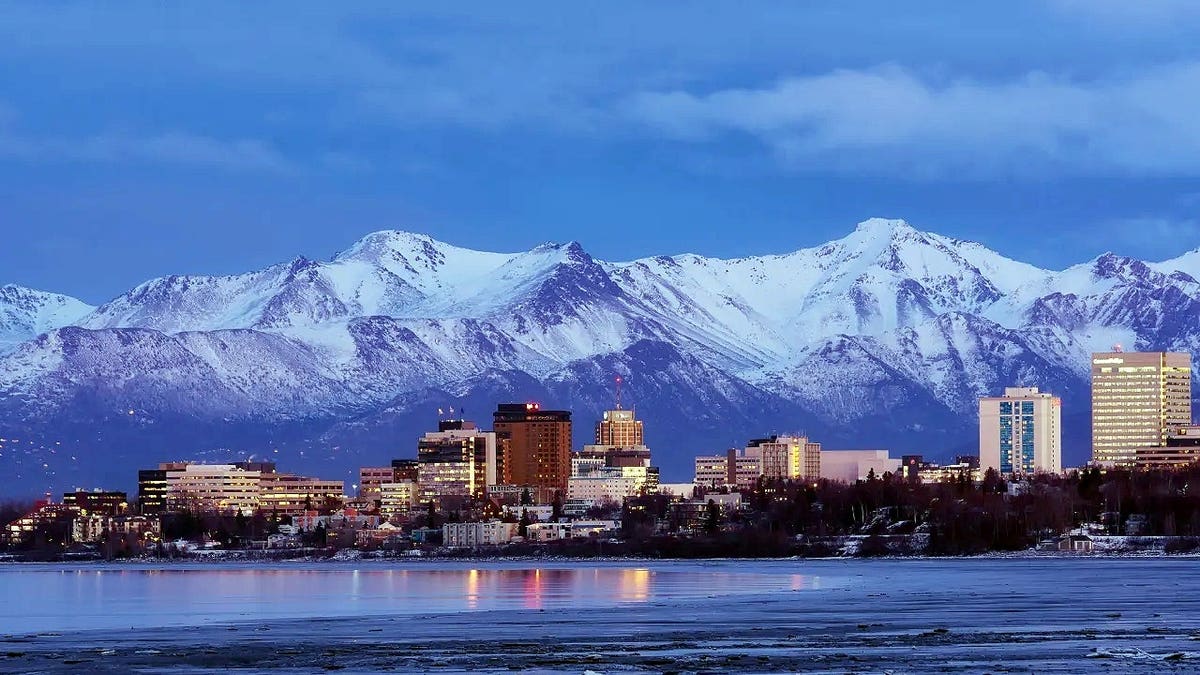
An Anchorage scene captured against the Chugach Range.
Tom’s father, Rep. Nick Begich Sr., served in the state and federal legislatures until his plane disappeared over the Inside Passage. His brother Mark served as a U.S. senator. The Begich family is primarily Democratic, except for Rep. Nick Begich III, a Republican. Another prominent Republican, business owner Bernadette Wilson, ran in the nonpartisan primary with Michael Shower.
Republican Lt. Gov. Nancy Dahlstrom, initially a prominent candidate, withdrew in June. Michael Loren Gilbert also participated, focusing on expanding Alaska’s energy and considering a highway to the Lower 48. His running mate, Timothy Hickel, belongs to another political family. Former Governor Wally Hickel, Timothy’s father, had two separate terms and was President Nixon’s interior secretary.
David Bronson, a former Anchorage mayor, joined the race with Josh Church. Additionally, former state Sen. Click Bishop paired with Greta Schuerch.
Alaska uses ranked-choice voting for general elections, allowing voters to rank candidates. Votes are redistributed as low-ranking candidates are eliminated. Despite being a Republican stronghold, Gov. Dunleavy’s exit provides an opening for Democrats like Begich. Begich III ousted former Rep. Mary Peltola in the last cycle after Peltola succeeded the late Rep. Don Young.