
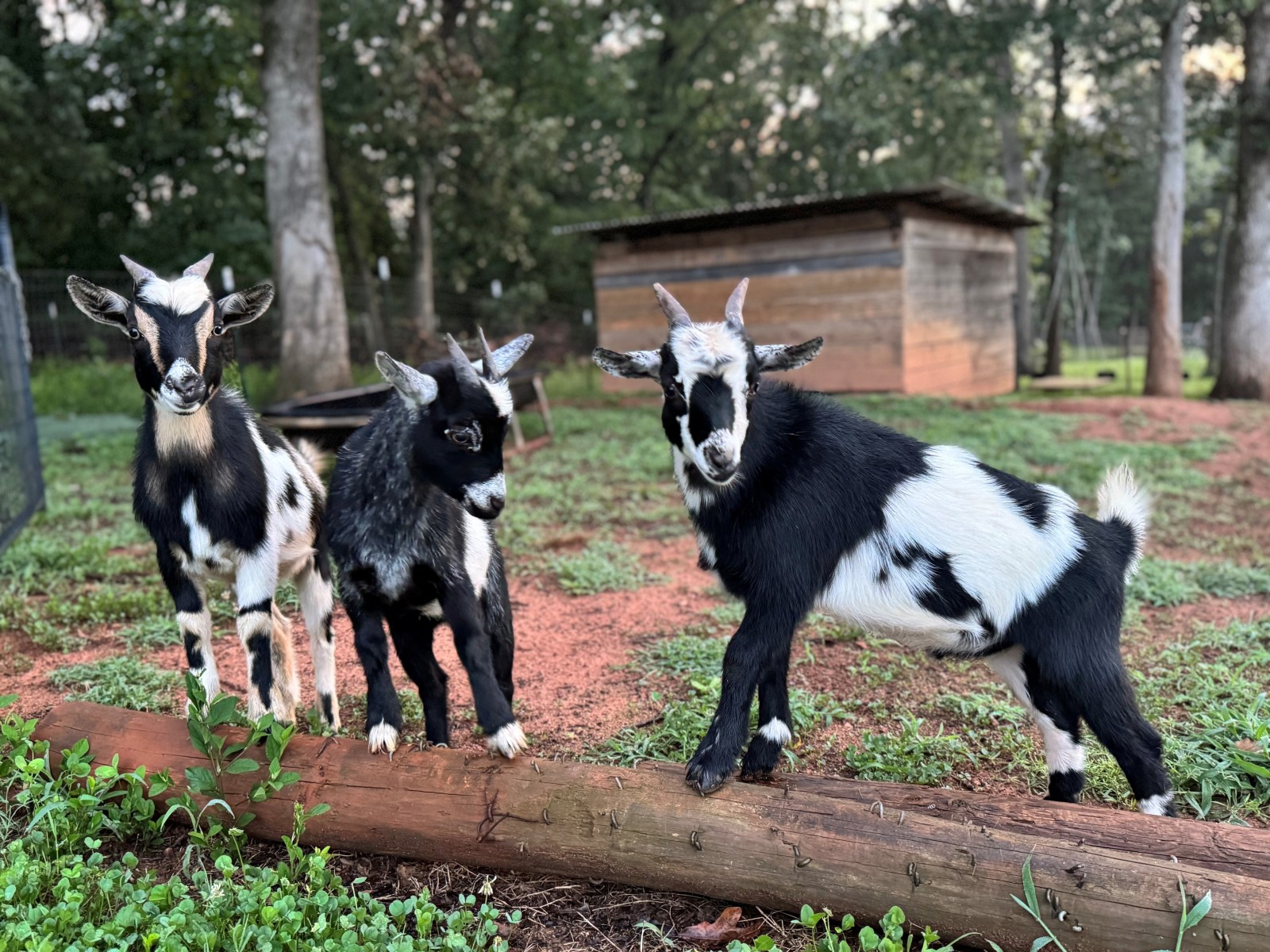
Health authorities in North Carolina have issued a public health warning regarding rabies exposure. This follows the discovery that baby goats at a mobile petting zoo tested positive for the virus.
The North Carolina Department of Health and Human Services (NCDHHS) confirmed the outbreak. Laboratory tests showed that three baby goats at Farm Adventures in Harmony, Iredell County, had rabies on August 28. A fourth goat was presumed infected despite not being tested.
How Did It Happen?
State health officials indicated the goats likely had exposure in late July. This occurred when a skunk entered their pen.
In a Facebook post, Farm Adventures explained the situation. “The baby goats were kept in a separate pen and were too young for vaccinations,” the post read. A skunk had entered the pen, leading to the exposure.
The farm removed the skunk but it had already bitten the goats. Despite not showing signs of rabies, the goats received veterinary care.
No other animals on the farm appear affected, and there is no current rabies risk to people from them. An investigation is ongoing.
Exposure and Contact Tracing
State and local health departments urge anyone with direct contact with these goats between July 28 and August 27 at Farm Adventures or related events to contact their local health department.
Identified exposure locations include:
- July 28: Jurney’s Assisted Living, Statesville (Iredell County)
- July 30: Private event (Mecklenburg County)
- August 1: Community Connections Back-to-School Bash, Breeden Amphitheater, Lexington (Davidson County)
- August 6: Brookdale Peachtree, Statesville (Iredell County)
- August 8: Private event (Watauga County)
- August 9: Private event (Burke County)
- August 15: Masonic Picnic Grounds, Mocksville (Davie County)
- August 16: Private event (Durham County)
- August 22: Private event (Iredell County)
- August 23: Private event (Durham County)
Officials advise those who attended these events and had contact with the animals to seek advice from their health department or medical provider.
What Are the Symptoms of Rabies?
Rabies is a fatal virus affecting the central nervous system, although human cases are rare in the U.S. North Carolina’s last human case was in 2011, per NCDHHS. The CDC reports that each year, about 1.4 million Americans are evaluated for potential exposure. Robust prevention protocols keep human fatalities below ten annually.
Wild animals like raccoons, skunks, and foxes are primary rabies carriers. Skunks are a major rabies reservoir, particularly in the Midwest and West. The virus usually spreads through the saliva of infected animals via bites or scratches.
Symptoms may take weeks or months to surface. Early signs resemble the flu: weakness, fever, or headache, alongside irritation at the wound site. The disease can then manifest in two forms:
- Furious rabies: Causes hyperactivity, hallucinations, hydrophobia, and cardiac arrest, leading to death within days.
- Paralytic rabies: Accounts for 20% of cases. It causes gradual paralysis, leading to a coma and death.
Rabies is preventable with vaccination and immediate medical care after exposure. The CDC highlights post-exposure prophylaxis as effective if administered soon after exposure.
Given that baby goats in petting zoos are often bottle-fed and handled closely, the risk of direct contact with an infected animal is significant.
What Happened to the Infected Goats?
The infected goats, namely Molly, Maggie, Cow, and Uno, were euthanized to halt the virus spread.
“We want to be transparent about this distressing event. The affected animals, our four precious baby goats, have been euthanized to prevent further spread,” Farm Adventures noted in a Facebook post.
The farm stated it will monitor remaining animals according to health officials’ guidelines.