
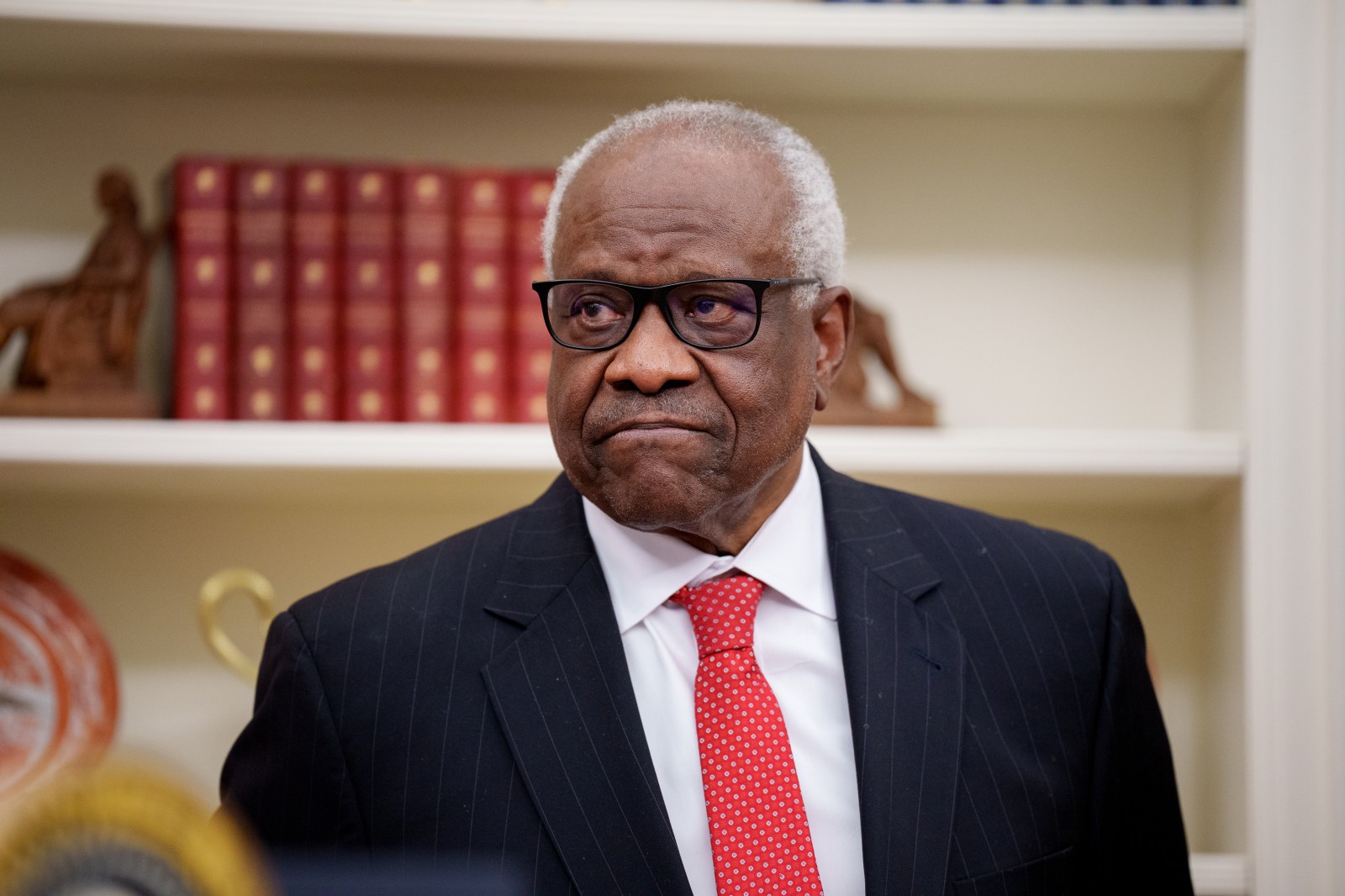
Justice Clarence Thomas’s Potential Role in Revisiting a Supreme Court Ruling
More than twenty years ago, Justice Clarence Thomas dissented from a Supreme Court decision that allowed states to deny scholarship funding to students studying ministry degrees. Now, Virginia college student Bethany Hall is seeking an opportunity for him to help overturn this precedent.
Bethany Hall’s Petition against Locke v. Davey
Virginia student Bethany Hall has petitioned the court to overrule Locke v. Davey, a 2004 decision upholding a state’s right to exclude students pursuing devotional theology degrees from receiving public scholarship funds without violating the First Amendment’s Free Exercise Clause. Hall’s filing contends that recent religious-liberty decisions have weakened Locke’s reasoning, and that it should be discarded.
Attorneys and Expectations
“The Supreme Court only grants about 1% of cert petitions. But we are as confident as we can be with a 1% chance that the Court will both take the case and overrule Locke,” Hall’s attorney Steven Fitschen told Newsweek.
Hall’s appeal challenges the denial of financial aid for students pursuing religious ministry and theology degrees. The decision could impact scholarship programs in Virginia and other states with similar restrictions.
The Background and Implications of Locke v. Davey
Locke v. Davey was decided by the Supreme Court in 2004. The case involved Joshua Davey, a scholarship recipient in Washington, who was prohibited from using state funds for a degree in pastoral ministries. The state’s policy, upheld by the court, did not violate constitutional rights according to the majority opinion.
This established a narrow exception allowing states to deny funding for vocational religious degrees. Hall argues that subsequent Supreme Court decisions have narrowed Locke’s standing and isolated it from broader religious-liberty jurisprudence.
Justice Clarence Thomas’s Historical Position on Locke v. Davey
Clarence Thomas was one of the most vocal critics of Locke in the original case, siding with Scalia’s dissent. Scalia argued against excluding theology from scholarship funding, stating it was unconstitutional discrimination.
Later writings by Thomas have questioned Locke’s reasoning, and Hall’s petition highlights examples where Thomas suggested revisiting the constitution’s Establishment Clause.
Potential Future of Hall’s Case
Seth Chandler, a professor of law, indicated a above-average chance of the Supreme Court taking the case, noting that lower courts have urged the Supreme Court to review. If the court takes Hall’s case, it is anticipated that Thomas and Justice Neil Gorsuch would favor overturning Locke.
However, Chandler noted that the ultimate outcome might depend on Chief Justice Roberts, who has been involved in cases weakening Locke’s legal foundation.
If the Supreme Court overturns Locke, states would be required to either fund all majors equally or eliminate scholarship programs to prevent seminary students from obtaining funds.
Newsweek’s reporting editor for this story was Anthony Murray.