
China’s military might exploit advanced American technology, including espionage and unauthorized access to artificial intelligence infrastructure. This could lead to the development of weapons posing a threat to U.S. military forces. Two leaders from the congressional China watchdog highlighted these concerns during an interview with Fox News Digital.
The officials warned that Beijing seeks to acquire U.S. semiconductors and access powerful AI data centers. This could enhance China’s military capabilities without American companies’ knowledge or involvement. The U.S.-China Economic and Security Review Commission’s 2026 annual report indicates Beijing’s efforts to bypass U.S. export controls to secure advanced semiconductors for its military.
Experts caution that China’s real AI threat to America is already present, going beyond the notion of ‘killer robots’.
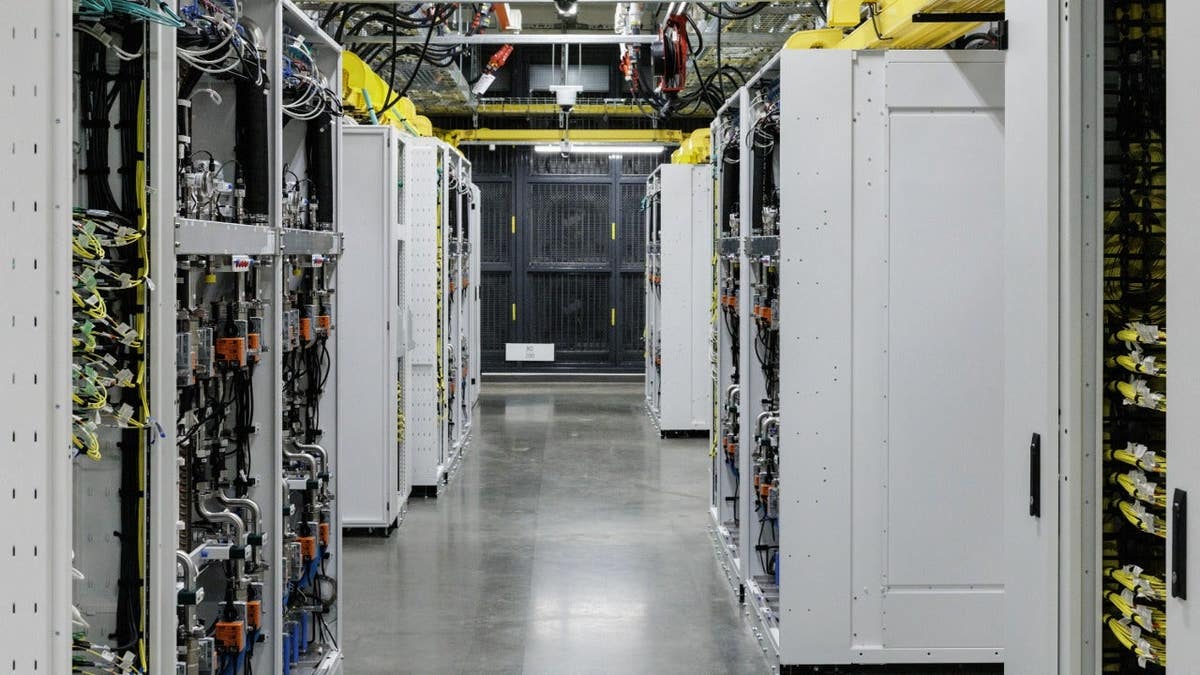
In a February 2026 photograph, racks of GPUs with closed-loop liquid cooling systems are seen inside a Microsoft data center in Indonesia, highlighting the global reach of advanced computing resources.
An assessment by Georgetown University’s Center for Security and Emerging Technology from April 2026 revealed the Chinese People’s Liberation Army’s interest in advanced Nvidia chips for AI military capabilities. Beijing aims to integrate AI into weapons systems, military command, and logistics as part of a shift toward ‘intelligentized warfare.’
Mike Kuiken, the commission’s vice chairman, expressed concern about the threat extending to access to overseas computing infrastructure. “Anytime the Chinese gain access to advanced chips, we are helping them,” he stated.
Randall Schriver, the commission chairman, acknowledged risks related to dual-use technology sales, inadequate cybersecurity, and American investments. “We need a comprehensive look at how Americans may be contributing to Chinese military modernization,” Schriver commented.
Kuiken warned of Chinese AI developers or military institutions gaining access to powerful data centers, stressing the importance of addressing this issue.
Nvidia’s connection with China has faced increased scrutiny. Recent reports indicate Nvidia halted shipments of licensed AI data center chips to China, highlighting the tension between commerce and security.
Nvidia CEO Jensen Huang’s urging of the Trump administration to ease AI chip sales restrictions has put the company’s technology at the U.S.-China AI leadership race’s forefront. However, a separate controversy involving Huang’s resignation over personal affairs sparked further tension.
The officials also noted China’s efforts beyond acquiring American hardware. “Denial and deception is central to the CCP’s doctrine, and it extends to the PLA,” Schriver noted. He cited China’s increased use of AI-enabled military systems, including autonomous platforms.
“We are witnessing the PLA adopt existing technologies and develop advanced AI capabilities to gain an edge,” Kuiken warned.
Amid these issues, China’s Foreign Ministry emphasized collaboration in AI security following discussions between Xi Jinping and President Donald Trump. They advocate strengthening communication to prevent AI security risks and ensure human control.
The commission identified data protection as a critical national security priority, warning that AI’s ability to expose cybersecurity vulnerabilities could result in compromised sensitive information. Recent technology outages affecting major U.S. entities have underscored these vulnerabilities.
Kuiken cautioned that powerful AI models make it easier to find such vulnerabilities, advising that organizations must safeguard their systems rigorously. The commission’s leading recommendation this year emphasizes protecting American data as both a security and economic priority.
Despite the concerns, no link was established between recent technology outages and Chinese cyber activities.
Fox News Digital reached out to the White House and the Chinese Embassy for comments but received no responses before publication.
Efrat Lachter, a seasoned Fox News Digital reporter, contributed to this report. With extensive experience covering global affairs, she brings light to conflicts, human rights, and political issues. Her journalism has taken her worldwide, documenting major events and uncovering critical stories. Lachter has been recognized for her reporting achievements through several prestigious awards.