
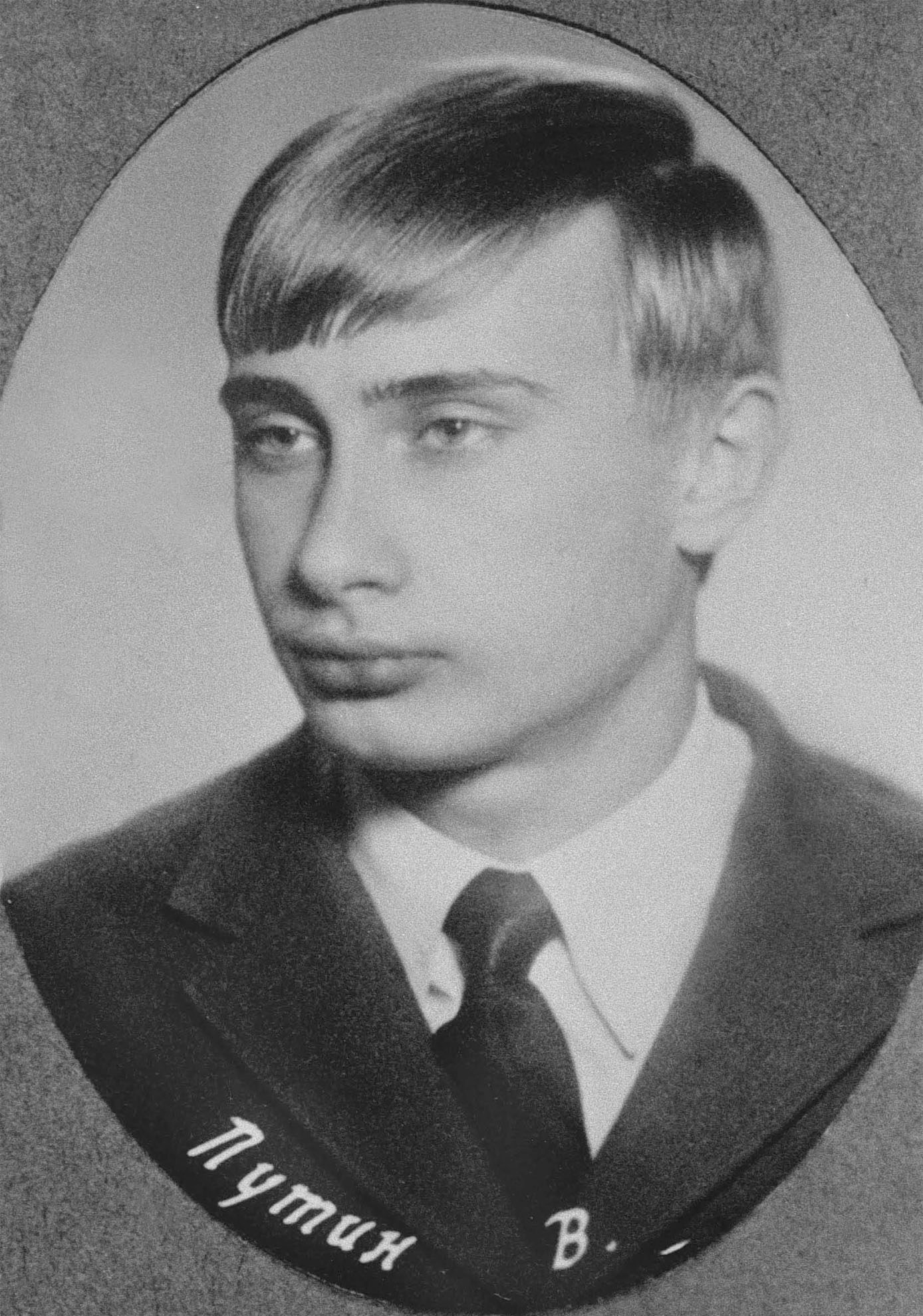
Bryan Adams’ song “Summer of ‘69” brings nostalgia for teenage romance and endless possibilities. While Vladimir Putin was 16 that summer, his experiences were starkly different. He already aimed to join the KGB amid his education and rough living conditions. Nevertheless, that time likely holds fond memories for him.
The Russian president suggests a meeting with China’s President Xi Jinping and Donald Trump. The discussion would focus on ending the war in Ukraine. Notably, Ukraine’s President Volodymyr Zelensky and European officials have no place at this proposed meeting. This plan reflects Putin’s worldview shaped during the Soviet peak.
For Trump, agreeing to Putin’s framing poses risks. Putin’s actions in Ukraine show disregard for Ukrainian leadership in peace talks. Outsiders find excluding Ukraine from negotiations odd. However, Putin sees global relations as controlled by powerful nations. Smaller countries, while they have some autonomy, lack control over their geopolitical paths.
The Soviet Union’s influence followed similar logic. In 1956, Soviet forces crushed Hungarian calls for independence. In 1968, Czechoslovakia faced Soviet tanks after attempting political reforms. Putin’s recent security proposal mirrored this approach, focusing on NATO’s expansion and downplaying Ukraine’s sovereignty.
Alexander Baunov, a Russian analyst, describes Putin’s desire to engage the US in talks over Ukraine as seeking a “new Yalta.” In Putin’s view, history’s course is for great powers to decide, sidelining smaller states like Ukraine.
Halcyon Days
This mentality has flaws, notably assuming Russia remains a great power. Putin famously called the Soviet collapse a major catastrophe, lamenting Russia’s lost influence. Today, Russia possesses significant military power, particularly nuclear capabilities, and a UN Security Council seat.
However, economically, Russia is a middle power. In 2025, the World Bank valued America’s economy at $30.8 trillion, China’s at $19.5 trillion, and Russia’s at $2.6 trillion. If Trump accepts the proposed meeting with Xi and Putin, Russia likely won’t cover the expenses.
Even Russian foreign policy acknowledges this hierarchy. Ivan Timofeev, from the Russian International Affairs Council, notes the unequal dynamics within the Russia-China-US triangle. He sees China as crucial to Russia both economically and geopolitically.
During the summer of ‘69, Soviet and Chinese soldiers engaged in border clashes. Today, China is a vital partner for Russia, contrasting past hostilities.
Brotherly Love
In July 2021, Putin’s essay on Ukraine’s history was published, highlighting a fundamental contradiction. He claimed respect for Ukrainian identity while denying its sovereignty. He argued Ukraine’s true independence requires partnership with Russia.
In Putin’s view, Ukraine is but a part of the Russian world. After years of conflict, Putin no longer mentions respect for Ukrainian sovereignty. At the St. Petersburg International Economic Forum, he stated, “I consider the Russian and Ukrainian people one people.”
Trump has indicated openness to a meeting with Xi and Putin, regardless of Zelensky’s presence. His focus would be on nuclear weapons discussions. Such a meeting meets Putin’s desires, asserting Russia’s status as a great power. If this meeting proceeds, it would uphold Putin’s principles of power politics, minimizing Ukraine’s role.