
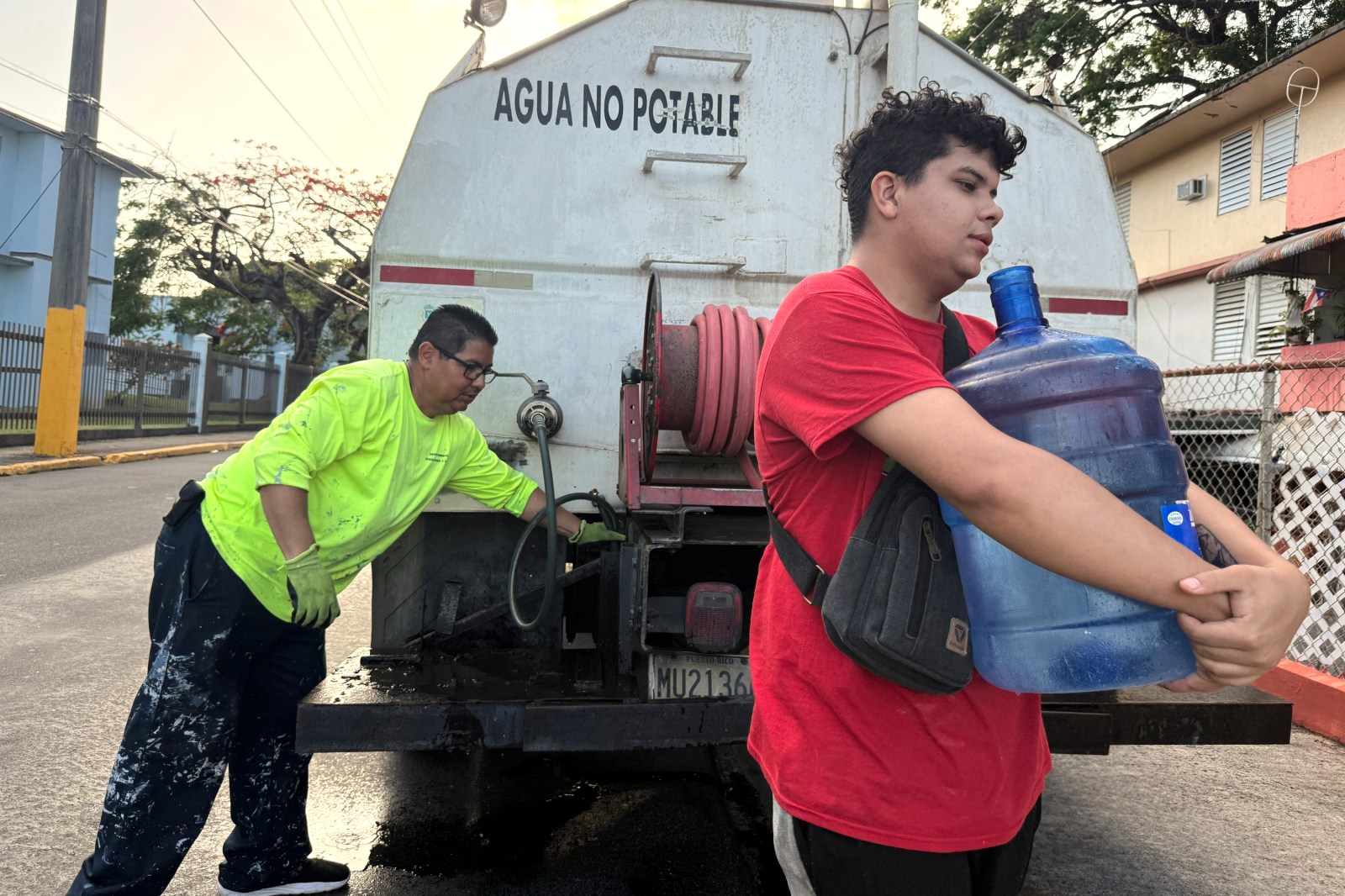
Puerto Rico has entered a significant 48-hour water-rationing cycle impacting over 180,000 residents as drought conditions worsen dramatically. Many neighborhoods report more than 100 days of inconsistent service this year. This crisis unfolds without comment from President Donald Trump, leaving residents, businesses, and hospitals anticipating extended shortages. Local officials caution that this emergency could persist for weeks, if not months, affecting millions of U.S. citizens struggling with a system weakened by long-term neglect.
The island’s water authority reports that the Carraízo reservoir has decreased to critically low levels, necessitating periodic water shutoffs in seven municipalities. However, residents indicate that outages began prior to the current drought, suggesting deeper infrastructure issues unaddressed by both the Puerto Rican and federal governments. Willianette Robles Cancel, Executive Director of CTPR, told Newsweek that the tourism sector is working with the Puerto Rico Aqueduct and Sewer Authority (PRASA) and the central government to sustain operations. She emphasized that their objective is to support and guide the sector to ensure continuity.
The broader crisis affects more than tourism, with growing frustration over the lack of federal response. Despite the gravity of the situation, the Trump administration has not issued any statements on the escalating water shortages. Puerto Rico faces one of its most severe droughts in history. July marked San Juan’s driest month in over 120 years. The National Oceanic and Atmospheric Administration (NOAA) forecasts below-average rainfall and above-normal temperatures through October due to a strengthening El Niño pattern.
The U.S. Drought Monitor’s August update highlighted that approximately 68 percent of Puerto Rico experiences drought, with moderate to severe conditions mainly in the island’s interior and northern regions. Governor Jenniffer González has expressed uncertainty about the rationing duration, describing the situation as “out of our hands.” CBS News mentioned that residents are divided into two groups that will alternate losing water for at least 48 hours at a time, with officials warning potential extensions to 72 hours.
Residents argue the crisis results from years of political neglect at both territorial and federal levels.
Many in San Juan have experienced over 118 days of unreliable water this year, with full-day and multi-day interruptions reported well before the formal rationing plan initiated. Puerto Rico’s government has provided little clarity or urgency. PRASA asserts that rationing is essential for equitable water distribution, yet outages had been reported since mid-June. San Juan’s mayor has taken legal action against PRASA for persistent shortages unrelated to weather, and the agency advises residents to boil water once service resumes because of contamination risks and system instability.
Water-resilience specialist Kevin Gast informed Newsweek that this crisis exemplifies a national problem, emphasizing the importance of not only having sufficient natural water but also maintaining quality treatment and distribution infrastructure. Newsweek reached out to PRASA and La Fortaleza for comments, but neither responded.
Puerto Rico has encountered water rationing before, notably in 2015 and 2020, but experts note that the current situation is broader and more destabilizing. Extreme heat, unprecedented drought, and long-standing infrastructure failures have produced a crisis warranting federal intervention weeks earlier. Hospitals resort to tanker trucks and businesses incur significant expenses to remain operational. The absence of federal involvement is a central aspect of a story that island residents can no longer ignore.
Small Businesses Face Challenges
Local businesses, especially in Old San Juan, face severe impacts. Some cafés and restaurants close during rationing because they cannot safely operate without water. Others pay substantial amounts daily for private tanker services when municipal trucks do not arrive. A San Juan business owner shared with Noticias Telemundo that he spends $300 to $500 each day to fill cisterns to remain operational. Travel blogger and podcast host Bianca Alba described the widespread strain on businesses, stating, “When businesses can’t operate, they lose income. When this continues for days or weeks, paying employees, covering rent, and meeting expenses becomes challenging.”
Residents report long lines for bottled water at supermarkets, with supplies running low soon after delivery. “People stockpile bottled water when possible,” Alba said. “Recently, a friend spent hours waiting at Costco to buy water before supplies diminished. This scarcity mindset is prevalent as residents remain uncertain about future water access.” She added, “Despite these challenges, residents continue working, serving tourists, operating businesses, and striving to maintain normalcy.”
Everyday Life Disruptions
The emergency has substantial impacts on everyday life. Vanessa Toro, currently staying in Puerto Rico with family, detailed the disruptions in a message shared with Newsweek. She spent hours searching for an open laundromat, only to find many closed because of water shortages. When she found one operational, it had limited supply and could only handle specific loads.
Toro then visited Econo, a primary supermarket chain, where customers were purchasing water in bulk and shelves were emptying swiftly. She observed people filling carts with bottles, fearing insufficient supply for upcoming shutoff periods. “Econo is packed,” she said. “This happens before children even finish school. Everyone’s buying water; they’re selling bags of water bottles, like individual bottles, four or five in produce bags.”
According to the National Weather Service, Puerto Rico’s rainfall since June 1 is over nine inches below normal. Meteorologist María Novoa García shared with The Weather Channel that coming weeks will likely see 50 percent below-average rainfall due to El Niño intensification. PRASA President Luis González Delgado assured that potable water trucks will prioritize hospitals and elder-care facilities while noting the system’s decades of underinvestment.
Residents in Canóvanas, Cupey, and other affected areas have endured weeks without water, complicating preparation for planned shutoffs. Community leader Marcia Soler París expressed to the Associated Press, “It’s chaos. How are Puerto Ricans supposed to prepare for rationing without current access?”
Experts emphasize that the crisis reflects deeper systemic issues. Aging infrastructure, chronic underinvestment, and climate-driven extremes have resulted in a system ill-prepared for sustained drought. Recent concerns by local scientists regarding large development projects approved during the drought note potential exacerbation of water stress and harm to vulnerable ecosystems. As drought intensifies, residents, businesses, and the tourism sector navigate a crisis without a clear resolution.