
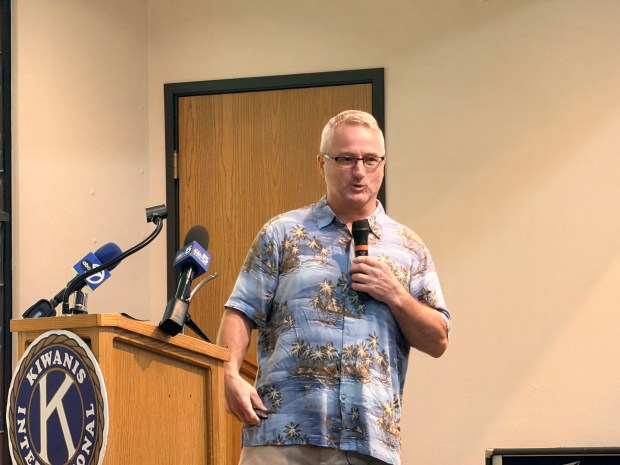
As temperatures rise, more people seek relief at beaches and pools. This has raised concerns about water safety. Dave Benjamin, Executive Director of the Great Lakes Surf Rescue Project, highlighted this issue. At a Valparaiso Noon Kiwanis Club meeting, he stressed the need for water safety education in schools.
Benjamin pointed out a significant gender difference in drowning statistics. “Four out of five drownings are male,” he said. This is attributed to males taking more risks and often overestimating their swimming abilities. In contrast, females tend to accurately assess their swimming skills. Alarmingly, many who claim they can swim might not manage the length of a pool in calm water.
He warned of the dangers posed by the Great Lakes, especially Lake Michigan’s southern end. Due to factors like wind and large crowds, this area is particularly hazardous. By mid-year, the Great Lakes had reported 29 drownings, with 14 occurring in Lake Michigan.
Water safety is not common sense.
Benjamin recounted a personal near-drowning experience, emphasizing the unpredictability of water incidents. He shared how panic set in when separated from his surfboard, leading to the realization that his life experience notwithstanding, calmness and preparedness are crucial in such situations.
Unfortunately, drownings continue, such as the tragic incident involving a 13-year-old, Keegan Roberts. Despite yellow warning flags and prior water safety programs at his school, Roberts tragically lost his life in Lake Michigan. The absence of the program that year due to funding issues underscores the necessity for consistent education.
The World Health Organization highlights drowning as an overlooked public health concern, aligning with Benjamin’s advocacy for awareness of the patterns and causes of drownings.
In his talk, Benjamin also offered practical advice for situations where someone needs rescuing. Approaching a rescue should involve reaching or throwing aids, not direct entry into the water. Legal requirements ensure life rings are available on Indiana beaches. When performing CPR, he emphasizes the critical nature of initial rescue breaths, alongside chest compressions.
The Great Lakes Surf Rescue Project is dedicated to offering training for both lifeguards and the general public, ensuring better preparedness and safety for everyone.