
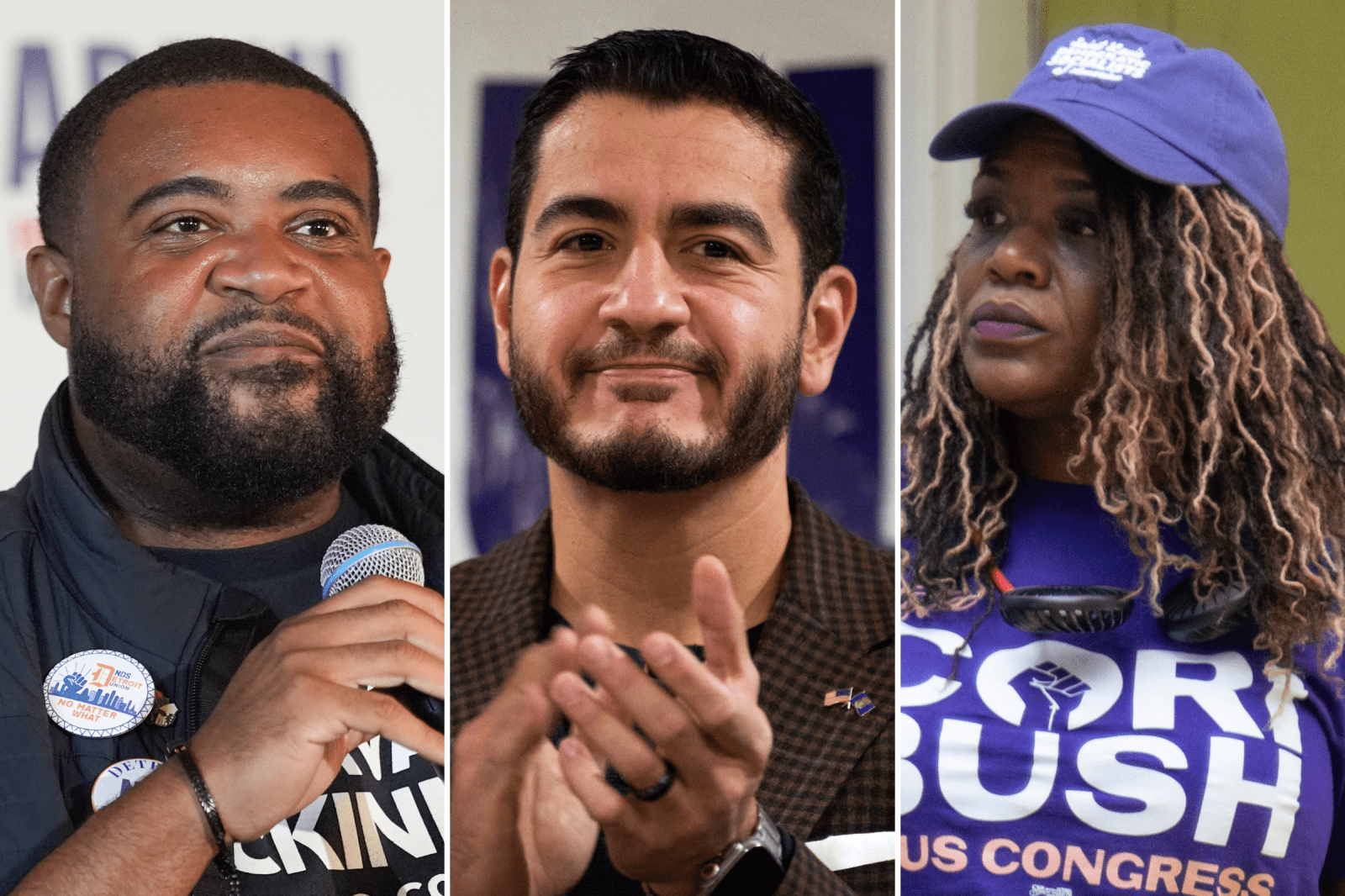
Democratic primaries in states such as Michigan and Missouri could be pivotal for progressives aiming to overcome moderates, as the political left seeks to capitalize on its achievements in prior contests. Progressives have previously claimed significant victories, securing nominations for congressional seats in cities like Denver, New York, and Philadelphia, due to mounting dissatisfaction with the Democratic Party. A number of current Democrats have lost to more progressive challengers. The upcoming primaries will gauge the demand for more progressive candidates in regions that traditionally lean moderate or conservative in the Midwest.
This movement emerges as Democratic voters express frustration with the party establishment’s limited reaction to President Donald Trump’s actions during his second term. A YouGov and The Economist poll indicates that 73 percent of Democrats believe their representatives criticize Trump “too little,” posing a challenge for the party as they strive to shield members from progressive contenders.
The Michigan Senate primary featuring progressive Abdul El-Sayed against centrist Haley Stevens is particularly noteworthy, potentially affecting control of the chamber in the November midterms. Several House races also exist where progressive candidates might surpass moderates, such as Michigan’s 7th District, a battleground where progressive William Lawrence contends with two moderate Democrats to oppose GOP Representative Tom Barrett. Another focal race is in Michigan’s 13th District, where Representative Shri Thanedar confronts a challenge from Donavan McKinney, a progressive and state legislator. Lastly, Missouri’s 1st District is witnessing Representative Wesley Bell facing a rematch with former Representative Cori Bush.
Michigan’s 7th District: A Critical Race
In this key swing district, Lawrence, associated with the progressive organization Sunrise Movement, opposes moderate Democrats Bridget Brink, former U.S. ambassador to Ukraine, and Matt Maasdam, a former Navy SEAL. The race is projected to be intensely competitive, with the Cook Political Report labeling it a toss-up. The district narrowly favored Trump by a single point in 2024, flipping the seat when its Democratic representative became a senator. Centered around Lansing, a Democratic support stronghold, it also includes rural conservative areas and Detroit suburbs.
Polling shows Lawrence leading with 38 percent support, followed by Maasdam at 27 percent, and Brink at 19 percent, according to a Global Strategy Group survey of 500 likely voters. An earlier GQR poll backed by Brink’s campaign indicated her leading at 30 percent, with Lawrence at 23 percent and Maasdam at 17 percent, surveying 400 likely voters.
Prediction markets give Lawrence a 92 percent winning chance, with Brink at 7 percent and Maasdam at 2 percent. On Polymarket, Lawrence maintains a similar 93 percent likelihood of success.
Michigan’s 13th District: Detroit’s Progressive Contest
The 13th District, covering Detroit, sees Thanedar, a businessman first elected in 2022, challenged by McKinney, supported by Justice Democrats. Both have progressive credentials, though McKinney leans further left as a Democratic Socialists of America (DSA) member.
Data for Progress shows Thanedar slightly ahead in polls, at 46 percent to McKinney’s 42 percent, from a survey of 324 likely voters. Prediction markets favor McKinney’s win with 88 percent probability on Kalshi and Polymarket.
McKinney emphasizes resident dissatisfaction with being overlooked and unaddressed needs. He claims that his success would emphasize the power of grassroots over corporate influence, stressing that his campaign resonates by focusing on the “many versus the money.” Thanedar, highlighting his advocacy for Medicare for All and opposition to ICE facilities, aims to continue his current momentum in Congress.
Missouri’s 1st District: A Rematch
In St. Louis, Bell and Bush contest each other once more after Bell’s 2024 triumph. Bell is positioned as the moderate, Bush the progressive backer endorsed by Sanders and Justice Democrats.
The 2024 race was heavily influenced by financial contributions from entities like AIPAC. Limited polling efforts, such as one from HIT Strategies, show Bell slightly ahead. Prediction markets predict a Bell win, with Kalshi suggesting a 71 percent chance.
Michigan Senate Race: Progressive Stakes
The Michigan Senate race is among the most critical tests for progressives. Polls indicate El-Sayed leading over Stevens, according to Mitchell Research & Communications and Emerson College surveys. El-Sayed’s lead over Stevens spans 14 to 16 points, aided by considerable support from younger voters. Michigan, being a slenderly divided state, remains a prime battleground. A primary win for El-Sayed would mark a significant progressive test in the November elections.