
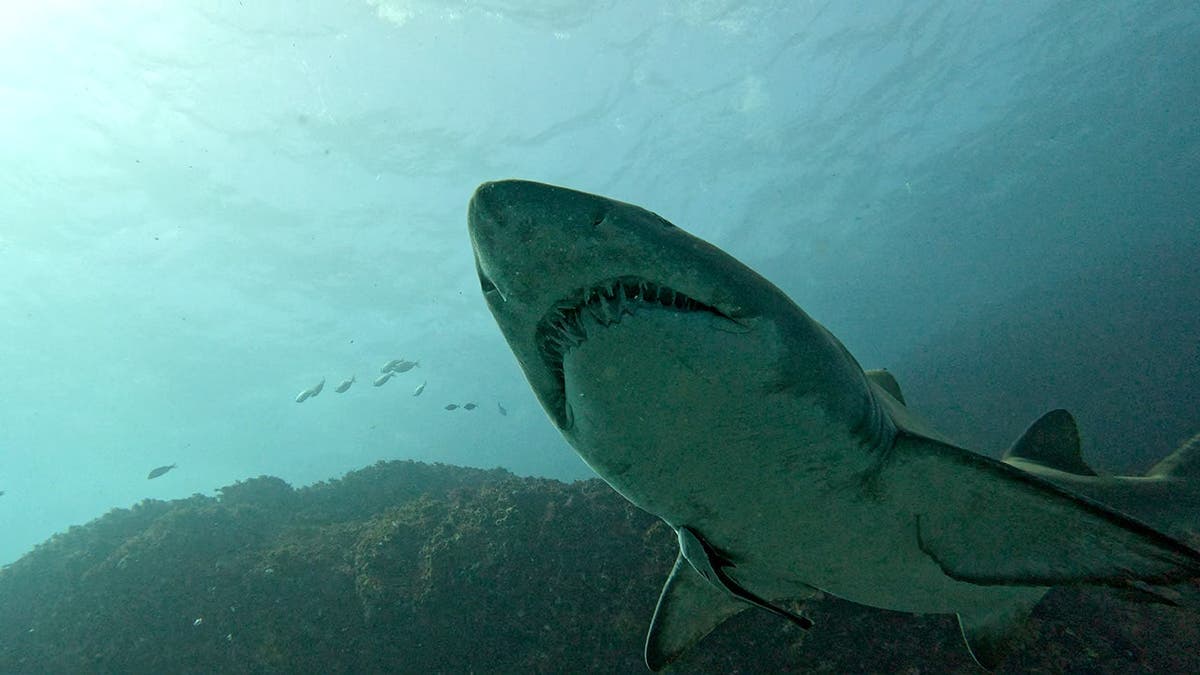
Swimmers should consider choosing quieter ocean areas to reduce shark attack risks, advises Jesse Watters. He discussed recent increases in shark attacks with Chris Fischer, the founder of OCEARCH. Notable incidents include a New York beach closure due to bull sharks, a Queens swimmer bitten, and a child attacked in Florida.
Chris Fischer highlights a resurgence in shark populations comparable to numbers from the 1960s. Beachgoers are advised to avoid swimming when bait fish are active to increase safety.
As the 2028 Los Angeles Olympics approach, Southern California prepares to host the world’s top athletes. Scientists at California State University Long Beach are developing a solar-powered shark-surveillance robot aimed at protecting both athletes and beachgoers during the Games. This robotic vessel will patrol coastal areas, scan for tagged sharks, collect water samples, and launch an aerial drone, all while relaying real-time data to lifeguards.
Chris Lowe, Director of the Shark Lab, explains that this craft will listen for acoustically tagged sharks and take water samples to detect white shark DNA. The innovative technology aims to enhance safety during Olympic aquatic events, such as open-water swimming in Long Beach and surfing in Orange County.
The goal is not to alert swimmers every time a shark is near, as sharks often frequent Southern California beaches without causing harm. Instead, lifeguards will use the data to assess risks more accurately.
The Shark Lab has already tagged numerous juvenile white sharks, using aerial drones and underwater listening to track their movements. The new surveillance vessel will integrate these tools into a single platform. However, more research and development are necessary before deploying a fleet of robotic shark spotters to protect Olympic participants.
Funding remains a challenge, with state support possibly ending in the fall. This funding is crucial as the technology relies on tagged sharks to function effectively. Ensuring continued tagging efforts remains a priority.
Despite the 2028 Olympics providing a timeline, the program’s intention is to extend its impact well beyond the event.