
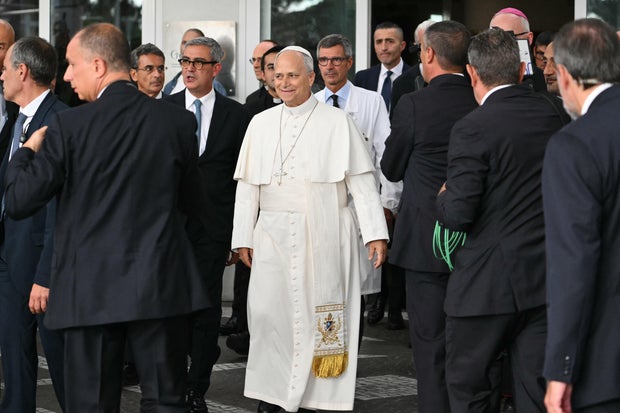
An interview with Vatican News has brought to light the discovery and treatment of Pope Leo XIV’s lung cancer earlier this week. The surgeon responsible for the operation shared key insights into the procedure and the importance of regular medical examinations.
The procedure took place four days prior to the pope’s discharge from the hospital, where he was greeted by a crowd of supporters. Dr. Stefano Margaritora, overseeing the thoracic surgery unit at the Agostino Gemelli University Hospital Foundation, revealed that the cancer was discovered by chance during routine examinations.
“The Holy Father falls into the category of people who discover they have lung cancer entirely by chance — not because they are undergoing preventive screening, but because they undergo examinations for other reasons,” Margaritora stated.
The tumor was located at the base of the right lung. If it had been situated slightly higher, it might not have been detected. Early-stage cancers like the pope’s often present no symptoms, underlining the value of preventive checkups.
Margaritora noted that the pope had no respiratory symptoms at the time. He shared the news of his cancer diagnosis during his Sunday noon blessing in front of thousands in St. Peter’s Square.
The operation, deemed routine, proceeded with no complications. During surgery, Pope Leo XIV was diagnosed with lung adenocarcinoma. The doctor commended the pope’s recovery, describing him as an exemplary patient who did not present any issues for the medical team.
Remarkably, two days after the surgery, the pope was found arranging chairs in the hospital chapel. Despite offers from the staff to assist, he insisted on doing it himself.
Resuming some work activities by Thursday, Pope Leo XIV held conversations with Russian President Vladimir Putin. He also celebrated Mass in the hospital chapel and engaged with high-ranking officials such as Cardinal Luis Antonio Tagle and Cardinal Baldassare Reina.
Looking forward, the pope is set to embark on a trip from November 6 to 17 to Uruguay, Argentina, and Peru.