
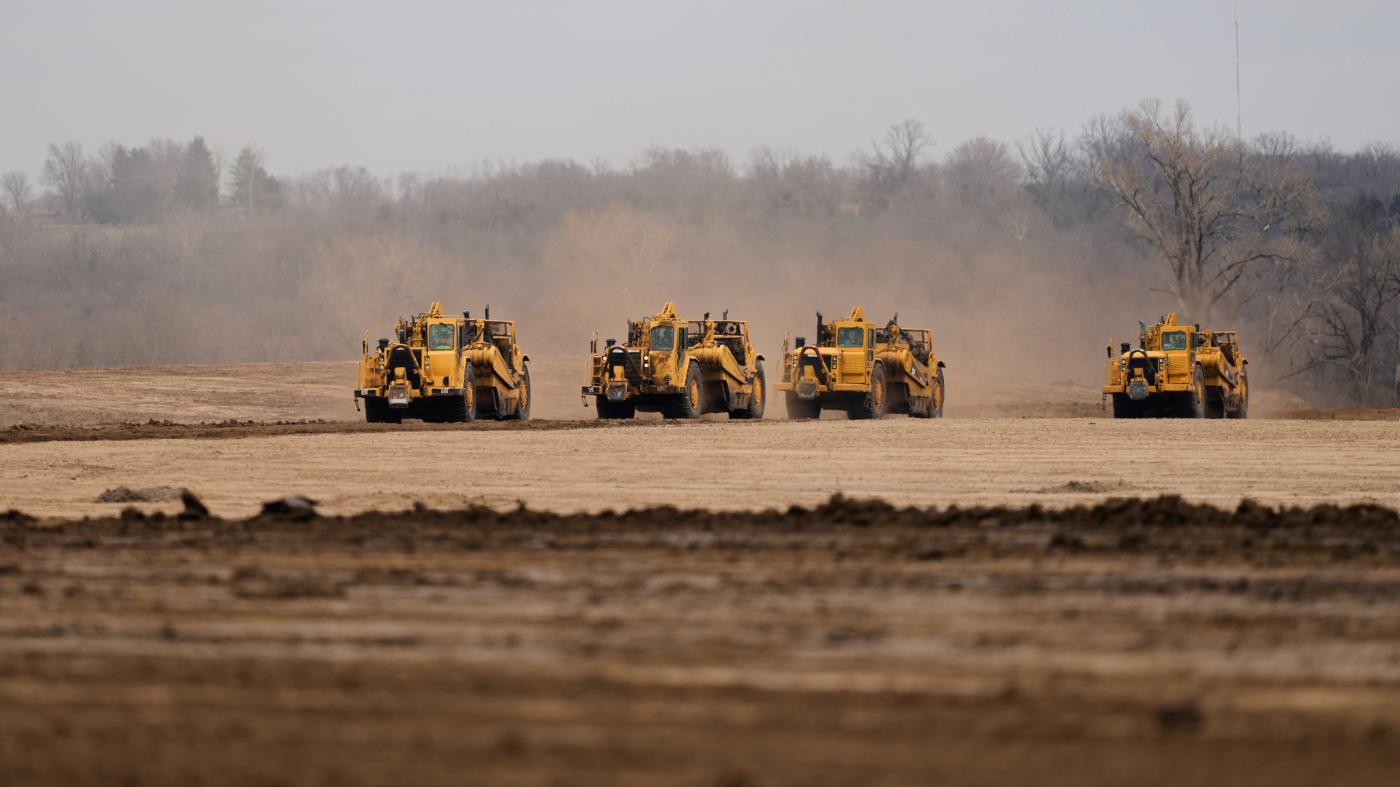
In recent developments, earth movers have begun preparing a site in Independence, Missouri, for a 2.5 million square foot artificial intelligence data center. This reflects ongoing tensions between political parties over the future of AI and energy industries. With Democrats increasingly skeptical of these sectors, Republicans find an opening to enhance American technological leadership, benefiting many of their rural constituents.
The upcoming shift in computing infrastructure hinges on geographic advantages found in rural areas, often Republican strongholds. Affordable land, adequate grid capacity, and efficient heat dissipation create a strategic edge for these regions. Recently, Google secured a $4.3 billion deal to restart a nuclear power plant in Iowa, marking a significant investment in energy infrastructure with electricity delivery expected by 2028. This move underscores a trend of tech companies favoring red states for new data centers.
Data centers planned for construction by 2028 will generally be located farther from major urban areas, bolstering economic prospects in rural regions. Two-thirds of these facilities are slated for rural counties predominantly in the South, prompting a business migration that may stimulate the local economy. An analysis by commercial real estate firm JLL highlights that most new data centers will arise in states that supported President Trump in the 2024 election.
Loudoun County, Virginia, currently home to the world’s largest concentration of data centers, anticipates $1.3 billion in tax revenue from these facilities next year. This contributes approximately 40% of the county’s revenue, aiding public services like schools and infrastructure, and leading to a 30% cut in residential property taxes. Data centers in the area create around 15,000 jobs, benefitting the wider economy significantly.
The regulatory landscape in red states plays a crucial role in this shift. These states expedite permitting processes, contrasting with the regulatory constraints seen in blue states. California’s ambitious goals for 100% green electricity by 2045, alongside closures of nuclear plants like Diablo Canyon, have caused power shortfalls, hindering data center growth. These challenges in energy policy risk ceding economic advantages to nations like China, which face fewer restrictions.
Democratic opposition extends to legislative efforts, such as the AI Data Center Moratorium Act proposed by Rep. Alexandria Ocasio-Cortez and Sen. Bernie Sanders, aiming to halt new AI data center construction federally. This stance could shift future economic dynamics, potentially favoring China’s progress in tech advancements. The Brookings Institution warns that blue state energy policies could undermine America’s AI leadership.
Republicans have a chance to capitalize on these policy missteps by advocating for growth strategies favorable to red state economies. Supporting abundant, reliable energy will be crucial for maintaining the nation’s edge in AI and computational technologies. With Democrats facing criticism for regulatory barriers, Republicans might gain political leverage by promoting economic development through strategic energy initiatives.
Andrew Follett, a research analyst with a nonprofit in Washington, provides insights into these complex intersections of politics and technology.