
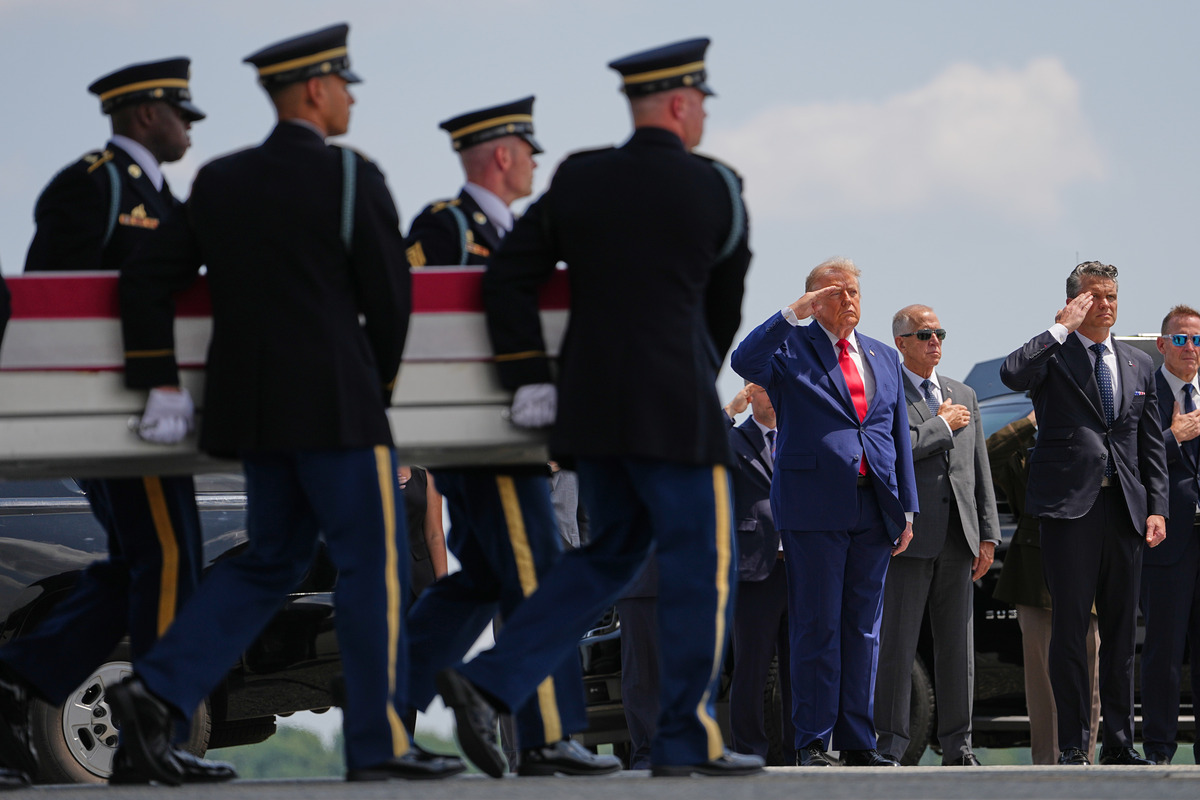
The Pentagon is revising how it reports U.S. service member casualties in the Middle East, drawing increased scrutiny over its communication strategies. The Defense Casualty Analysis System (DCAS) now differentiates between deaths and injuries pre- and post-ceasefire declared in June by President Donald Trump.
According to DCAS, 18 U.S. service members have died, and 624 have been injured since the conflict with Iran began in February. The database separates casualties into two periods: February to June, and after July 7, when a ceasefire broke, and attacks resumed. This change aligns with the resumption of U.S. airstrikes after Iran targeted merchant vessels near Oman, leading to two weeks of nightly attacks.
The Pentagon attributes the changes to “temporary data disruption.” The administration faces criticism due to heightened tensions from Iran’s control of the Strait of Hormuz, impacting fuel prices, and a perceived lack of a clear exit strategy.
Lawmakers and analysts argue that these database changes may be an attempt to sidestep Congressional approval for continued military operations, minimizing the perceived impact on U.S. forces. Last month, Congress moved to limit Trump’s authority regarding the conflict, signaling waning political support.
Jim Townsend, a former Pentagon official, accused the administration of manipulating casualty data by treating post-ceasefire clashes as a separate conflict rather than a continuation of Operation Epic Fury, which was initiated by the U.S. and Israel on February 28.
The Pentagon’s records now classify recent actions under “Overseas Operations,” distinct from earlier engagements. This shift labels the deaths of four service members, who were killed after July 7, separately. These individuals were 1st Lt. Tyler James Feehan, Pvt. Isabella Gonzales, Sgt. Angel Rampersad, and Sgt. Michael Emmanuel Swinton. Additionally, 207 personnel have been wounded since then.
Changing Context
Rep. Thomas Massie criticized the Pentagon’s new category as an “absurd ruse,” suggesting it aims to appear as if there were two separate Iran wars. He accused Defense Secretary Pete Hegseth of not complying with legal requirements to consult Congress.
U.S. law mandates halting military operations after 60 days without Congressional approval. As this limit neared in May, Trump maintained the conflict with Iran had ended. The application of the 1973 War Powers Act remains contentious among legal experts and politicians.
Recently, the New York Times reported changes in casualty numbers, reducing the official count from 18 to 14 to adjust for the deaths that followed the announced ceasefire. Anonymously, military officials indicated this decision reflects internal discussions.
Acting Pentagon press secretary Joel Valdez acknowledged these adjustments, citing ongoing efforts to coordinate with Military Services to resolve “site anomalies,” aiming for accurate casualty reporting despite the complexities involved.