
Oregon has dramatically increased its spending on low-income housing over the last five years, providing developers with a substantial $1.4 billion. The cost of developing each apartment has seen a sharp rise, reaching $540,000. The state has earmarked an additional $850 million for future projects, with federal tax credits likely contributing further funding. Despite the vast expenditure, the specifics of how these funds are used remain hidden from public scrutiny. Unlike most other states, Oregon has a legal carve-out that restricts the disclosure of financial details regarding subsidized housing projects.
Ongoing secrecy hinders the ability of researchers and journalists to evaluate costs associated with these projects. This is vital in the Pacific Northwest, where affordable housing shortages exacerbate homelessness. Transparency in construction costs could allow for either an increased number of rent-restricted apartments or deeper rent discounts with the same financial resources.
Margaret Van Vliet, a former director of Oregon’s state housing agency, suggested that lawmakers need to reassess the exemption. Despite significant investments in housing, Oregon sees growing homelessness. Van Vliet remarked, “For all the public money, we seem to be digging a deeper hole.”
Other states demonstrate the benefits of transparency. The Los Angeles Times reported spiraling costs for low-income housing in California, uncovering that some units cost over $1 million due to governmental regulations. This inflationary trend could have been mitigated, allowing 12,000 additional families access to housing during 2011-2015. UCLA researchers identified $300 million in annual development fees that could finance additional apartments, prompting California’s Governor Gavin Newsom to sign legislation to reduce these fees.
Jason Ward, director of the Rand Corp.’s Housing Center, compared subsidized housing costs in California, Texas, and Colorado. His study found California’s costs are elevated due to requirements for above-market wages and large design fees. Had California adopted Colorado’s cost structure, it could have produced four times more rent-subsidized apartments.
Ward criticized Oregon’s secrecy. He noted that cost data is usually accessible and that such data has been obtained in 17 states, only encountering rejection in New Jersey. Transparency should prioritize public accountability, especially when cost outcomes are unfavorable.
Oregon’s Legislature endorsed these record disclosure exemptions in 1997, when the state’s housing budget and staff were significantly smaller. Lynn Schoessler, then deputy director of Oregon Housing and Community Services, expressed concern over potential corporate risks should financial details be disclosed. Lawmakers overwhelmingly approved the exemption.
While some details about subsidized housing in Oregon remain available, the Portland area’s regional government shares costs for locally-bonded low-income housing projects. These represent just 20% of Oregon’s subsidized housing, with the rest handled by private developers via the state housing finance agency. The state agency discloses general cost estimates but redacts itemized expenses.
The state’s sunshine committee evaluates public records’ exemptions and considers revisions. Co-chair Charlie Fisher emphasized the necessity of transparency for verifying public spending, particularly at this significant scale.
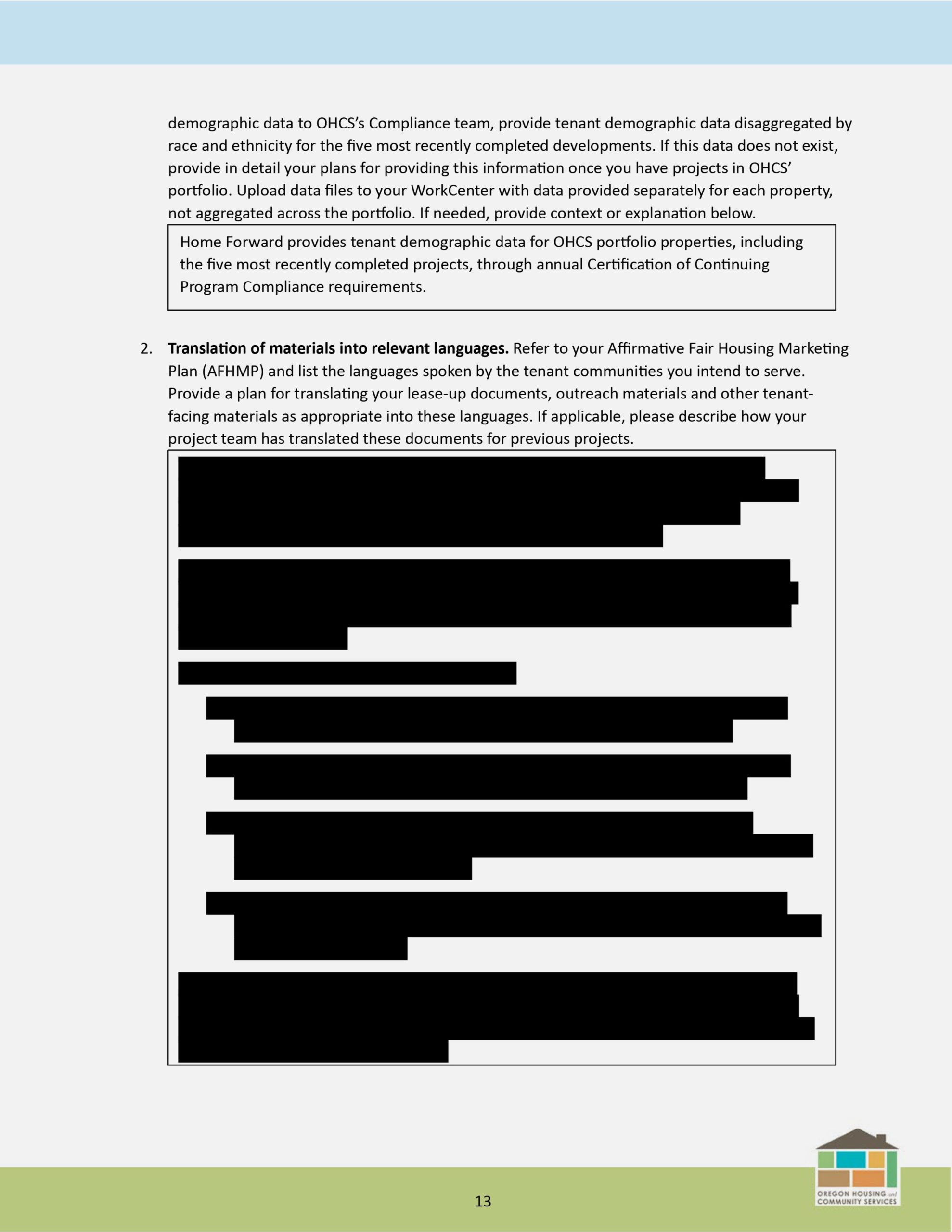
The exemption’s impact extends beyond finances. When queried, the state redacted tenant language lists, outreach translation plans, and explanations of financial risks in some projects. Yet, information released by local housing authorities showed commonplace details initially withheld.
Andrea Bell, director of the state housing agency, professed a commitment to transparency but stressed adherence to the exemption. She acknowledged interest in construction costs and currently assesses ways to enhance public availability of these figures.
Financial secrecy may not impede development elsewhere. California’s competitive funding atmosphere sees many applications turned away, despite public record requirements. Transparency in Washington state allows officials to freely share housing project details with various entities. When ProPublica requested financial documents for projects in Seattle, these were provided without redaction and free of charge.