
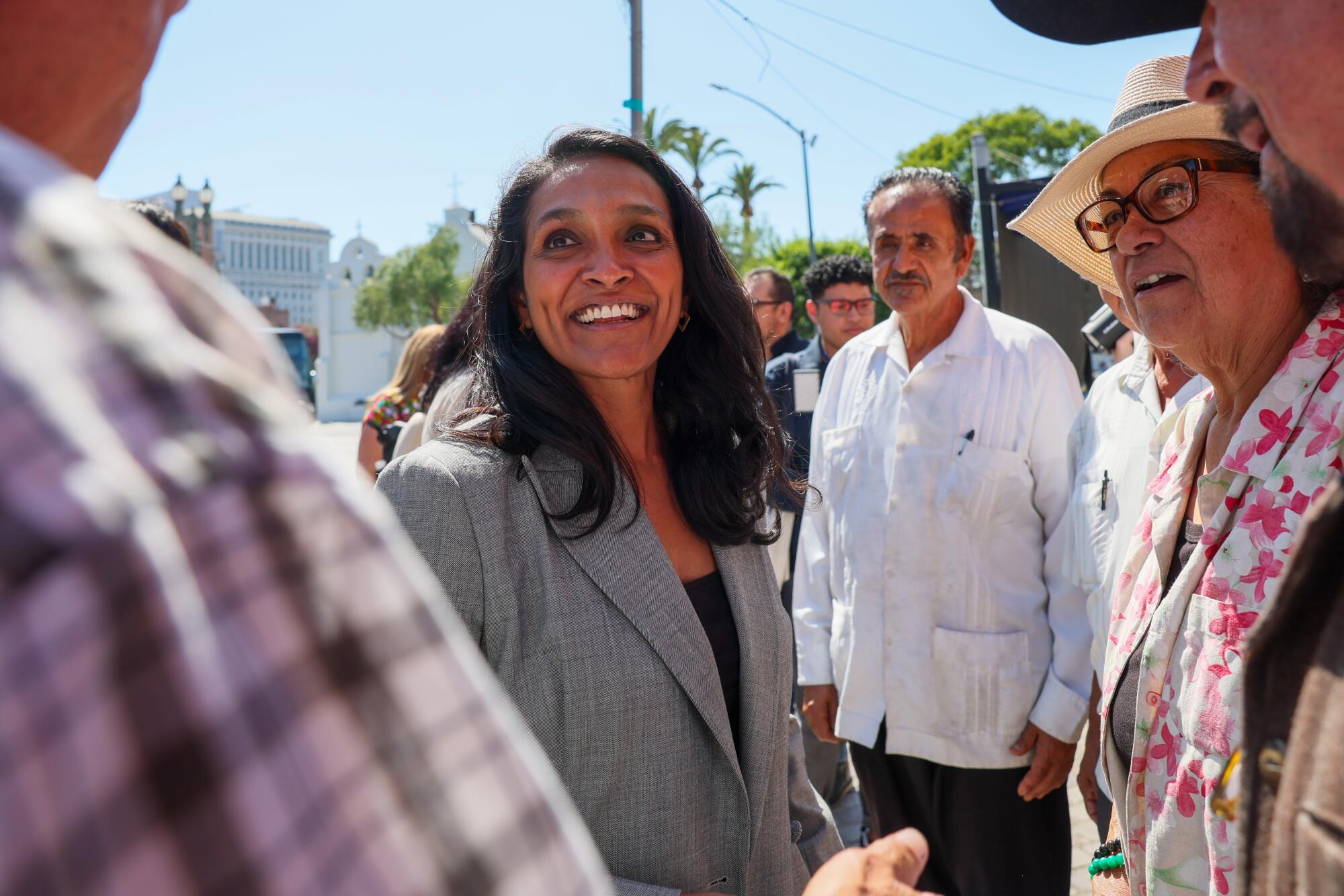
Nithya Raman faced a moment of self-reflection during a debate with Mayor Karen Bass in Sherman Oaks. When asked by the moderator about areas for improvement as a politician, Raman paused and considered carefully. She replied, “What I know I need to keep working on is that in order to make sure that your ideas aren’t stopped, you have to invite people in before you try and put them forward.”
This admission highlighted her understanding of the political landscape as she campaigns to become the next mayor of Los Angeles. Raman, an alumna of both Harvard and MIT, is often praised for her intelligence. During her six-year tenure on the City Council, she has driven crucial legislation such as the Tenant Anti-Harassment Ordinance in 2021 and efforts to revise the city’s Rent Stabilization Ordinance last year, which lowered maximum allowable rent increases.
Challenges in Collaboration
Despite her legislative successes, Raman has received criticism for not working as effectively with council colleagues, allies, and community leaders. “She is not a natural-born politician. She’s much more attuned to governing than politicking,” commented Rick Cole, a former deputy mayor under Eric Garcetti and current Pasadena City Council member. “But she’s a quick learner and she has huge upward potential because of that.”
Raman entered the mayoral primary race unexpectedly, filing shortly before the deadline on June 2. This came just weeks after she endorsed Bass. Although declining an interview, Raman stated her candidacy resulted from her frustration with the city’s current direction, and her belief that change should not wait another four years.
In her statement, Raman highlighted her achievements, such as passing significant renter protections, enacting a Sanctuary City ordinance, and establishing a homelessness oversight bureau. Despite these accomplishments, she lacked endorsements from any council members.
Position and Endorsements
While Raman lost backing from her progressive allies in the council, her entry into the race reflected her outsider status. “I was an outsider when I first ran and I think I’ll be an outsider in this race and I’m OK with that,” Raman stated upon announcing her candidacy.
Her platform emphasizes data-driven strategies to address homelessness and infrastructure issues like non-functional streetlights and pothole-ridden roads. Raman, married to television writer Vali Chandrasekaran, aims to revive Hollywood jobs by reducing fees and easing permit processes.
Raman calls for significant housing expansion, decreased developer red tape, and introducing “gentle density” into single-family zones. She emigrated from India as a child and pursued degrees in urban planning, founding the non-profit SELAH to assist unhoused individuals.
Past Experiences and Political Relationships
Raman’s previous work with SELAH and internships with city initiatives laid the groundwork for her political career. Despite being considered a top contender, her recent difficulties with forming alliances have affected her campaign. Critics like Bass have pointed out her lack of relationship-building skills among council colleagues as a fundamental weakness for a mayoral position.
Raman’s political journey includes controversial decisions, such as evolving views on defunding the police and reconsidering measures like the mansion tax, known as Measure ULA. She initially supported ULA, which taxes property transfers for affordable housing funding, but later called for reforms. Despite some opposition, Raman’s position is appreciated for sparking necessary conversations on city development.
Leadership Style and Future Prospects
Raman’s leadership style stems from her focus on principles over political maneuvering, eliciting mixed reactions among supporters and critics. Progressive former council member Mike Bonin sees her adaptability in changing positions as a strength, defining it as a responsible approach to governance.
Ultimately, while Raman’s stance on issues has sometimes led to perceived inconsistencies, she remains a formidable presence in the race, driven by her commitment to both her ideals and the practical needs of Los Angeles.