
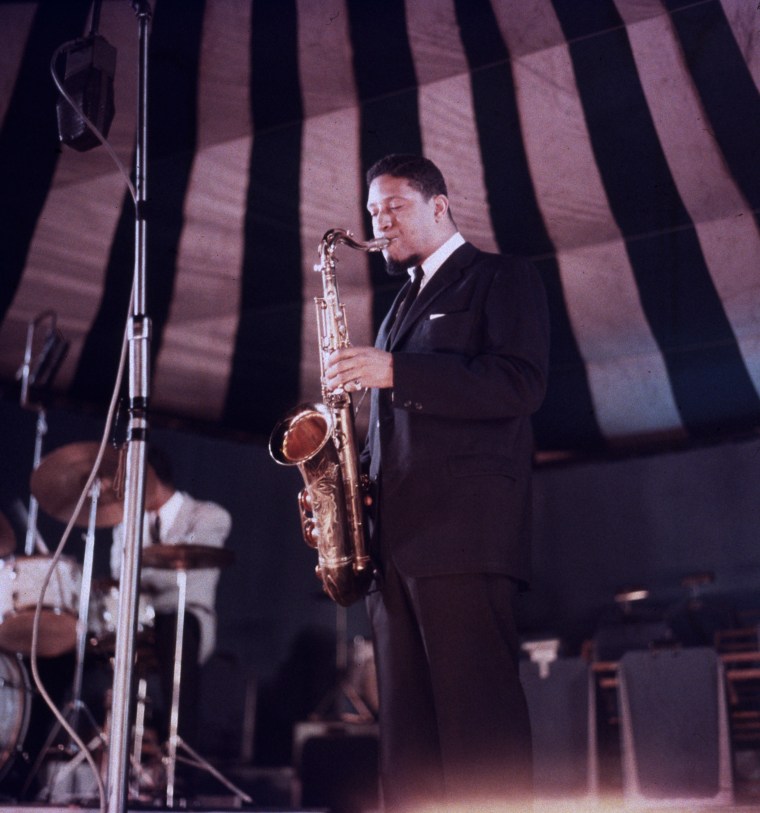
Sonny Rollins, a pioneering tenor saxophonist in the jazz world, passed away at the age of 95. His spokesperson, Terri Hinte, confirmed his death at his home in Woodstock, New York. Although the cause of death was unspecified, Rollins had faced various physical challenges in recent years.
Rollins, known for his unique tone and constant experimentation, was a central figure in jazz for over five decades. From his teenage years as a prodigy to his mature explorations of free jazz, he was a master of improvisation. Rollins stood alongside John Coltrane and Charlie Parker as one of the most influential saxophonists of his era.
The influence of Rollins stretched beyond jazz. Rock enthusiasts might remember his sax solo on the Rolling Stones’ 1981 track “Waiting on a Friend” from the album “Tattoo You.” Despite his success, Rollins never rested on his laurels, often taking breaks from performing and continually adopting new styles. He considered himself “a work in progress,” frequently critical of his past recordings.
Enduring Achievements
During the 1990s and 2000s, Rollins released several acclaimed albums and maintained a rigorous practice regime. He continued touring well into his 80s until pulmonary fibrosis forced him to retire. He performed his last concert in 2012 and ceased playing altogether by 2014. Despite missing the applause of audiences, it was the act of playing that he longed for more.
In 2001, Rollins won a Grammy for his album “This is What I Do,” and in 2006, he earned another for his solo “Why Was I Born?” The latter was part of his album “Without a Song: The 9/11 Concert,” recorded live in Boston shortly after the September 11 attacks.
His family includes a nephew, Clifton Anderson, and nieces Vallyn Anderson and Gabrielle DeGroat.
Meeting the Greats
Rollins’ career took off in his late teens when he joined Thelonious Monk’s band, soon collaborating with icons like Miles Davis and Bud Powell. However, his rising fame almost faltered due to a heroin addiction. He served jail sentences in 1950 and 1953 and later sought treatment at a hospital in Lexington, Kentucky.
Rollins experienced a spiritual awakening during his recovery, which shaped his philosophy on life. Returning to the scene, he joined the Max Roach-Clifford Brown quintet and recorded “Saxophone Colossus,” a landmark album hailed for its hard bop sound.
In a move that would define his career, Rollins isolated himself for two years, practicing alone on the Williamsburg Bridge. This seclusion allowed him to explore his inner self, unaffected by fame. He returned to music in 1961, embracing free jazz, which divided some fans. His style remained fluid, shifting between traditional and avant-garde approaches.
A Living Legend
By recording again in 1972, Rollins was acknowledged as a jazz legend. Awarded a Guggenheim Fellowship and inducted into the Downbeat Hall of Fame, he also transitioned to performing in concert halls.
Born Theodore Walter Rollins on September 7, 1930, in Harlem, he grew up in a musical family. Initially encouraged to play piano, Rollins gravitated to the saxophone and quickly made a name for himself in the jazz circuit. Though largely self-taught, his talent was undeniable.
Rollins leaves behind many unreleased recordings, content to let others decide their fate. In a 2020 interview, he remarked on his relief over not having to worry about his music after his passing: “And, boy, I agonize over my music; I won’t have to agonize about it anymore. Thank God.”