
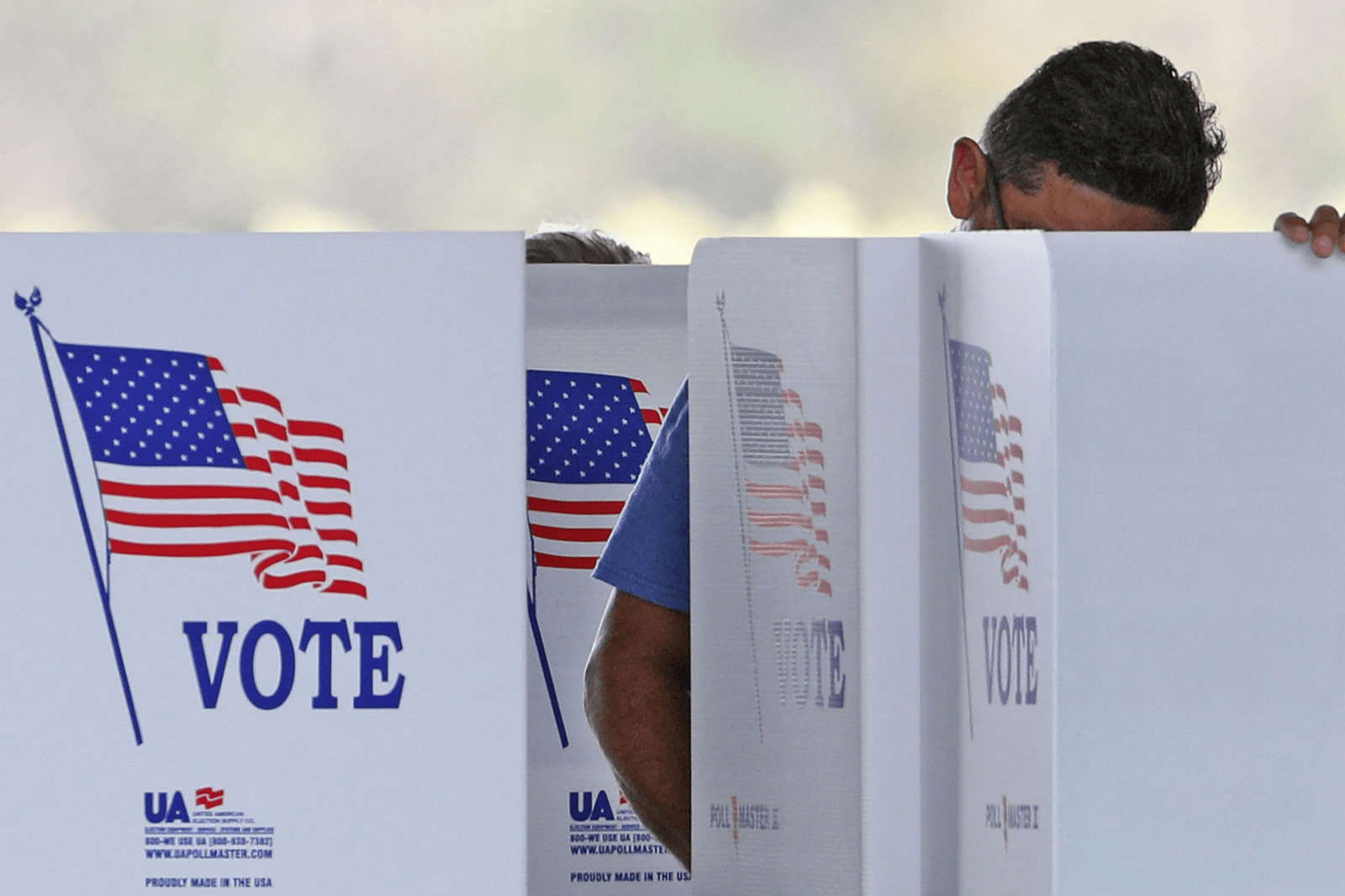
With two months remaining until Election Day, polling for the midterms provides a clearer, yet inconclusive, view of the congressional race. Democrats currently enjoy a stronger national environment and a more apparent path to the House of Representatives. Control of the Senate hinges on six races that analysts label as toss-ups.
Polling and Prediction Markets
An Emerson College national poll released on August 20 showed Democrats leading by eight points on the congressional ballot, with 51% supporting the Democratic candidate and 43% the Republican. Six percent were undecided.
Prediction markets at the time reflected a similar division between the two chambers. Polymarket had Democrats at 89% to win the House and Republicans at 12%. Its Senate market was almost balanced, showing Democrats at 51% and Republicans at 50%. On Kalshi, Republicans had a slight edge for the Senate at 51%, compared to Democrats at 49%.
Prediction markets synthesize polling, campaign events, and other factors, but they reflect traders’ views, not a voter sample.
Enthusiasm and Election Models
A Reuters/Ipsos poll completed on August 31 found President Trump’s approval rating at 33%. Democratic voters expressed more enthusiasm for the November elections than Republicans—46% to 31%. Independents preferred Democrats by 36% to 22% on the congressional ballot.
Election models also favor Democrats. Decision Desk HQ’s forecast on September 1 gave Democrats a 67% chance of winning the House, with a central seat estimate of 229 Democrats to 206 Republicans.
House and Senate Dynamics
Democrats have a national advantage reflected in the most competitive House seats. The Cook Political Report listed 21 districts as toss-ups, with 16 Republican-held and 5 Democratic-held. The imbalance shows a challenge for Republicans, as more of their seats are vulnerably competitive.
Key House districts include those in Michigan, New York, Pennsylvania, and Virginia. For example, a Global Strategy Group survey in Michigan’s 7th district found Democrat William Lawrence at 49% and Republican Tom Barrett at 47%. Such races highlight the significance of competitive districts in national outcomes.
In the Senate, Democrats face a tougher mathematical challenge. They need four seats for control, with critical races in Alaska, Iowa, Maine, Ohio, and Texas labeled as toss-ups. Polls in these states highlight the unresolved nature of the Senate contests.
Impact of Trump’s Ratings
While Trump’s approval ratings provide a backdrop, Senate polls don’t uniformly align with them. For example, in Iowa, Republican Ashley Hinson led in the Senate race, while the Democratic candidate led for governor in the same poll.
Alaska’s Senate race remains competitive despite Trump’s previous success in the state. This suggests voters may consider local issues more than the president’s national standing.
Conclusion: Uncertainty Ahead
Both parties face challenges and opportunities with eight weeks remaining. Democrats seem positioned for a favorable outcome in the House, while the Senate outcomes remain uncertain. Candidate identities and local dynamics will likely influence these crucial races more than broad national trends.