
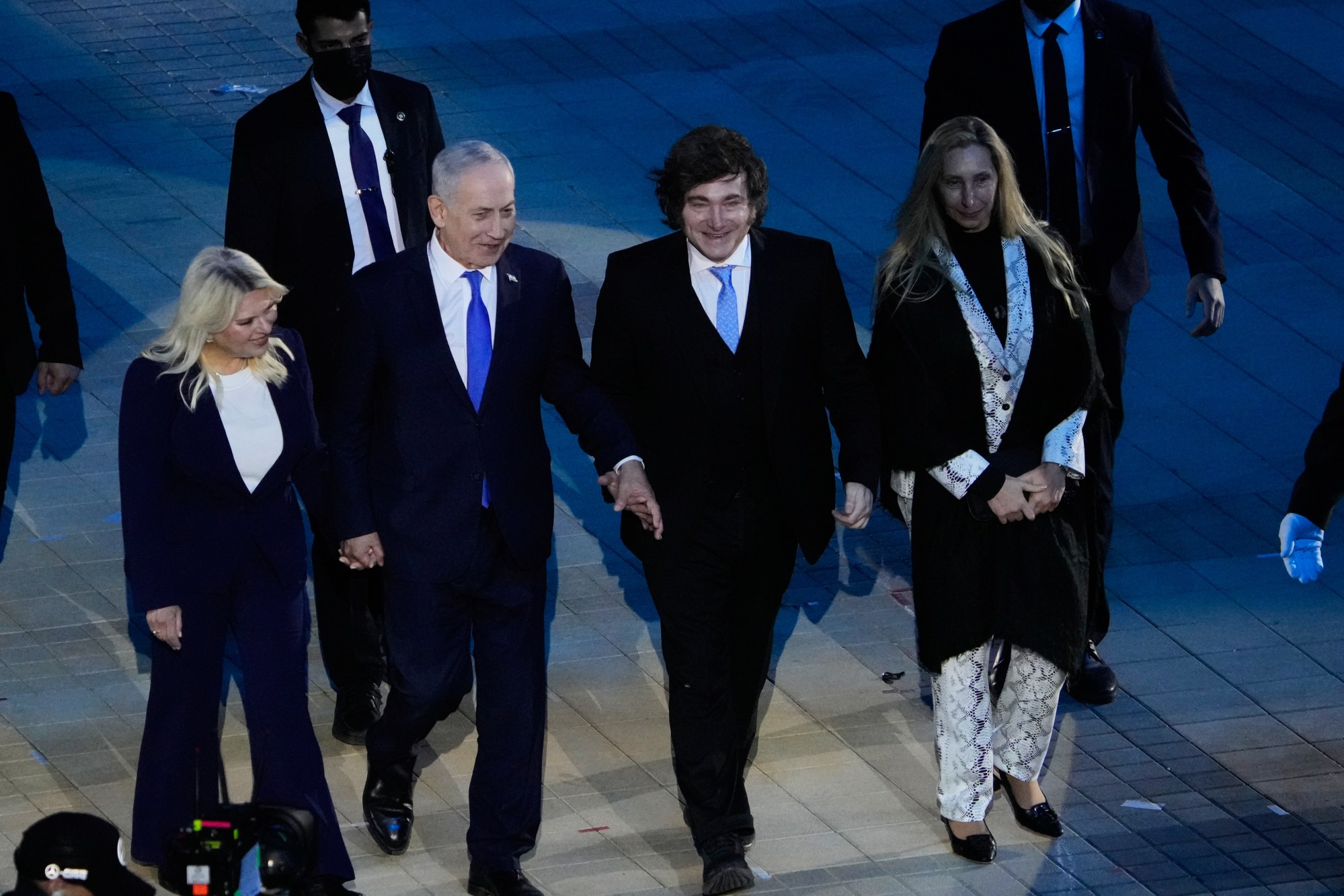
Israeli Prime Minister Benjamin Netanyahu recently met with Argentina’s President Javier Milei in Jerusalem. This meeting symbolizes a significant shift as several Latin American countries express strong support for Israel, signaling a fresh phase of cooperation spanning security and trade sectors.
This development sees countries, from long-time allies like Argentina to former adversaries like Venezuela, seeking to build relations with Israel. Venezuela, for example, has resumed consular ties with Israel after a 17-year gap. Previously leaning towards Iran, Venezuela’s stance is changing following the departure of Nicolas Maduro. The country has taken steps such as removing enriched uranium and apprehending a Hezbollah terrorist. Furthermore, the Israel Defense Forces lent assistance to Venezuela after earthquakes.
Bolivia has reopened diplomatic channels with Israel after terminating a two-decade socialist regime. The new government has voided a military agreement with Iran, stopped security cooperation, and lifted visa requirements for Israelis, while withdrawing from the genocide lawsuit against Israel.
In Colombia, President Abelardo de la Espriella marked a shift from leftist governance by restoring relations with Israel, moving the embassy to Jerusalem, and acknowledging Israel’s control over the Golan Heights.
Honduras, previously supportive of Palestine, has altered its stance by redeploying its ambassador to Israel, pulling out from the lawsuit, and establishing a defense agreement with Israel.
Costa Rica announced a free trade agreement with Israel and committed to relocating its embassy to Jerusalem. The country has also distanced itself from Iran by labeling its proxy groups as terrorist organizations, aligning with similar measures taken by the Dominican Republic.
Peru has intensified its collaboration with Israel, notably in security, acquiring $60 million in Israeli-made rocket launchers. Under President José Antonio Kast, Chile renewed ambassadorial exchanges and is pursuing joint projects in science and technology.
Argentina has expelled Iran’s top diplomat and branded the Islamic Revolutionary Guard Corps as a terrorist group. It also endorsed the Isaac Accords. Similarly, Ecuador designated certain Iranian-linked groups as terrorist organizations, apprehending a suspected Hezbollah affiliate.
The evolving geopolitical landscape, described as a new Monroe Doctrine era, offers a unique chance for Israel to deepen engagement with Latin America. Despite the promising start, Israel must forge enduring, multifaceted alliances to withstand possible future political changes.
Israel brings strong capabilities in areas like science, technology, water management, agriculture, education, and security, aligning perfectly with regional needs. The current momentum presents an opportunity for Israel to solidify its presence and influence in Latin America.
Arturo McFields, the author, is an exiled journalist and former Nicaraguan ambassador. He has notable credentials, including participation at the National Defense University and Harvard Leadership course.