
Supreme Court Validates Late-Arriving Mail-in Ballots
The Supreme Court recently issued several important decisions. One of these rulings supports state laws, including in California, that allow mail-in ballots postmarked by election day to be counted even if they arrive later. The court’s decision surprised many by siding with state laws to ensure these ballots are included. This move impacts the way ballots are processed, especially in states like California where a majority of voters cast mail-in ballots.
This decision came with a 5-4 ruling, where Chief Justice John G. Roberts Jr. and Justice Amy Coney Barrett joined the court’s liberal members. California permits a seven-day grace period for mail ballots to arrive. While some argue this delays results, no significant evidence of fraud has emerged from this practice.
State officials welcomed this decision, praising it for improving voter access. However, the need for faster counting was acknowledged. Governor Gavin Newsom’s budget aims to tackle this by allocating funds for hiring additional staff and upgrading technology.
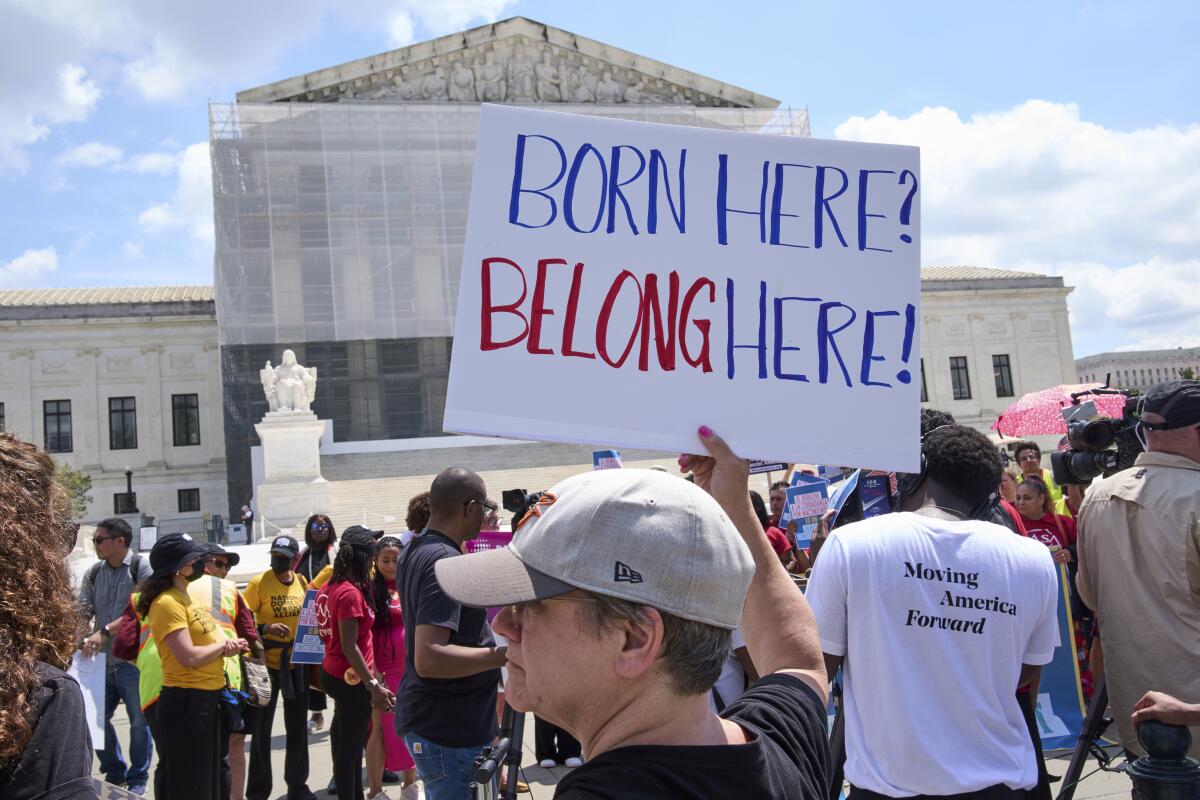
Supreme Court Upholds Birthright Citizenship
In another notable decision, the Supreme Court reaffirmed the U.S. Constitution’s promise of birthright citizenship, which recognizes anyone born in the U.S. as a citizen, regardless of their parents’ immigration status. This 6-3 decision strikes a blow against former President Trump’s efforts to alter this constitutional right via executive order.
U.S. Sen. Alex Padilla, a Californian and son of immigrants, expressed satisfaction with the court’s ruling. He emphasized the importance of continuing to uphold democratic values and citizen rights stipulated in the Constitution.
Laws Restricting Transgender Athletes Upheld
The Supreme Court, in a 6-3 ruling, supported laws in Idaho and West Virginia that restrict transgender athletes from participating on girls’ sports teams. This decision references Title IX of 1972, establishing separate sports teams for boys and girls based on biological sex rather than gender identity.
Justice Brett M. Kavanaugh highlighted physical differences in his opinion, suggesting that maintaining separate teams helps ensure fair competition. Meanwhile, states like California that uphold more inclusive policies remain unaffected for now, though such policies have been challenged in the past.
California Legislative and Policy Updates
- Housing Crisis: Senate Bill 79 tackles California’s housing crisis with the Low-Rise Ordinance which allows for zoning changes in select neighborhoods.
- Solar Battery Installation: Despite the end of federal tax credits, the trend of installing home solar batteries continues, driven by state incentives and high electricity costs.
- School Superintendent Changes: The state’s new budget shifts powers from elected school superintendents to a governor-appointed position. Supporters argue this change is overdue.
In additional California news, a lawsuit has been filed against gas companies for allegedly using AI to increase prices, and a significant development project in downtown Los Angeles has been approved.
Community Insights and Engage
Residents are encouraged to share opinions on town names in California, with examples like ‘Dunmovin’ and ‘Smartsville’ capturing local curiosities.
We welcome feedback on how to enhance our newsletter. Your input could be featured in our next edition.