
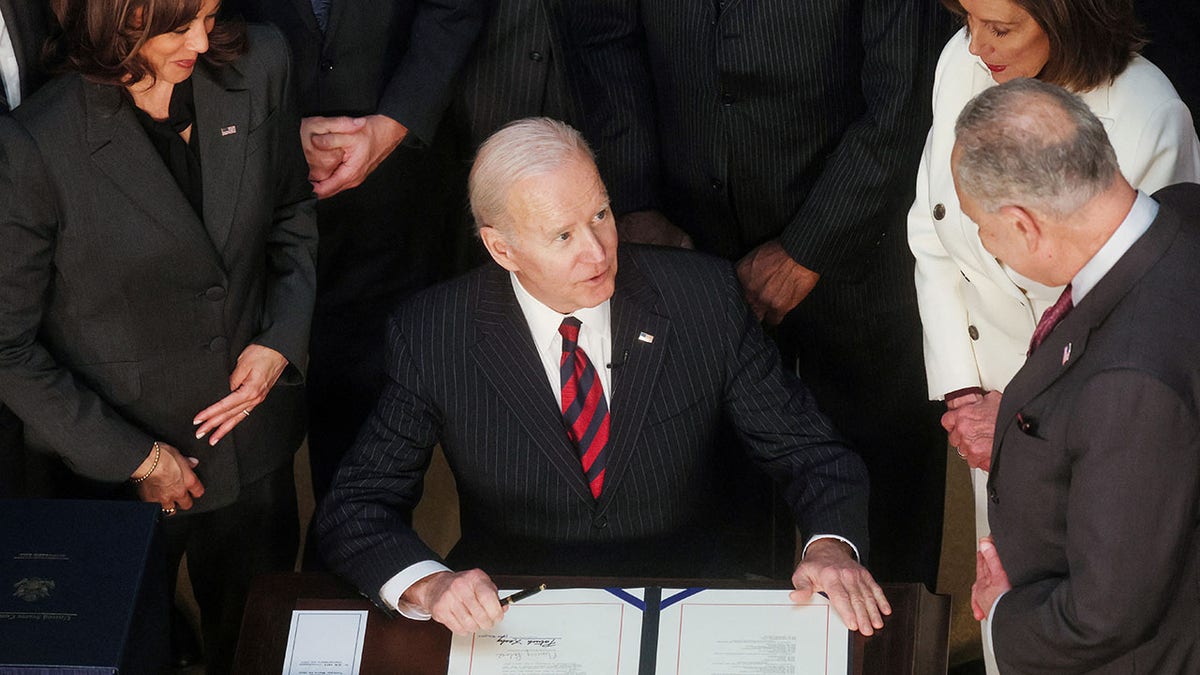
Internal emails reveal that the Justice Department (DOJ) faced confusion and disarray following clemency grants announced by former President Joe Biden. These grants faced scrutiny from former U.S. pardon attorneys, a federal judge, and other officials. The records, obtained by the organization Protect the Public’s Trust (PPT) through the Freedom of Information Act, highlight the challenges encountered by DOJ officials.
Issues with Clemency Grants
In one instance, DOJ prosecutors questioned whether Biden’s commutation applied to an additional sentence for a career offender involved in crack-cocaine trafficking. A deputy pardon attorney suggested that applying it to both sentences was the most sensible interpretation. Many of Biden’s clemency grants on January 17 bypassed the usual pardon office vetting process and lacked thorough review.
The Office of the Pardon Attorney (OPA) was also unprepared for Hunter Biden’s pardon. An incorrect notice described him as receiving pardoning “after completion of sentence,” which was inaccurate since he had not been sentenced. Officials struggled to verify and transmit the pardon to the court properly.
The overall clemency process was criticized for prioritizing politics over careful deliberation, according to PPT’s communications director Alexa Moutevelis.
Judicial Concerns
U.S. District Judge Daniel Hovland expressed his dissatisfaction after examining North Dakota commutations. He noted the absence of consultations with sentencing judges, prosecutors, or victims. Hovland challenged the rationale behind several pardons, suggesting they conflicted with the principles of granting a second chance through clemency.
Jason Miyares, former Virginia Attorney General, remarked on the significant gap between public messaging and internal procedures.
Lack of Individual Review
The Biden administration had stated that the president regarded clemency decisions seriously. However, DOJ revealed that the clemency officials did not conduct individual reviews for over 1,500 clemency recipients whose sentences were commuted. These individuals were identified by the Bureau of Prisons (BOP) as serving sentences on home confinement during COVID-19, under the CARES Act.
In late January, a question arose about Christopher Damon Spencer’s commutation’s scope. Deputy Pardon Attorney Kira Gillespie apologized for the previous confusion and confirmed the commutation should apply to both relevant cases.
DOJ’s Internal Struggles
The handling of Hunter Biden’s pardon sparked another internal episode of confusion. OPA was unaware of the pardon and corrected its notification regarding it. Publicly, Oyer, the former pardon attorney, asserted that the administration’s pardon actions occurred without consulting the OPA, a significant deviation from established practice.
Response and Criticism
Former Pardon Attorney Margaret Love noted that the process appeared secretive, unlike typical procedures whereby names of clemency recipients are vetted by DOJ professionals. DOJ stated that even though some presidents previously exercised clemency without consultating the department, the lack of vetting for many cases was unprecedented.
Judge Hovland’s objections, especially concerning fraud and drug-trafficking cases, were publicized at the time. He critiqued the erosion of trust in the justice system due to the commutations. The DOJ received complaints from affected U.S. attorneys but did not respond to Hovland’s requests for case clarification.
Ahead of Biden’s December death-row commutations, DOJ made efforts to notify affected U.S. attorneys, illustrating discrepancies across different clemency actions.