
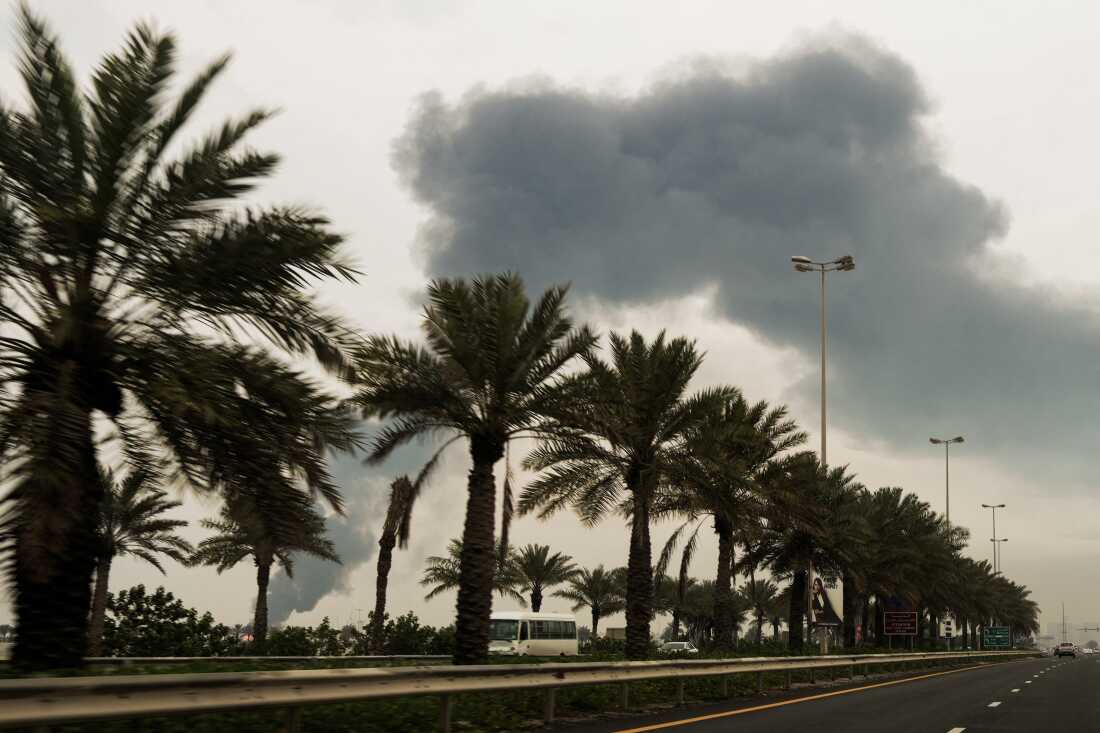
A plume of smoke from Iranian strikes on fuel tanks in Muharraq, Bahrain, appeared on March 12. This development came shortly after hostilities with Iran began in late February. A military spouse was preparing to return to Bahrain with her husband when they received a call from the U.S. Navy. “A day before we were supposed to leave to be stationed at Bahrain together, we were told to go somewhere else temporarily, and here we are five months later,” she shared. NPR has chosen to withhold their names and location for privacy.
The Navy spouse expressed concerns about the impact on her husband’s career. The couple has been living out of three duffel bags, moving between seven hotels. “We stayed in one place for a while, then moved suddenly to another location for ten weeks,” she explained. “There’s constant moving with little notice, making it impossible to unpack or own much because relocation is unpredictable.” They remain on temporary duty status, disqualifying them from base housing or financial support for local housing. U.S. bases in the region continue to face threats, including from Iran. Bahrain, located less than 130 miles from Iran by sea, requires ships to navigate the Strait of Hormuz.
Following an NPR report in April, the Navy confirmed that at least 1,500 troops and their families had evacuated the base in Bahrain, which houses the Navy’s 5th Fleet and serves as the Middle East hub for the Navy and its international partners. Just over a month before the evacuation, a $15.8 million overhaul for junior sailors’ barracks began at the base.
Some evacuees remain in “safe havens”—designated locations for emergency returns. Others continue moving between bases. Adm. Karl Thomas, Fleet Forces commander, explained to NPR that a comprehensive plan has not been released, making family returns to Bahrain improbable in the near future. “We assess each case individually to ensure people receive necessary care and we understand their needs. However, with tensions rising again, returning isn’t an option,” Thomas added.
With many belongings left overseas, families must decide whether to purchase new cars and clothing. Advocates, sailors, and family members highlight monetary challenges for families in unintended locations. Sailors and their families have passed through areas like Norfolk, Virginia, with hundreds arriving in Tampa, Florida, home to U.S. Central Command. Blue Star Families, an advocacy group, aids military families in hotels by providing food. As the school year approaches, families with children are attempting to enroll in local schools. They may lack complete records, noted Suzy Malloy, executive director of Blue Star’s Tampa chapter. “When the kids first arrived, we supplied backpacks and school materials because they departed so quickly, without gathering school necessities,” she explained.
Inge Michiels, who operates Jetpet Global, oversees animal transport in and out of Bahrain, serving military and civilian clients. Still residing in Bahrain, she recalls the shock six months ago when hostilities began. “Initially, it was shocking, especially since Bahrain is perceived as a safe, friendly island. The morning it started, I was suddenly jolted out of bed,” she stated. Clients were often unprepared for the expenses and paperwork needed to move pets from the Middle East.
Costs can reach several thousand dollars and rose sharply during the initial months, with flights from Bahrain canceled. Many left their pets with neighbors or friends, unable to take them. “There’s widespread panic among people and within our team. We face similar stresses, like sleep deprivation and alarm disruptions,” Michiels noted. Bahrain continues experiencing occasional attacks. For most clients, she advises patience is necessary.