
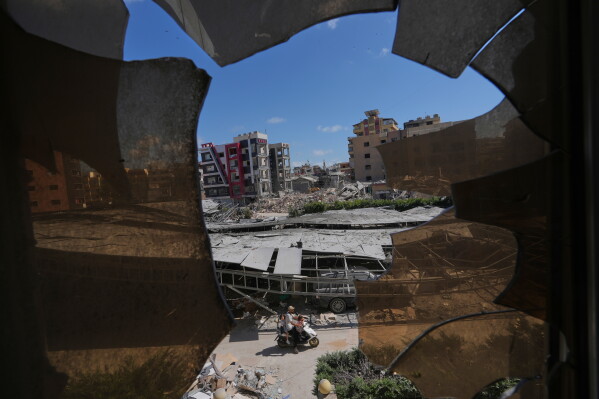
On Saturday, Israeli airstrikes in southern Lebanon resulted in the deaths of at least seven individuals, including two children. This incident occurred shortly after reports of a potential ceasefire agreement surfaced. The ongoing hostilities are jeopardizing an interim agreement between the United States and Iran aimed at ending the Middle Eastern conflict.
According to Lebanon’s National News Agency, the strikes targeted Nabatiyeh and surrounding areas, leaving at least seven people trapped under debris. The international community is now engaged in mediation efforts to stop the violence between Israel and Hezbollah. The conflict has already led to significant casualties, with 47 people killed in Lebanon and the loss of four Israeli soldiers during an exchange on Friday.
An Israeli military source, requesting anonymity, stated that Hezbollah launched over 50 attacks on Israeli positions overnight. This prompted a military response targeting Hezbollah in southern Lebanon. Meanwhile, Israeli ambassador to Washington, Yechiel Leiter, expressed on social media Israel’s commitment to an immediate ceasefire contingent on Hezbollah honoring the agreement.
Efforts for Ceasefire and Diplomatic Challenges
Hezbollah has indicated a willingness to abide by a ceasefire if Israel reciprocates. However, official confirmation of such an agreement remains elusive. A Hezbollah representative, speaking anonymously, noted mediation efforts by Qatar, the U.S., and Iran but did not confirm that a deal had been finalized.
The conflict, which erupted following U.S. and Israeli strikes on Iran, could undermine a U.S.-Iran deal reached earlier this week. This agreement had reopened the Strait of Hormuz, crucial for global oil and gas supply, and aimed to restart discussions on Iran’s nuclear program. Despite not being part of the deal, both Israel and Hezbollah are expected to cease military operations in Lebanon as a condition for its success.
While Israeli Prime Minister Benjamin Netanyahu has pledged to maintain a military presence in southern Lebanon until the threat is neutralized, Hezbollah demands Israeli withdrawal as part of the deal. Consequently, talks between the U.S. and Iran in Switzerland have been delayed, with no new timeline announced.
On-the-Ground Impact and Ceasefire Uncertainties
The situation remains tense on the ground, with smoke plumes reported over southern Lebanon as Israeli jets flew over Tyre. A strike in Barish village claimed the lives of four family members, while other villages witnessed additional casualties due to drone strikes.
In response to these developments, Netanyahu’s office has not provided comments regarding the ceasefire negotiations. Netanyahu previously stated on social media that Israeli forces targeted 150 Hezbollah operations aggressively.
Diplomatic Movements Affected
As tensions continue, planned diplomatic visits have been postponed. Iranian officials, citing the need for peace before discussions, did not proceed to Switzerland. Similarly, U.S. Vice President JD Vance delayed his trip.
Iran’s Foreign Ministry indicated that dialogues involving international mediators are advancing. Although a digital signing marked the initial agreement, in-person negotiations remain on hold, yet plans for meetings continue.
Difficulties Ahead in Nuclear Discussions
Future negotiations between the U.S. and Iran are expected to confront challenges, especially concerning Iran’s nuclear ambitions. While Tehran asserts its program’s peaceful intent, enriched uranium levels suggest other possibilities as per the International Atomic Energy Agency.
The initial 2015 nuclear deal took over 18 months to negotiate, and similar complexity is anticipated this time. The interim agreement provides a 60-day framework for finalizing a nuclear accord, with potential for extension. Incentives for reaching an agreement include lifting sanctions and establishing a $300 billion reconstruction fund.
Some concessions have already occurred. The U.S. has lifted its blockade on Iranian ports and permitted oil sales, alongside plans to unfreeze Iran’s assets. The timeline for these actions remains uncertain, signaling further diplomatic work ahead.
Report by Mroue from Beirut, with contributions from Abby Sewell in Beirut and Samy Magdy in Cairo for the Associated Press.