
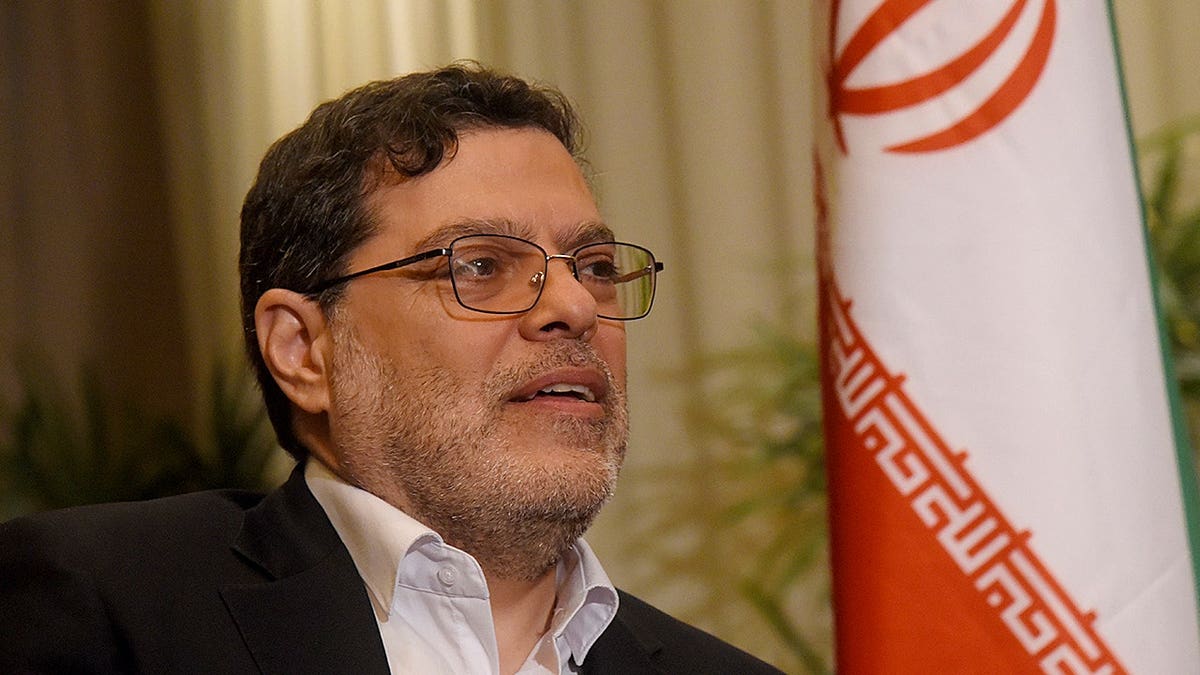
Tehran has been preparing for decades for a possible U.S. ground invasion, according to Seyed Mohammad Marandi, an Iranian American academic known for his pro-regime stance. This comes after fresh explosions shook the region during ongoing U.S.-Iran conflicts.
Marandi, who previously advised Iran’s nuclear negotiation team, claimed that the U.S. plans an invasion, although he did not specify a timeline. His comments were made during a discussion with political analyst Glenn Diesen, highlighting the recent developments and Tehran’s strategies.
“The Americans are planning an invasion. I’m not saying it will necessarily happen in the next few days. But they have plans for an invasion,” Marandi stated.
Tehran has been decentralizing and storing its missile arsenal underground to protect against American airstrikes. Marandi emphasized that Iran is focusing strikes on Bahrain and Kuwait, where most U.S. assets are based for a potential ground attack.
The conflict has escalated with missile and drone attacks on U.S.-affiliated locations in Jordan, Kuwait, and Bahrain. Jordan reported intercepting 10 missiles, whereas Kuwait suffered casualties and infrastructure damage.
In response, U.S. forces targeted strategic points in Iran, including bridges, tunnels, and weapon storage facilities. This led to multiple explosions in Khorramabad, a city in Iran’s Lorestan province, and home to the Imam Ali Missile Base.
According to Iranian state media, these explosions resulted from U.S. missiles launched from bases in Kuwait. Reports also highlight prior damage by Israeli strikes on this key military base.
Marandi elaborated on Iran’s strategic use of a subterranean network to store and distribute missiles, making it challenging for U.S. forces to target them effectively. He explained that the missiles and drones are dispersed across various locations to minimize damage from potential airstrikes.
“They fire them, and then they go back to their bases, or they take out different missiles and drones, spread them out so that the Americans cannot bomb them in large numbers,” Marandi noted.
The escalation has disrupted a 60-day ceasefire agreement intended to support nuclear negotiations. Control over the Strait of Hormuz remains a central issue in the conflict.
President Donald Trump initiated renewed airstrikes soon after the ceasefire took effect, considering a ground war by mid-July. Marandi indicated that Iran’s military is ready for such a scenario and introduced a new weapon to the conflict.
“Iran has been accumulating missiles and drones for decades and introduced a new missile recently,” Marandi claimed, referring to the Islamic Revolutionary Guard Corps (IRGC).
He concluded by suggesting that Iran sees a U.S. ground invasion as a potential way to resolve the conflict. Marandi asserted that Iran is prepared and confident in its ability to prevail in such a confrontation.