
Emergence of Houthi Rebels as a Strong Ally of Iran
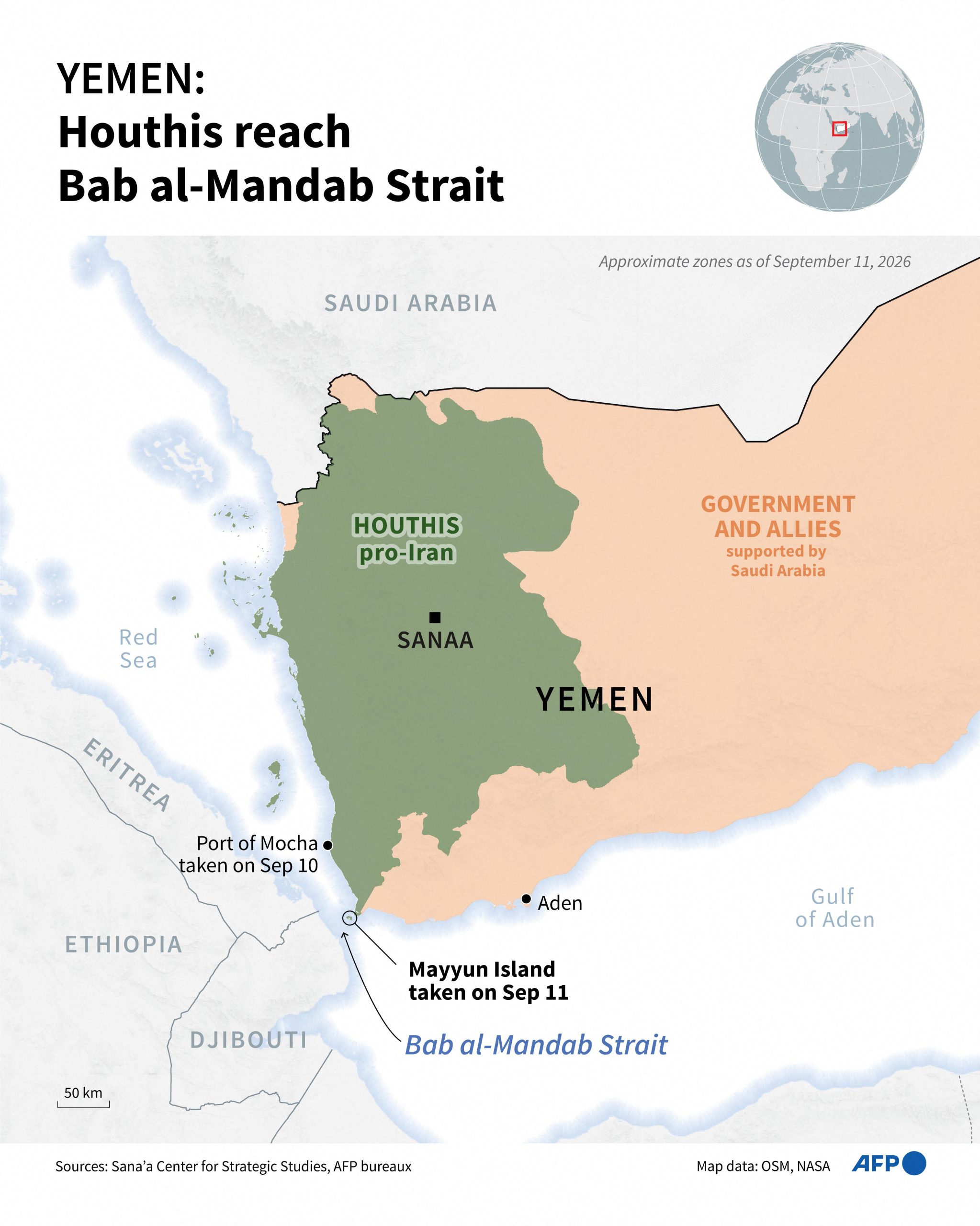
Over the past decade, the Houthi rebels in Yemen have transformed from a little-known group into a significant force in the Middle East. They have become Iran’s most effective ally, creating challenges for the United States and its regional allies. Despite the weakening of other Iranian proxy forces, the Houthis have gained prominence in the region by conducting aerial attacks that are difficult to counter.
Impact of Conflicts on Saudi Arabia and Global Energy
The Houthis, supporting Iranian interests, launched attacks on Israel following U.S. strikes in Iran earlier this year. Saudi Arabia, a wealthy nation and a key ally of the United States, has been notably affected by these militant activities. Recent reports indicate that at least 20 fatalities occurred at Saudi airports due to Houthi attacks. Additionally, Saudi oil infrastructure has been targeted, causing disruptions that have raised global energy prices.
The strategic importance of the Bab el-Mandeb Strait for oil and gas shipments cannot be overstated, akin to the Strait of Hormuz. The ongoing aggression by the Houthis has led Saudi Arabia to request U.S. military assistance, a decision that President Trump is currently reconsidering.
Evolution and Strengthening of Houthi Forces
The Houthis are financially and militarily backed by Iran. They were previously a small element within Iran’s Axis of Resistance, a coalition of anti-U.S. and anti-Israel militants that includes Hamas and Hezbollah. Recent conflicts have weakened Hamas and Hezbollah, but the Houthis have emerged stronger, better equipped, and confident. Mohammed Al-Basha of the Basha Report emphasizes that U.S. military strategies involving Iran must consider Houthi actions as a significant factor.
After October 7, new tactics were employed, involving complex, layered attacks using drones and missiles. These methods have been extended to target Saudi Arabia, complicating defense strategies. Yemen’s impoverished status has been somewhat advantageous for the Houthis, as they leverage a strong ideological support base willing to endure economic hardships to inflict damage on opponents.
Houthi Objectives and Aspirations
Brig. Gen. Yahya Saree, a spokesperson for Houthi forces, characterizes uprisings against Saudi Arabia as retaliation for Saudi aggression. However, strategic analysts like Al-Basha suggest deeper motives. The Houthis aim for power and recognition, seeking to control all of Yemen and gain regional legitimacy and support for their expansion.
Historical Context and Military Capacity
The Houthi movement, grounded in the Zaydi Shiite Muslim sect, has considerable roots in northern Yemen.
Representing a significant portion of the population despite Yemen being predominantly Sunni, the Houthis evolved from a group focused on preserving cultural identity to a force with militant ideologies. The early 2010s marked the start of their rise to power, coinciding with regional unrest that allowed for increased influence.
By 2014, they seized Sanaa, leading to a civil war that forced the government to relocate to Aden. They managed to capture key state powers and levy taxes while building military capabilities. Military assistance from Iran and Hezbollah helped hone their skills and capacity for manufacturing advanced weaponry, including drones and missiles, despite new technologies requiring external support.
A noteworthy aspect involves AI software potentially aiding Houthi weapon development, as discovered by Anthropic, a tech firm. While localized manufacturing has developed, ties to Iran remain crucial.
Strategic Importance to Iran
With the waning influence of groups like Hamas and Hezbollah, the Houthis have become vital to Iran. They offer a resilient and economical means for Iran to project power, threaten regional stability, and influence international shipping. Despite enjoying autonomy, the Houthis play a critical role in Iran’s strategy.
Humanitarian Implications of Yemen’s Civil War
Yemen’s conflict has created devastating humanitarian issues. The United Nations estimates that 377,000 lives have been lost, many due to indirect outcomes like starvation and disease. Additionally, displacement figures reveal over 201,210 people have fled, with a significant number seeking refuge in Djibouti.
The World Health Organization recently published local data showing deaths and injuries connected to recent violence, underscoring the tragic impacts of ongoing conflict.
As the situation in Yemen remains complex and precarious, strategic responses and humanitarian aid are crucial to addressing the multifaceted challenges in the region.