
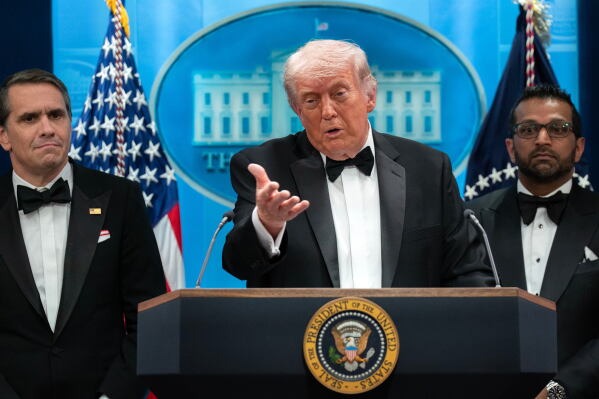
U.S. President Donald Trump has announced a new set of tariff hikes, provoking objections from various international trading partners. Countries like China, Japan, and Australia have expressed their discontent, labeling the tariffs as unfair. The U.S. administration implemented additional tariffs of 10% to 12.5% on 60 economies, asserting these nations failed in enforcing bans on goods made with forced labor. This follows the expiration of stopgap levies Trump’s administration imposed after their recent Supreme Court loss.
Australia and New Zealand Reaction
Australia’s Trade Minister, Don Farrell, rebuffed claims linking Australia, known for exporting beef, gold, and copper, to modern slavery. He criticized the increased tariff on Australia’s exports to the U.S., stating existing measures were sufficient. He pledged to continue lobbying for the removal of all tariffs on Australian goods. In New Zealand, Prime Minister Christopher Luxon described the tariffs, which also include a 12.5% import duty, as harmful to trade and expressed disappointment over what he considers unjustified measures.
Evidence and European Union’s Criticism
The U.S. investigation backing these tariffs lacked substantial evidence to support forced labor allegations. Tariffs are deemed to increase costs and uncertainty for businesses, as stated by a New Zealand leader on social media. European Union foreign policy chief Kaja Kallas stressed the point that European labor laws offer better conditions than those in the U.S., questioning the tariff decision’s grounding.
Japan, Singapore, and South Korea’s Position
Japan protested the 12.5% tariff imposed on its exports, following assurances from the Trump administration that no further tariffs would be applied. Singapore’s Ministry of Trade and Industry emphasized its stance against forced labor, highlighting engagement with the U.S. Trade Representative for potential discussions. South Korea expressed a commitment to communicating closely with the U.S. to maintain mutual trade benefits, noting the tariff announcement alleviates some trade policy uncertainties.
Thailand and China’s Responses
Thailand acknowledged its inclusion in the new tariff measure but pointed out exemptions for over half of its exported goods’ value to the U.S. China iterated its opposition to unilateral tariffs, calling trade wars unhelpful. The newly imposed tariffs remind Beijing of previous tensions due to Trump’s past tariff initiatives.
U.S. Trade Official’s Comments
Former U.S. trade official Wendy Cutler remarked that the newest tariffs offer few surprises, ranging from 10% to 12.5%. The U.S. Trade Representative pursued an inquiry supporting these measures under legal frameworks. The possibility of additional tariffs based on structural trading partner excess capacity in the fall remains. Experts expect these duties to be less disruptive owing to numerous product exclusions, although some price increases are inevitable.