
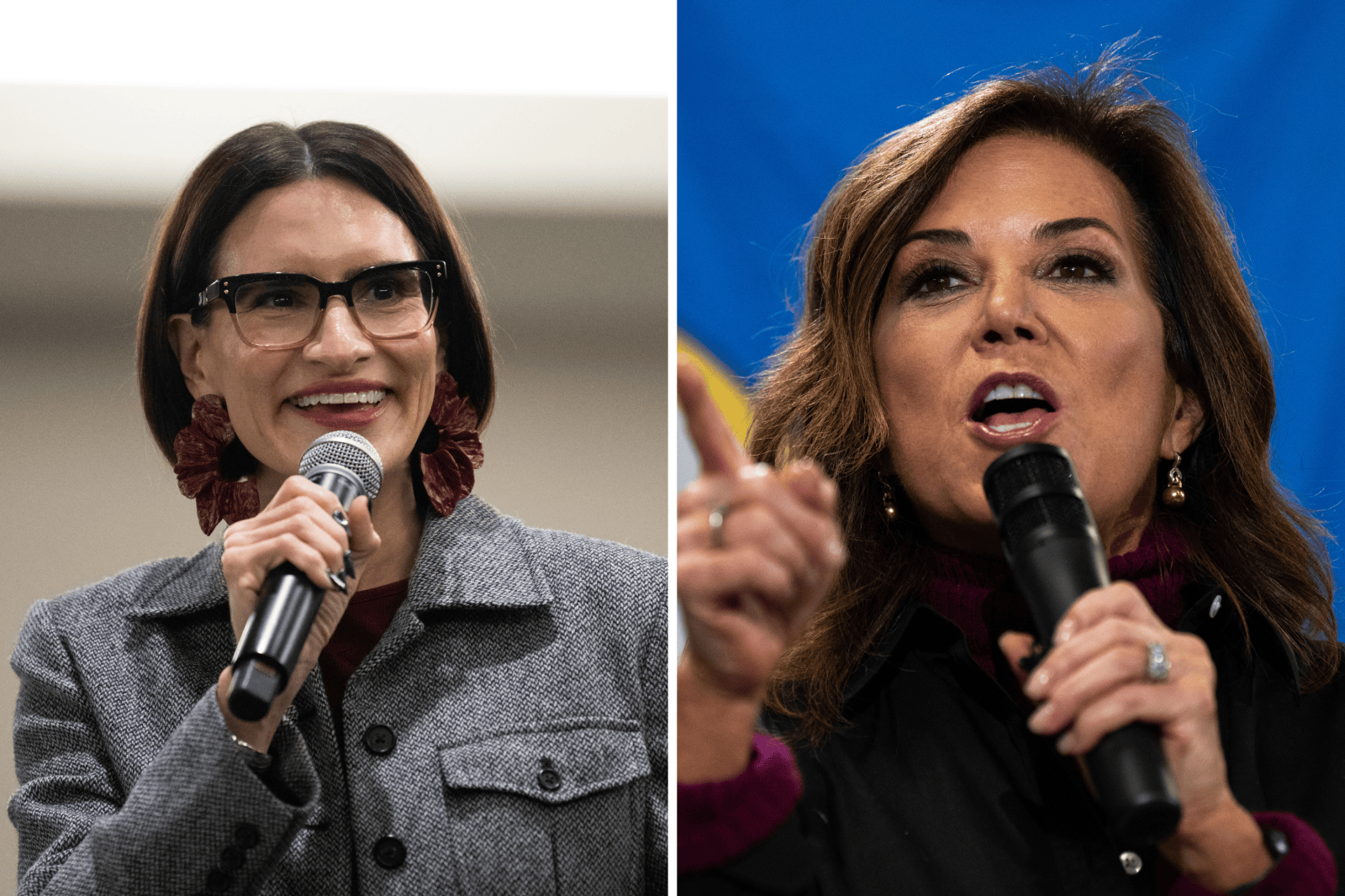
President Donald Trump’s endorsement of Republican Michele Tafoya, alongside a federal raid on Democratic Representative Ilhan Omar’s home, influenced Tafoya’s defeat to Democrat Peggy Flanagan for a Minnesota U.S. Senate seat, according to David Schultz, a political science professor. Flanagan, Minnesota’s lieutenant governor under Governor Tim Walz, secured victory in Tuesday’s midterm elections, receiving 53.7% of the vote to Tafoya’s 43.6%. This win occurred as Democrats flipped several U.S. Senate, House, and gubernatorial seats, including in traditionally Republican states like Texas and Ohio. Flanagan is now the first Native American woman elected to the U.S. Senate.
Despite Minnesota’s reputation as a Democratic stronghold, having last elected a Republican to the Senate in 2002, the GOP saw an opportunity to flip the seat. Schultz, a professor at Hamline University, suggested that concerns over corruption were one reason for the GOP’s perceived chance at winning.
Schultz identified two main reasons for Tafoya’s loss: Trump’s late endorsement and the Homeland Security Investigations raid on Omar’s Washington, D.C., home on October 12. Both incidents happened just weeks before Election Day. “Tafoya was getting close to Flanagan until about two-and-a-half weeks ago when the Justice Department conducted the search of Ilhan Omar’s property,” Schultz explained, noting that the raid probably further motivated Democrats.
Schultz further elaborated that Trump’s endorsement in mid-October had negative impacts on Tafoya’s campaign. Before the endorsement, she had managed to maintain some distance from Trump. University of Minnesota political science professor Larry Jacobs also noted that the Democrats’ victory in the Minnesota Senate race was largely due to backlash against Trump and the economic costs attributed to him. No other major issues seemed to have a significant impact on the race.
In early October, before Trump’s endorsement and the raid on Omar’s home, Tafoya was polling closely with Flanagan. While victory was unlikely for the GOP, Schultz noted a possibility for success, which narrowed as events unfolded. Schultz suggested that undecided voters tended to shift against Tafoya, reflecting a national trend of opposition to Republicans. The raid on Omar’s home “rekindled” negative sentiments about the Trump administration among Minnesota voters.
Reactions from Flanagan and Tafoya
Following the election, Flanagan expressed her gratitude to Minnesota voters, saying “Chi miigwech,” which means thank you very much in the indigenous Ojibwe language. Meanwhile, Tafoya referenced a quote from Wall Street Journal columnist James Freeman on her social media. The quote emphasized the resilience of democratic institutions and the importance of politicians listening to voters.
Looking Ahead
Before the new Congress is sworn in on January 3, lawmakers will reconvene for the 2026 lame-duck session. During this period, Republicans will retain control of any committees they hold, allowing them to advance legislation, negotiate government funding, and confirm nominations, despite impending Democratic control in the new Congress. In Minnesota, Schultz mentioned that Republicans must strategize on reaching urban and suburban voters in areas like Minneapolis and St. Paul to improve their chances in federal elections.