
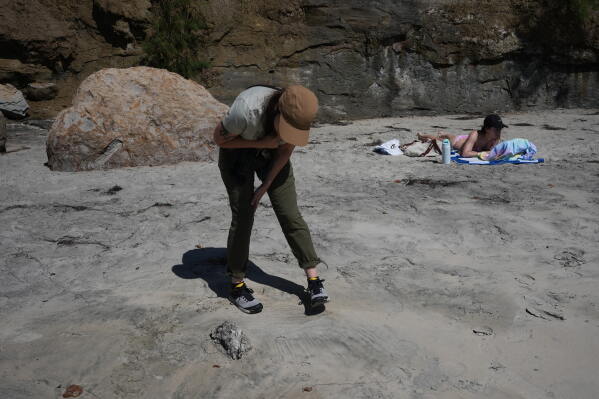
Marine ornithologist Tammy Russell recently found numerous seabird carcasses scattered on a San Diego beach. Using surveys carried out by scientists and volunteers, they aim to assess the effects of a prolonged marine heat wave on seabird populations. These surveys have been invaluable in monitoring sea life health along the California coast over the decades.
Seabirds like California brown pelicans, loons, and grebes have starved due to decreased cold, nutrient-rich water nearshore. This reduction in the water has severely affected krill, anchovies, and sardines, which are essential food sources. Russell, a postdoctoral scholar at UC San Diego’s Scripps Institution of Oceanography, noted the rapidity of seabird deaths, often within hours of reaching the shore.
“We’ve seen cormorants come ashore and die in a short time,” Russell expressed. “This is heartbreaking and seen across the coast.”
The formation of a new El Nino further complicates the scenario. This natural occurrence warms specific Pacific regions, impacting global weather systems and raising temperatures. Although seabird die-offs happen occasionally, increased frequency with warming oceans is a significant concern for scientists and wildlife officials.
A persistent marine heat wave, recorded by NOAA, is warming vast West Coast sections for an extended period, the third of its kind recorded. The Scripps Institution measures ocean temperatures at numerous stations, noting significant increases this year. Robotic gliders used in these measurements confirm warm temperatures at various ocean depths, reminiscent of the 2023 El Nino.
The ongoing heat wave, coupled with this year’s El Nino, disrupts food webs for marine life, from whales to seabirds. Cold-water species are migrating deeper and northward, mirroring patterns seen a decade ago, intensifying concerns about future impacts.
“We don’t know the extent of this impact,” noted Russell while discussing the prevalence of Booby species near California due to ocean warming.
Wildlife organizations treated many undernourished birds as the heat wave intensified. According to International Bird Rescue, headed by CEO J.D. Bergeron, the number of dead birds on beaches is unusual. He reported pelicans seeking food in unexpected locations, which can lead to injuries like catching on fish hooks.
While avian flu tested negative in these birds, factors beyond warm waters could influence increased seabird mortality. Krysta Rogers from the California Department of Fish and Wildlife highlighted high death rates following a strong breeding season, linking this to chicks’ survival rates post-winter alongside the marine heat wave. Other species reported increased deaths as well.
Seabird carcasses washing ashore only represent a small fraction of overall deaths. Lessons from past events, like the 2013 “blob” off Alaska, illustrate the massive impact warm water masses can have on marine life. For example, during prior events, millions of common murres perished, showing the vulnerability of seabird species dependent on specific prey for survival.
The U.S. Fish and Wildlife Service, using data from these surveys, is yet to release a comprehensive report, underscoring the ongoing scrutiny necessary for understanding and mitigating such environmental challenges.
The Associated Press collaborates with private foundations for its climate coverage, maintaining full editorial responsibility to ensure thorough and unbiased reporting.