
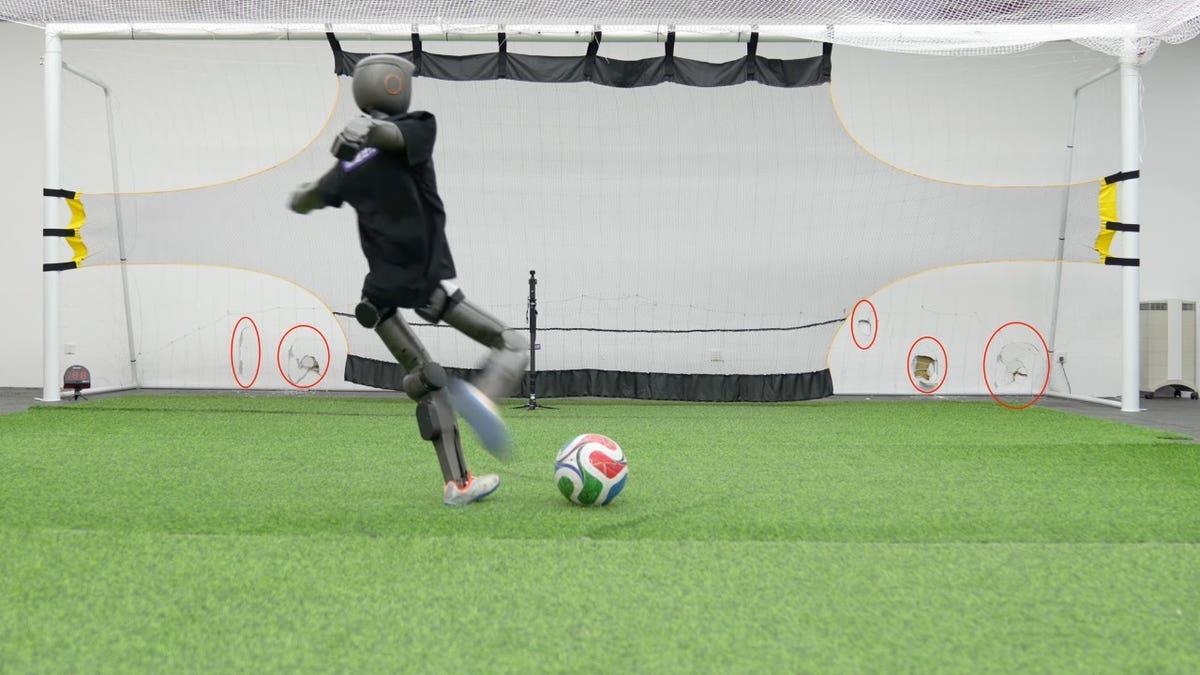
A robot soccer player has emerged, causing goalkeepers to feel anxious. Booster Robotics recently showcased its T1 humanoid in a video titled “Try Stopping This Robot,” demonstrating the robot’s powerful soccer kicks. Many shots hit the curtain behind the goal, but a few left visible dents and impact marks on the wall, sparking widespread discussion.
Understanding the Booster T1 Humanoid Robot
The Booster T1, developed by Beijing-based Booster Robotics, stands approximately 3 feet, 10 inches tall and weighs around 66 pounds. Depending on its configuration, the T1 offers 23 to 41 degrees of freedom, allowing for walking, turning, balancing, and other athletic movements. It can walk for about two hours and stand for around four hours on a single charge, making it versatile for various tasks. The robot supports numerous open-source tools, software frameworks, and API interfaces to facilitate training for new roles.
More than 50 robotics teams and research institutes use the T1, highlighting its significance in the field.
The Importance of Robot Soccer in Training
Testing robots through soccer serves a valuable purpose. The game challenges humanoid robots to handle movement, balance, and quick responses to changing situations. Soccer requires a robot to adjust its posture, shift weight, and make decisions, providing insights into machine capabilities that could be applied in different settings like warehouses or disaster zones.
Potential Safety Issues of Powerful Robotics
The strength of the T1 raises safety questions. While a robot capable of denting a wall is impressive, it also presents potential risks. Inaccurate movements or system failures could pose a threat to nearby individuals. Thus, implementing robust regulations and safety standards becomes crucial as robots transition into public spaces.
Ensuring safety involves setting force limits, establishing emergency stop procedures, and creating appropriate testing environments. These measures are vital for integrating robots into daily life safely.
RoboCup and the Future of Robotics
The T1 is part of RoboCup, an international robot soccer competition. The ultimate goal is for humanoid robots to eventually compete with and defeat human World Cup champions under official soccer rules. Even though this ambition may seem far-fetched, it drives significant research. The use of robot soccer to enhance robots’ ability to balance, perceive, and make decisions advances their development beyond sports applications.
Implications for Everyday Robotics
Robot soccer demonstrations, like those of the T1, indicate the future path of robotics. Humanoid robots are evolving to move more confidently, balance more effectively, and exert greater force. These advancements could lead to applications in warehouse operations, elder care, and emergency response. Simultaneously, they pose new regulatory and safety challenges as stronger robots are introduced in human environments.
Addressing these issues requires transparency and accountability to ensure safe and responsible robot usage.
For more insights and updates, visit CyberGuy.com where you can access tools and information on maintaining online security.