
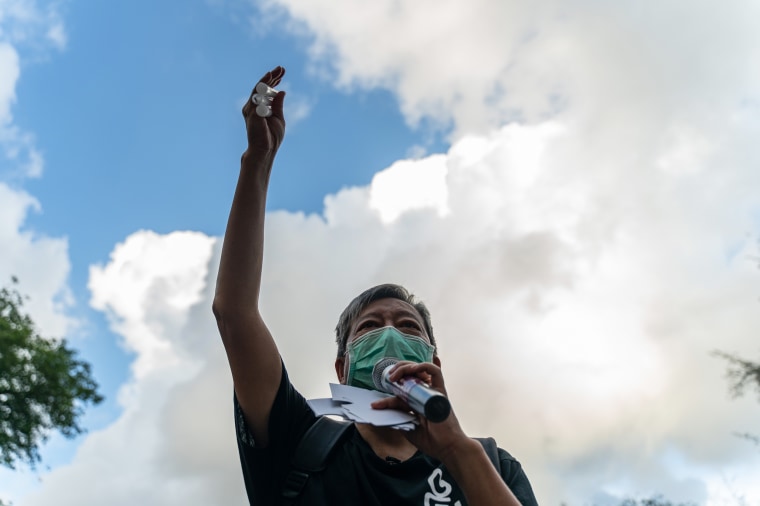
In Hong Kong, two former organizers of a vigil commemorating the 1989 Tiananmen Square crackdown have been convicted in a national security case. Lee Cheuk-yan and Chow Hang-tung were the previous leaders of the Hong Kong Alliance in Support of Patriotic Democratic Movements of China. They faced charges of inciting subversion under a China-imposed security law and, along with the alliance, were found guilty. This could result in a maximum prison sentence of 10 years for them.
The yearly candlelight vigil was the sole large-scale public remembrance of the Tiananmen Square incident on Chinese soil, attracting tens of thousands yearly. The gathering was banned in 2020 during the COVID-19 pandemic, shortly before Beijing introduced the national security law to stifle pro-democracy protests in Hong Kong.
Eric Lai, a senior fellow with the Georgetown Center for Asian Law, noted that the charge of inciting subversion is often used in mainland China to criminalize human rights advocates and intellectuals. He implied that the decision in Hong Kong mirrors practices seen in the mainland’s party-controlled judiciary.
During the trial, prosecutors insisted the case was apolitical, alleging that the alliance aimed to incite the overthrow of China’s Communist Party through illegal methods. Lee countered that their goal was democratic progress, allowing the people to choose their leadership. Chow argued that the intention was to eliminate unchecked power.
“Justice lives in the hearts of the people,” Chow remarked, dismissing the importance of the court’s ruling.
The trial, anticipated to last 75 days, concluded its closing statements on the 24th. Another defendant, Albert Ho, pleaded guilty at the trial’s start, potentially reducing his sentence. Lee and Chow anticipate pleading for reduced penalties in a future hearing.
Tang Ngok-kwan, a former alliance member, commented that a guilty verdict would alter his view of Hong Kong’s laws. He was barred from entering the court with materials deemed “sensitive” by the police.
The 1989 Tiananmen Square crackdown marked a significant moment in China’s history. It highlighted that market reforms would precede political liberalization. Post-pandemic restrictions have led pro-Beijing groups to occupy the vigil’s former site during the Tiananmen anniversary.
Beijing asserts that the 2020 security law is necessary for Hong Kong’s stability. This regulation has resulted in the incarceration of many activists, including Jimmy Lai, and the disbandment of numerous civil society organizations, such as the alliance.