
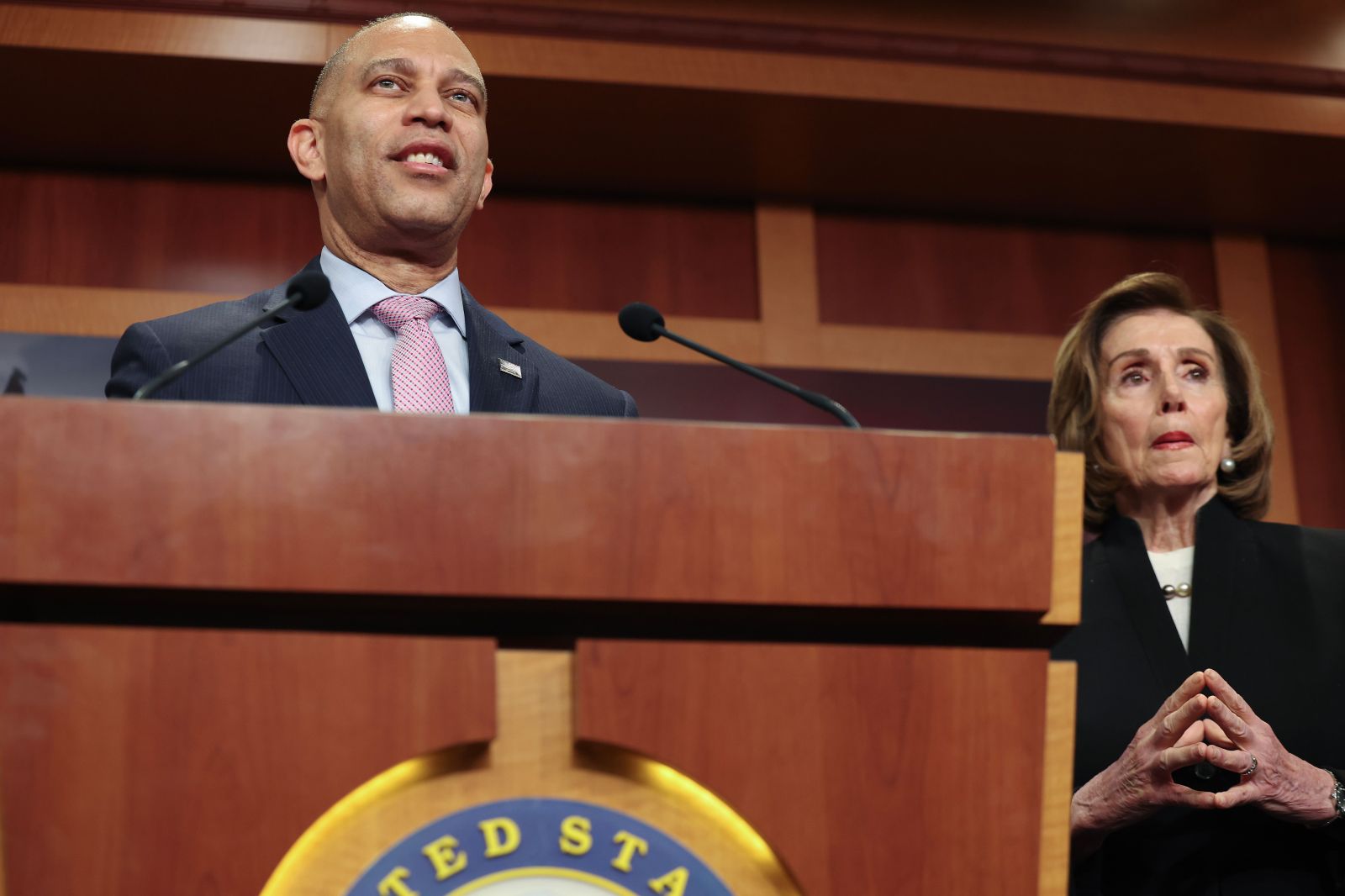
Hakeem Jeffries has led the House Democratic Caucus for nearly three years, operating from the same office where Nancy Pelosi held her leadership role for two decades. The procedural vote this week has reignited comparisons between Jeffries and Pelosi, sparking debate among Democrats.
Maine Representative Jared Golden and Washington Representative Marie Gluesenkamp Perez, both Democrats, unexpectedly supported Speaker Mike Johnson in advancing his agenda, aligning with Republicans after a conservative uprising. Their actions surprised Democratic leadership, as five conservative Republicans had planned to vote against a rule, threatening its passage without Democratic support. The vote succeeded 210-208, marking a contrast to Pelosi’s tenure when procedural votes rarely saw defection.
Pelosi had appointed Jeffries as her successor in 2023, but she expressed disappointment over the recent vote, highlighting differences in their leadership styles. Pelosi remarked, “I, as speaker, never, we didn’t even consider that anybody would do that.” Jeffries faces criticism from those who argue that he lacks the control over his caucus that Pelosi commanded. Progressive commentator Emma Vigeland remarked, “Pelosi was no leftist, but she could whip her caucus. Jeffries is bad at the basics of his job.”
Jeffries’ tenure continues a leadership lineage consisting of three Democrats over three decades: Dick Gephardt, Pelosi, and Jeffries. Pelosi has publicly praised Jeffries, asserting Democrats “will make progress” under his guidance. However, criticism has increased, especially after Senate Democrats sided with Republicans to end a government shutdown without healthcare subsidy agreements. Pelosi privately encouraged Jeffries to “use your power” against President Trump, as frustration grew over his cautious approach.
Recent months have been challenging for Jeffries. He faced backlash from progressives after Florida Representative Jared Moskowitz became ranking member of the House Foreign Affairs Committee’s Subcommittee on the Middle East and North Africa. The appointment raised concerns among Democratic voters critical of Israel’s actions in Gaza. Additionally, Jeffries’ meeting with Jared Kushner, Trump’s son-in-law, attracted criticism. The talk included potential cooperation areas like housing and immigration. James Carville, a veteran Democratic strategist, criticized these interactions, stating Democrats should avoid unnecessary meetings with Republicans.
Jeffries’ association with AIPAC has fueled criticism, with some party members considering primary challenges against him. Several Democratic candidates have declined to confirm support for him as speaker if the party wins the House. The era of an all-powerful House speaker might be ending, according to Jim Kessler from Third Way, a center-left group. “Republicans have cycled through seven House leaders since 2010 with the Tea Party’s rise,” he noted, contrasting it with Democrats’ consistent leadership.
Polling presents challenges for Jeffries. A CNN survey in July showed his unfavorable rating elevated, with 16% viewing him favorably and 32% unfavorably. This gap is the widest CNN recorded since December 2022. A YouGov tracker lists Jeffries at 22nd in popularity among Democrats.
Kessler believes Jeffries’ real test will arise if he becomes speaker, needing to manage his caucus. “The Golden and Gluesenkamp Perez vote may offer the far left an excuse for poor behavior next Congress,” Kessler suggested. House Democratic tensions precede Jeffries. Rank-and-file members previously expressed frustration with leadership limits. Pelosi managed to contain these tensions, but her absence is making discord more noticeable.
Not everyone perceives Jeffries as losing control. Basil Smikle, a Democratic strategist, argues vulnerable members may need to separate from leadership for electoral success. “Jeffries, like Pelosi, knows winning is crucial,” Smikle stated.
Kessler believes Democrats need voting flexibility, but the recent vote was misguided. “Crossing leadership on rules is not correct,” he said. “Congress members represent constituents, but some loyalty in procedural matters is vital.” The Democratic Party faces wider reputational challenges. A Fox News poll showed 41% of respondents viewed the party positively, compared to 56% unfavorably, marking a shift favoring Republicans.
Golden and Gluesenkamp Perez voted with Republicans on advancing GOP-backed bills, including a resolution denouncing “socialism in all its forms”—interpreted by many Democrats as a deliberate tactic for midterms. Golden’s vote focused on a bill protecting Maine lobstermen. “I voted for the rule for one simple reason,” he stated: “It paved the way for a vote on my bill.” Gluesenkamp Perez linked her vote to working-waterfront economics, sharing her views on social media.
Newsweek contacted Golden and Gluesenkamp Perez for comment. Jeffries, Minority Whip Katherine Clark, and Caucus Chair Pete Aguilar labeled the vote “a significant breach of trust.” Clark was surprised and said repercussions are “under discussion.” Some members favored tough action, while others felt less urgency about punishment. Opinions among rank-and-file members varied, with anonymous sources calling the vote “a deeply selfish act.” Others suggested committee assignment changes for Golden and Gluesenkamp Perez, though discussions are ongoing.
Contact Newsweek editors on this story: Jason Lemon and Dave Siminoff.