
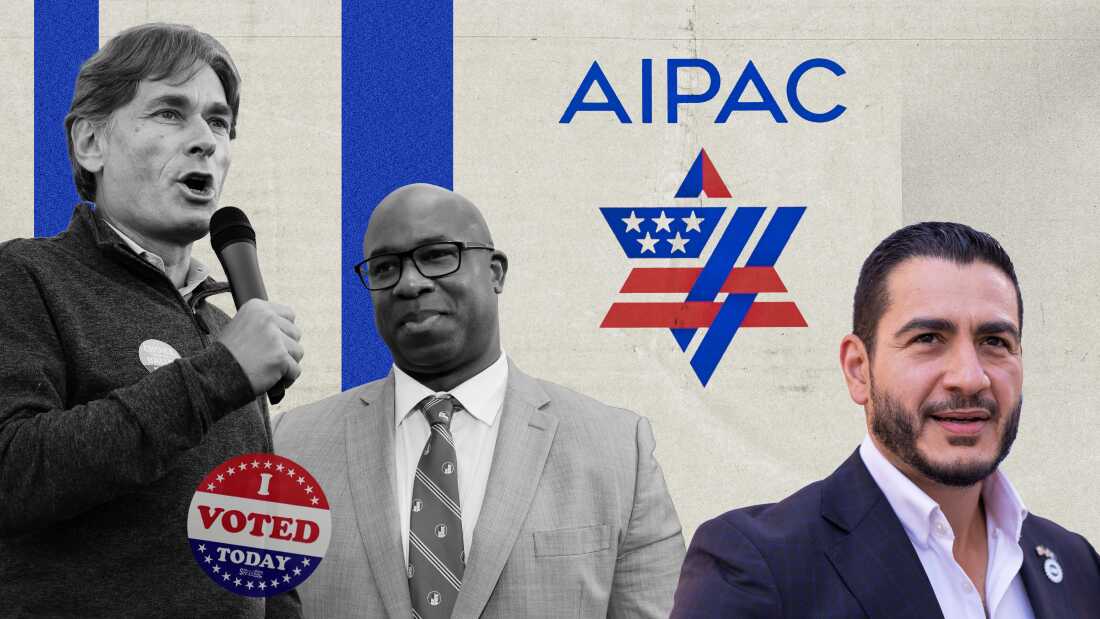
The American Israel Public Affairs Committee (AIPAC) is seeing increasing debate within U.S. political circles. This election cycle, several Democratic candidates have contrasted their stance toward AIPAC, with figures like Abdul El-Sayed criticizing opponents for receiving AIPAC backing in Michigan’s Democratic primary for U.S. Senate.
AIPAC, originating in the 1950s, has aimed to strengthen U.S.-Israel relations through bipartisan efforts. Historically, they opted to avoid endorsing specific candidates. However, this changed before the 2022 elections when AIPAC launched a political action committee and a super PAC. This transformation was partly due to increasing campaign costs and political divisiveness. Howard Kohr, AIPAC’s former chief executive, noted that this shift was to support allies and challenge detractors.
AIPAC’s prominence has grown significantly, although public understanding of the organization remains varied. The group’s influence has been challenged by declining support for Israel among Democrats. According to a Pew Research Center survey, 60% of U.S. adults hold an unfavorable view of Israel. For the first time, a greater number of Americans sympathized more with Palestinians than with Israelis, as per a Gallup poll.
The reduced favor stems from various events, including the conflict in Gaza and shifting attitudes toward the Iran nuclear deal. Over 100 House Democrats recently voted in favor of cutting aid to Israel, signaling a shift in party dynamics. AIPAC’s approach to campaign financing has also drawn criticism, impacting its reputation.
Despite the debates, AIPAC measures its impact through long-term goals, aiming for bipartisan support for Israel in Congress. A significant moment came when AIPAC’s United Democracy Project contributed significantly to campaigns, spending over $62 million so far this year.
Criticism extends to perceptions of AIPAC’s alignment with foreign influence, which analysts like Van Jones dismiss as unfounded. AIPAC’s advocacy remains rooted in American values and democracy, emphasizing a robust U.S.-Israel relationship.
As political discourse intensifies, AIPAC faces complex challenges in maintaining its mission and influence in U.S. politics.