
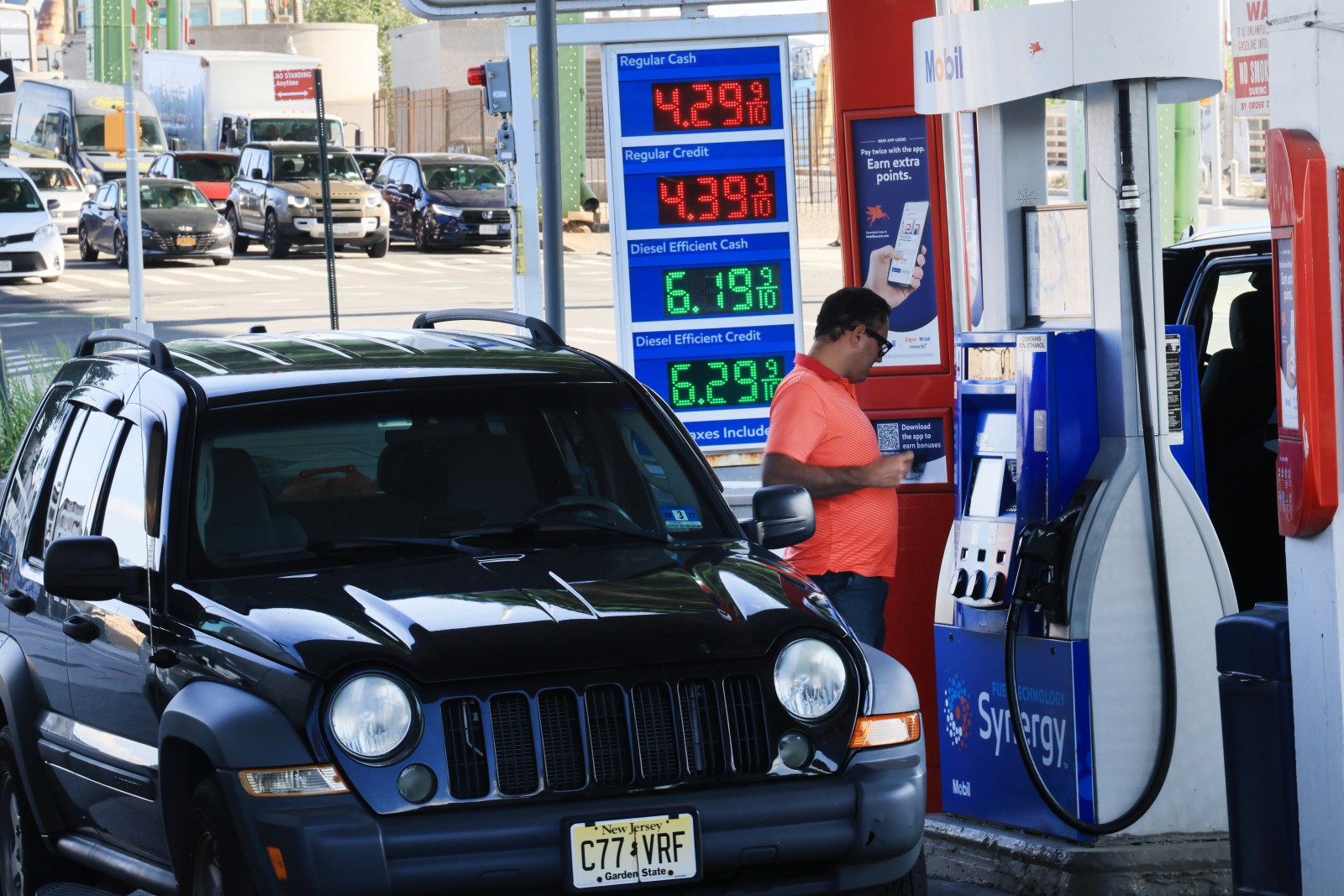
Gasoline prices have surged worldwide, with drivers paying an average of $5.89 per gallon, according to data from Global Petrol Prices. This marks an increase of around one dollar since late February, coinciding with the outbreak of war in Iran, which has disrupted global energy markets. Prior to the conflict, the average global price was $4.92 per gallon as of February 23, just days before the U.S. and Israel initiated joint strikes on Iran.
Similar increases have been witnessed in the United States, where gas prices averaged $2.98 per gallon shortly before the conflict. As of Thursday, the American Automobile Association noted a national average of $4.28 per gallon, reflecting a rise of $1.30 per gallon since February 28.
This surge in prices follows significant increases that occurred after Russia’s invasion of Ukraine in early 2022 and subsequent disruptions in the global oil supply chain. These developments have added substantial financial strain on American drivers, who were hoping for relief from the earlier price hikes.
Global Petrol Prices data for September 7 show that the national average gas price in the U.S. was $4.42 per gallon, slightly above AAA’s average of $4.15. Patrick De Haan, GasBuddy’s head of petroleum analysis, highlighted that U.S. consumers have been spending $377 million more daily due to elevated gas prices, equating to a weekly surcharge of $4.63 billion.
De Haan also expressed skepticism regarding the usual fall price drop, citing ongoing conflicts in Ukraine and Iran as reasons for uncertainty.
Lowest and Highest Gas Prices Worldwide
Since the war’s onset, fuel prices have spiked globally due to the closure of the Strait of Hormuz, which previously facilitated a fifth of the world’s oil and gas supply. Among the cheapest locations for fuel, Libya offers gas at $0.09 per gallon, followed by Iran ($0.11), Venezuela ($0.132), Angola ($1.238), and Kuwait ($1.287). These prices reflect substantial government subsidies and domestic oil production.
Conversely, Hong Kong recorded the highest gas prices at $15.892 per gallon, significantly surpassing Libya’s price. Other countries with high prices include Malawi ($12.245), Norway ($11.765), Denmark ($11.100), and the Netherlands ($10.371), largely due to heavy fuel taxes and environmental levies.
Despite not experiencing the most severe effects of the Iranian conflict, some countries have seen sharp price hikes. Australia experienced the highest increase, with a 42 percent rise between February 23 and March 23. Sri Lanka, the U.S., Canada, and Pakistan also saw notable increases, indicating close alignment of their retail fuel prices with global crude fluctuations.
On the contrary, several countries with regulated or subsidized fuel markets, including Saudi Arabia and Kuwait, have maintained stable prices, shielding drivers from immediate global market impacts.
Future Gas Prices
The trajectory for gas prices hinges on Middle Eastern developments and the potential reopening of the Strait of Hormuz. With ongoing exchanges between the U.S. and Iran, a resolution to the conflict remains uncertain.
Denton Cinquegrana, chief oil analyst at Dow Jones’s Oil Price Information Service, noted that even if the conflict resolves and the strait reopens, prices would not decrease rapidly.
Patrick De Haan commented on President’s Trump’s prediction of a post-election drop in oil prices, expressing doubts about such assurances. He highlighted factors like seasonal changes in gasoline demand and market tensions as influences on future prices.