
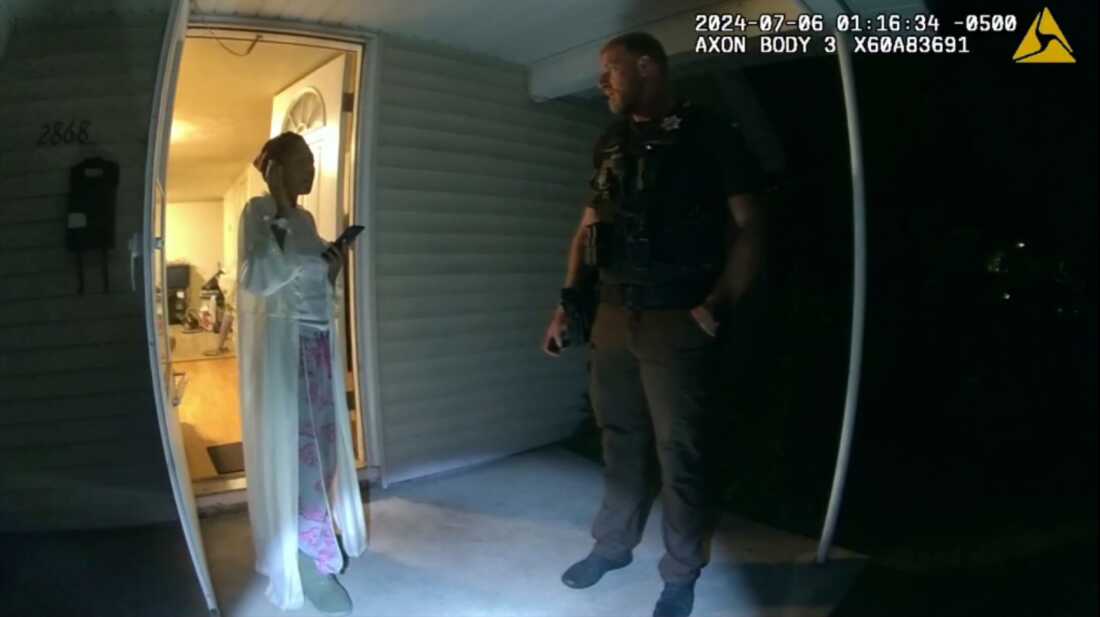
Sean Grayson, a former Illinois sheriff’s deputy, died Sunday while serving a 20-year prison sentence. He was involved in the fatal shooting of Sonya Massey, which sparked debates over police use of force. Grayson’s attorney, Daniel Fultz, confirmed his death without providing further details.
Grayson, 32, was convicted of second-degree murder in October for the shooting of Massey, a 36-year-old Black woman. She had reported a possible prowler outside her Springfield home. Body camera footage from July 2024 captured the encounter, showing Massey crouching in her kitchen and apologizing before Grayson shot her.
In January, Grayson received a maximum sentence of 20 years. Before the incident, he was diagnosed with colon cancer. At his sentencing, it was revealed that the cancer had spread to his liver and lungs. He requested medical release under an Illinois law for prisoners with terminal illnesses, but the Illinois Prisoner Review Board denied the request last month.
On July 6, 2024, Massey called 911 about a prowler. Grayson and another deputy, Dawson Farley, responded. Video showed Grayson instructing Massey to remove a pot of hot water from the stove. She complied, saying, “I rebuke you in the name of Jesus.” Grayson then threatened to shoot her unless she dropped the pot. Massey apologized and ducked behind the counter before Grayson fired three times. Farley testified that he didn’t see Massey as a threat, drawing his weapon only after Grayson did.
Grayson was fired and charged with first-degree murder. The jury convicted him of a lesser charge after he argued that he feared Massey would throw the hot water at him. Massey’s death garnered national attention, protests, and scrutiny of Grayson’s employment history in law enforcement. Following this, Illinois lawmakers enacted the Sonya Massey Act, mandating thorough review of law enforcement applicants’ past employments.
The Justice Department initiated a civil rights investigation, resulting in an agreement with Sangamon County and its sheriff’s office. Changes included improved training for interactions with individuals with behavioral health issues and the development of a mobile crisis response program.