
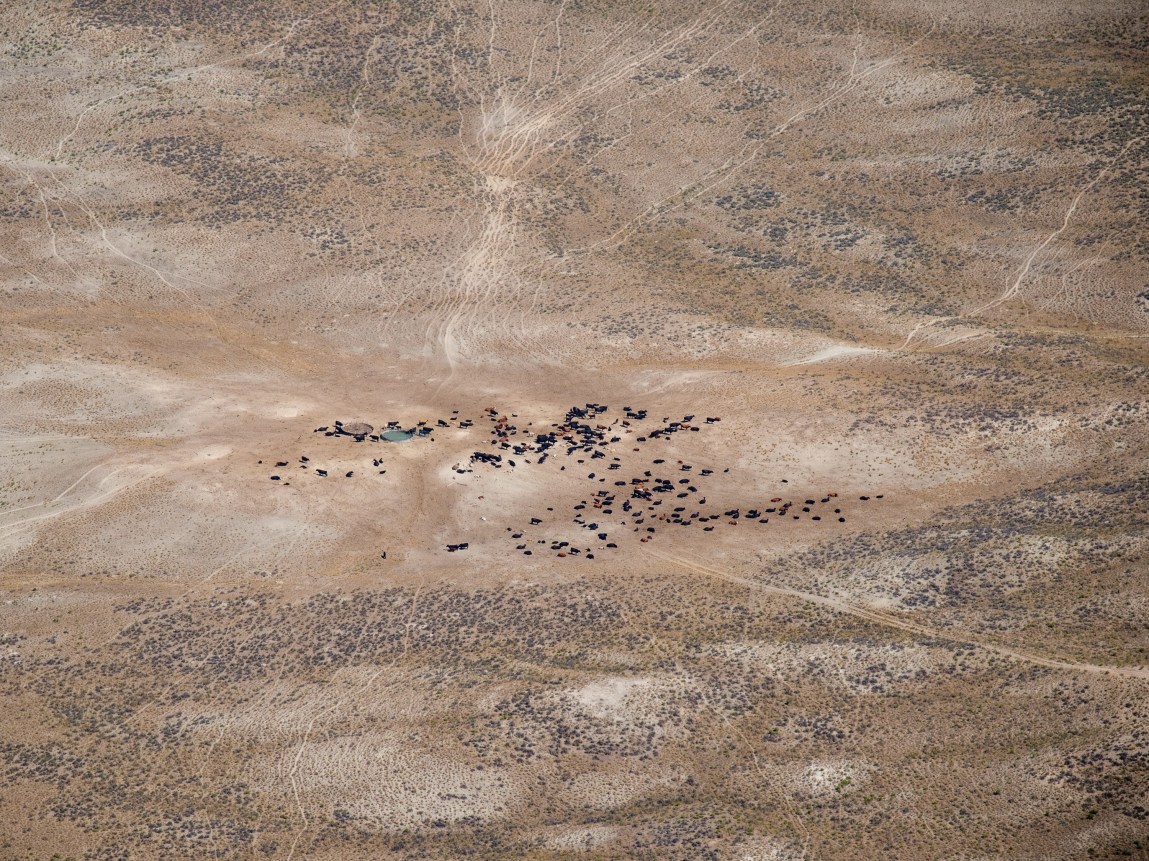
The federal government is revising its guidelines governing ranching on public lands to boost livestock grazing across 155 million acres in the West, an area two times the size of New Mexico. Current regulations on public lands grazing originate from a system that is nearly a century old and provide subsidies to many wealthy Americans without adequately addressing the environmental harm it causes, as reported by ProPublica and High Country News last year.
The U.S. Department of the Interior’s Bureau of Land Management (BLM) is drafting new rules — the first update since 1995 — which could extend the practice of grazing. These proposed changes would also reduce public participation in BLM’s decision-making, strictly limiting who can get involved and when they can object, cutting out several steps where the public could previously observe and comment on permits.
“They’re clearly trying to reduce involvement of anyone other than ranchers,”
In June, the agency announced these changes, reflecting a priority to reduce regulatory burdens, promote productive lands, and strengthen economies. Although the BLM did not answer questions on the proposed regulations, internal discussions and analyses from employees revealed both potential benefits and challenges of the update.
Benefits include an expanded requirement for the agency to study ecological impacts from all land uses, not just livestock. This could lead the BLM to more informally handle low-level violations, clear up outdated code sections, and give greater flexibility to both the agency and ranchers in range management. However, regulations lean heavily in favor of ranchers, according to several groups that work on rangeland management issues.
Josh Osher, from the Western Watersheds Project, noted potential threats to wildlife due to increased livestock presence. Reports indicate that subsidies provided to ranchers by the federal government fell $284 million below market rates for public land use in 2024.
Representatives from Native American tribes, conservation groups, and other stakeholders suggested that there was little opportunity for them to offer input on these draft regulations. Concerns are heightened by the involvement of certain officials with close ties to the ranching industry, such as Karen Budd-Falen.
Native American tribes managing bison herds, like the Rosebud Sioux Tribe, worry that the new regulations — which favor livestock production — might threaten their cultural practices and land restoration projects. Rules may also impact the renewal and issuing of permits needed to maintain these herds if guidelines prioritize livestock production models.
The regulatory overhaul is interpreted by some as a shift back to policies reminiscent of those during the Ronald Reagan administration, argued Tim Canterbury from the Public Lands Council. While the livestock industry views this as progress, reducing public involvement could lead to further degradation of public lands, conservationists warn.
The new regulations encourage the use of cows as a tool to prevent wildfires by grazing on vegetation that could fuel flames. However, adjustments also lessen public influence in rangeland management processes. The BLM’s changes might complicate efforts by its own staff to curb harmful grazing practices.
Nada Culver, former BLM deputy director, indicated that provisions might ease challenges for ranchers to continue grazing despite negative environmental assessments and simplify renewing permits. The changes call for restocking all vacant land areas, aiming for occupancy by ranchers, further escalating concerns from environmentalists and tribal communities about impacts on ecosystems and traditional practices.