
When Jennifer Siebel Newsom chose the title “first partner” instead of “first lady,” she aimed to challenge traditional gender roles. She became the first wife of a California governor to make this shift. No wife of a U.S. president had formally adopted such a title before. Many women who have taken on the role of first lady have expressed discomfort with the title and expectations it brings. Some have accepted the role but later redefined what it means to be a first lady.
Maria Shriver, wife of former California governor Arnold Schwarzenegger, initially resisted the role. She paused her career as a network news correspondent and anchor to become the first lady in 2003. Shriver later described her initial reaction as entering “kicking and screaming.” While in Sacramento, she transformed the state history museum, established the world’s largest Women’s Conference, and launched a program to support low-income working families during the recession. Reflecting on the experience, Shriver remarked that it turned out to be the best job she ever had.
Anne Gust Brown, married to Edmund G. “Jerry” Brown, preferred a more private role. As a lawyer, she became deeply involved in her husband’s political ventures, including managing his campaign for attorney general and drafting his gubernatorial address. She never considered herself a first lady, finding the title challenging, as she told Alta Journal in 2018.
The role of America’s first ladies is often under intense scrutiny. Martha Washington, the first U.S. first lady, was hesitant to embrace her new responsibilities. In a letter to her niece, she wrote of feeling like a “state prisoner” with limited freedom. Despite this, she fulfilled her duties with determination, believing that happiness or misery depends more on one’s disposition than circumstances.
Jacqueline Kennedy entered the White House in 1961 and preferred to be addressed as Mrs. Kennedy, disliking the title “first lady,” which she compared to a term for a saddle horse. The traditional expectations of the role have been noted by historians, alongside exceptions like Eleanor Roosevelt and Hillary Clinton.
Eleanor Roosevelt, in the 1930s and ’40s, dramatically redefined the role as she supported Franklin D. Roosevelt, who struggled with polio. She traveled to war zones in the South Pacific during World War II and penned a syndicated newspaper column for decades. Despite harsh criticism, she remained steadfast in her efforts.
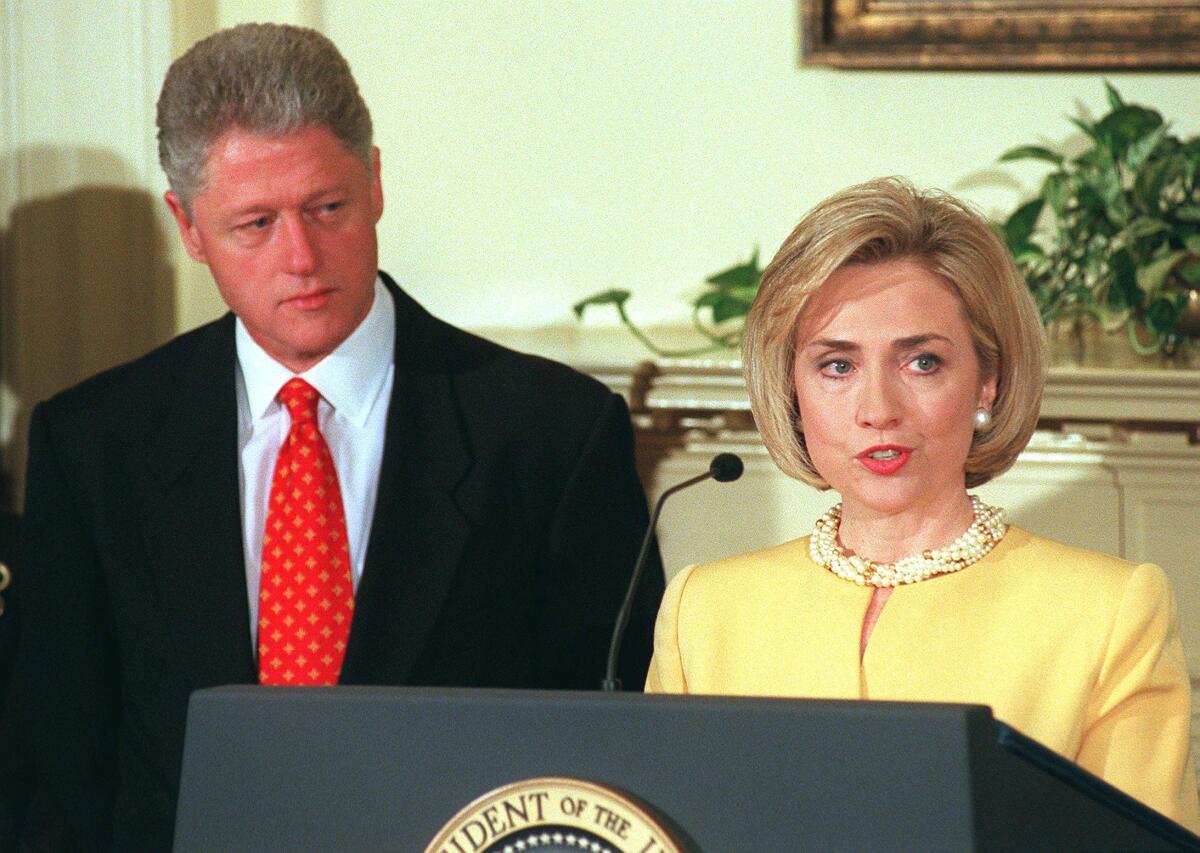
The dynamic was different for Hillary Clinton during Bill Clinton’s presidency. Running for office, he joked about offering a “twofer,” recognizing Hillary as an accomplished lawyer. However, her venture into shaping a universal healthcare plan sparked controversy due to its secrecy and significance. Their finances were scrutinized in the Whitewater scandal, and her remarks about not being a “little woman standin’ by my man like Tammy Wynette” drew criticism.
Following Clinton, Laura Bush adopted a traditional role focused on literacy. Michelle Obama, an accomplished attorney, promoted healthy eating and nutrition. Director of the Center for American Women and Politics at Rutgers, Debbie Walsh, suggested Michelle Obama avoided heavy policy issues due to racial and sexist challenges she faced.
In 2021, Jill Biden became the first first lady to maintain a professional job while in the role, teaching at Northern Virginia Community College. Walsh noted that the first lady’s role might evolve further as more women and LGBTQ+ individuals take office, with husbands or partners serving as first spouses. This shift may reduce expectations for spouses to remain silent or solely supportive. Doug Emhoff, the second gentleman, offered an example by maintaining his professional life while supporting Vice President Kamala Harris.
Walsh observed that Siebel Newsom’s “first partner” title might attract additional criticism. In today’s climate, this nontraditional approach may offer grounds for adversaries to attack. Perry suggested that Middle America’s response to the “first partner” label could be influenced by misconceptions about gender roles, suggesting a cautious approach.