
UNITED NATIONS, NEW YORK – This week, more than 100 presidents and prime ministers will arrive in New York for a high-stakes diplomatic gathering at the United Nations. The event occurs amid conflicts in the Middle East and Ukraine, economic challenges from energy market disruptions, and questions about the U.N.’s efficacy in an increasingly divided world.
The U.N. spokesperson, Stéphane Dujarric, announced that 73 heads of state, 45 heads of government, along with 49 ministers, 11 vice presidents, and a crown prince, are expected. Member states have submitted around 1,000 bilateral meeting requests, and 168 events are planned during high-level week. Dujarric described the atmosphere as “high stress” as delegations prepare for arrival.
The General Debate of the 81st U.N. General Assembly starts on Tuesday, under the theme “Restoring trust, managing transformation: A United Nations that delivers for all.” Beyond the speeches and meetings, nations will vie to capture U.S. attention, according to Frank Ahrens of BGR Analytics.
A new analysis by BGR Analytics measures the influence of 197 countries in the U.S. using economic, cultural, diplomatic, institutional, and geopolitical metrics. Japan tops the index for a third year, followed by Germany, Canada, the United Kingdom, and South Korea.
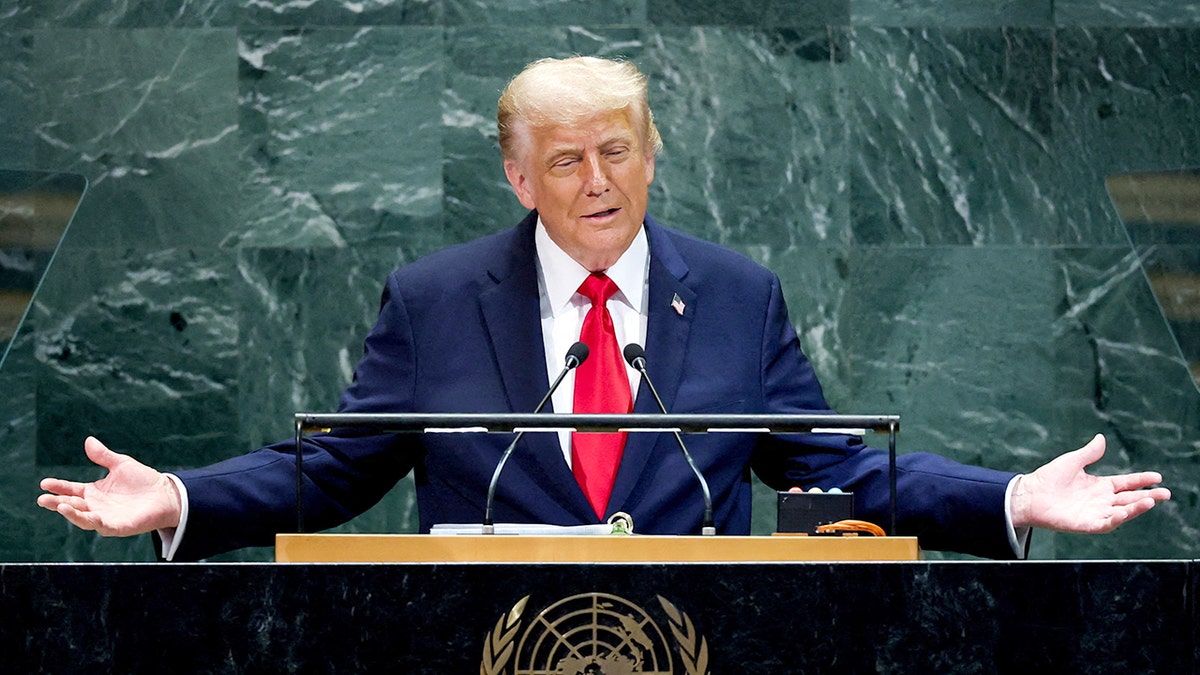
Amid this competition, President Donald Trump returns to the assembly with the US-Iran conflict ongoing. Regional pressures have increased due to Iran-backed Houthi actions affecting Red Sea shipping. European and Asian allies have hesitated to join U.S. efforts against Iran, straining relations with Washington.
The agenda also covers Russia’s actions in Ukraine, Israeli-Palestinian tensions, issues in Sudan, climate change, and artificial intelligence. Attendees expected include Iran’s President Masoud Pezeshkian, Ukraine President Volodymyr Zelenskyy, Israel’s Prime Minister Benjamin Netanyahu, and Russia’s Foreign Minister Sergei Lavrov.
The BGR Impact Index evaluates influence, incorporating over 100 indicators like GDP, population, and foreign investment. Social media sentiment is significant, accounting for 20% of the index.
Bahrain’s online reputation improved, rising 22 places in the index, linked to its U.N. Security Council role, Arabian Gulf Cup win, and a U.S. naval visit. Conversely, Georgia fell 31 positions due to political unrest and journalist arrests.
Ahrens notes that awareness alone does not equate to influence; genuine achievements are necessary to maintain global standing. The index combines sentiment with concrete measures like economic ties and lobbying efforts.
BGR uses “The Freddy Effect” to illustrate online perception shifts. A German soccer fan’s positive posts in the U.S. boosted Germany’s reputation by 13%, highlighting social media’s role in shaping national perceptions.
This insight may guide leaders at the assembly, where securing meetings and media coverage is vital. Effective communication holds great potential for global influence.