
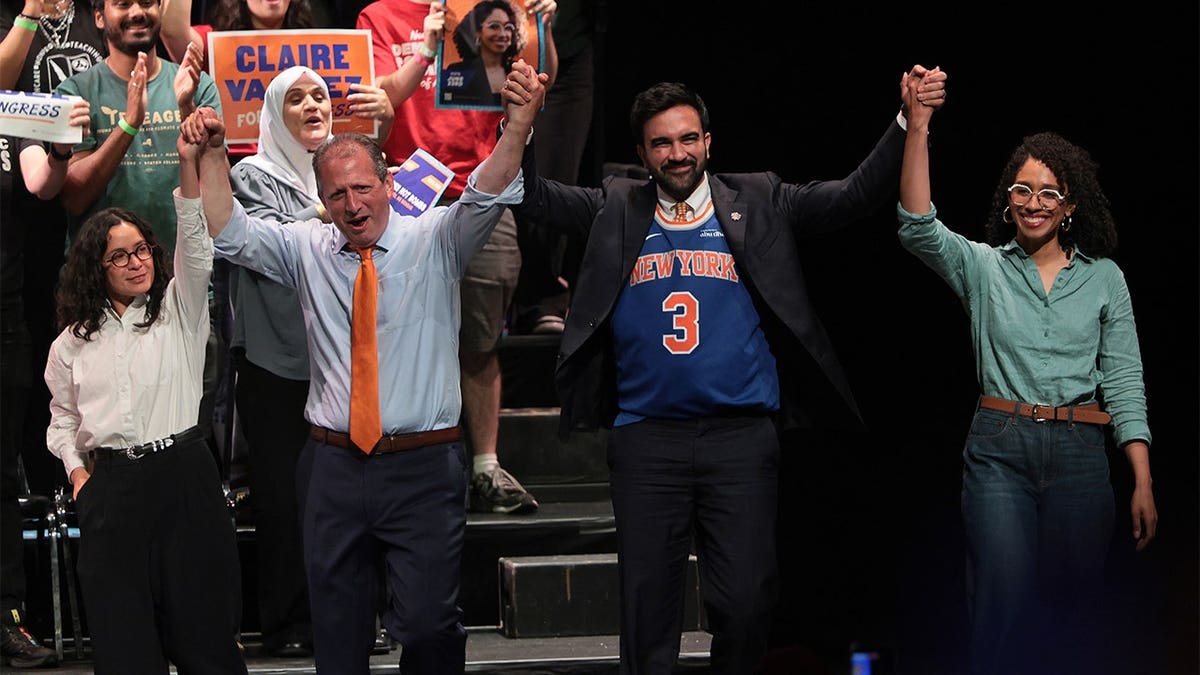
Delaware voters are heading to polling stations on Tuesday to participate in the concluding primary of the 2026 election cycle. This marks the end of a season highlighted by significant victories for progressive and socialist candidates over their Democratic establishment counterparts, in addition to President Donald Trump’s substantial sway in Republican contests, despite encountering some notable losses.
Democratic Primary Contests
Democratic Senator Chris Coons and State Attorney General Kathy Jennings are each contending with primary challengers. Democratic Representative Sarah McBride is running unopposed as they prepare for the general election. Here, Republicans aim to disrupt the Democrats’ stronghold on Delaware’s statewide offices.
The Delaware primaries conclude a season that has unsettled the Democratic Party with contenders backed by the left wing and Democratic Socialists of America, frequently triumphing. These candidates have occasionally unseated entrenched incumbents.
Impact of Progressive Wins
One year after socialist New York City Mayor Zohran Mamdani surprised many with a Democratic primary win leading to his general election victory in the populous city, the far left secured additional wins in June. Notable victories include Melat Kiros defeating 15-term Democratic Rep. Diana DeGette of Colorado and Darializa Avila Chevalier displacing five-term Democratic Rep. Adriano Espaillat of New York.
This trend continued in August with significant wins in statewide Senate primaries by Abdul El-Sayed in Michigan, Lt. Gov. Peggy Flanagan in Minnesota, and state Rep. Angie Nixon in Florida.
Despite some setbacks for progressives, such as Francesca Hong’s defeat in Wisconsin’s Democratic gubernatorial primary, the left expanded its influence. Many winning candidates campaigned on platforms advocating for policies like the abolition of ICE, reducing military aid to Israel, and promoting a single-payer health system.
Joe Caiazzo, a Democratic strategist, commented, “Progressives have built a coalition with a message that can support candidates when they offer an acceptable alternative to the status quo.” Caiazzo emphasized the need for progressives to present serious, credible candidates to maintain success.
Trump’s Influence on Republican Primaries
In Republican nominating battles, Trump recently claimed his endorsements are “stronger than ever.” The data supports this claim, showing his endorsements succeeded in all Senate GOP primaries this cycle, with nearly identical success in House Republican contests.
President Trump has reshaped the GOP since his first White House victory, pushing populist and “America First” factions to prominence over traditional conservative elements. Nonetheless, challenges persisted for Trump, with five of his chosen gubernatorial candidates suffering defeats this year. This included Georgia Lt. Gov. Burt Jones and South Carolina Lt. Gov. Pamela Evette, among others.
GOP strategist Ryan Williams remarked, “The Republican Party is Trump’s party. An endorsement from him provides tremendous support in a primary, but doesn’t guarantee a win.” Williams noted that underlying candidate issues could still pose challenges beyond the benefits of an endorsement.
Delaware’s Closing Primary
Delaware’s primary follows the season’s commencement on March 3 in Texas, North Carolina, and Arkansas. Senator Chris Coons is seeking a third full Senate term, facing challengers like University of Delaware history professor Jeff Appelhans. Former state Sen. Michael Katz and U.S. Army Reserves Col. John Shulli vie for the Republican nomination.
Sarah McBride is running unopposed in the Democratic primary for her second term as Delaware’s statewide House member. Republicans Joseph Arminio, Earl Cooper, and John Whalen battle for the GOP nomination. State Attorney General Kathy Jennings faces Democratic challengers including attorney Dwayne Bensing.