
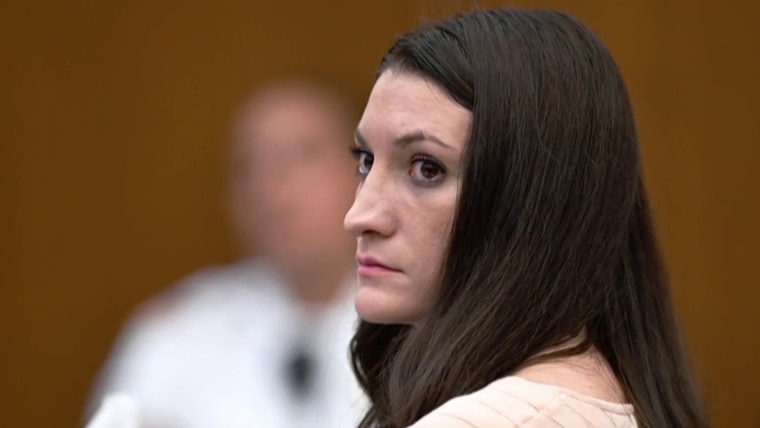
Plymouth, Mass. — At Lindsay Clancy’s murder trial, a defense psychologist testified that Clancy did not fully understand the “wrongfulness” of killing her three children due to mental health problems. This testimony by Dr. Paul Zeizel supports the defense’s assertion that Clancy is not legally responsible for her actions. Clancy is said to suffer from bipolar disorder and postpartum psychosis at the time of the incident.
Zeizel began treating Clancy after the tragedy. He testified that Clancy could not control her actions according to the law, lacking awareness of her actions’ moral implications. He described her condition as a “mental disease or defect.” Clancy, 36, faces murder charges for the deaths of her children, Callan, Dawson, and Cora, aged 8 months to 5 years.
Postpartum psychosis, a condition more severe than postpartum depression, is linked to stress, sleep deprivation, and hormonal changes after childbirth. It reportedly affects 1 to 2 per 1,000 women after delivery.
Prosecutors allege that Clancy, a former labor and delivery nurse, premeditated the killings in January 2023. They claim she sent her husband on errands to isolate time to commit the act.
Zeizel, who spent over 35 hours with Clancy across multiple visits, previously assessed her at a perinatal clinic in December 2022. Clancy reportedly felt suicidal and feared her “brain was damaged,” adding to her mental struggle. She exhibited signs of paranoia, fearing others could hear her thoughts and worried she might lose her children.
Though experiencing psychosis, Zeizel clarified that she could perform routine activities like driving and internet searches. On the day of the killings, Clancy cared for her children in various ways.
Defense attorney Kevin Reddington questioned Zeizel, asking if Clancy’s ability to function in daily life disproved her psychotic state. Zeizel affirmed it did not.
During cross-examination, prosecutors questioned Zeizel’s credibility and objectivity. They highlighted mistakes in his report and questioned his involvement with the defense team. Zeizel admitted no medical records showed Clancy hearing voices inciting self-harm, only her expressed desire to die.
Prosecutors also questioned Clancy’s suicide attempt, which left her paralyzed. They noted that hospital records did not document Clancy honoring her children’s birthdays or anniversaries of their deaths.
In response, Reddington asked Zeizel if there was any indication of Clancy enjoying her stay at the hospital. Zeizel described Clancy’s condition as having “bad days and worse days.” He stated that Clancy frequently expresses affection and longing for her children.
If convicted, Clancy faces life imprisonment without the possibility of parole. If found not guilty due to diminished criminal responsibility, she will be committed to a state mental health facility.
If you or someone you know is in crisis, contact the 988 Suicide & Crisis Lifeline by calling or texting 988 or visit 988lifeline.org. Additional resources are available at SpeakingOfSuicide.com/resources.