
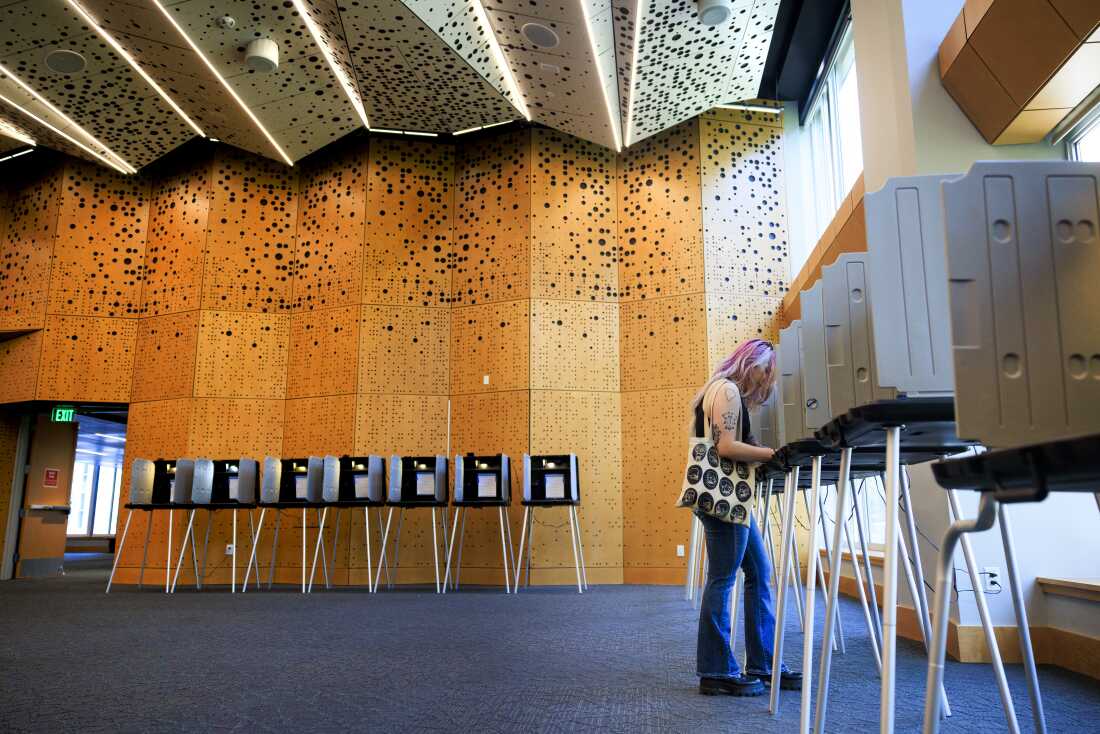
A voter casts her ballot in Colorado’s primary election at Denver’s Central Library on June 30. Democratic candidates, on the campaign trail, have focused on a consistent message: addressing economic concerns and high prices affecting working individuals. Persisting with the theme of affordability is viewed by many in the party as the optimal approach to reclaim power in Congress.
Some party members, however, advocate for a broader message; they believe democracy is an area Democrats should also address, particularly as President Trump continues to make unfounded claims about election integrity. Jane Kleeb, a vice chair of the Democratic National Committee, emphasized the importance of discussing U.S. election integrity.
“As Democrats, we have to show we are fighting on all fronts, not relinquishing any ground or talking like robots,” Kleeb stated.
Recent commentary, however, from California-based researchers suggests that steering clear of democracy discussions might help Democrats win over working-class voters. Concerns exist that focusing on democracy could detract from issues voters prioritize, including housing, groceries, gas, and healthcare costs.
Lindsay Owens, Groundwork Action’s president and CEO, advises Democrats to concentrate on President Trump’s economic mismanagement, a stance she sees as beneficial during the midterms. Polls indicate more voters now trust Democrats on economic issues than Republicans.
“The Republicans’ struggles with economy are self-inflicted,” Owens remarked. “Democrats should cement their advantage on cost-of-living concerns.”
Amanda Litman, co-founder of Run for Something, agrees; she believes tackling topics like gerrymandering and voting rights can occur post-election. Changing campaign tactics might not be wise now.
“Ending gerrymandering won’t directly resolve housing affordability,” Litman expressed. “The path to electing pro-democracy leaders may mean temporarily avoiding democracy topics.”
Kleeb contends this view presents a false choice, arguing that multiple issues can concern voters simultaneously.
After setbacks in the 2024 elections, internal debates surfaced about whether democracy was a losing topic. Yet, Kleeb noted that it motivated voters, even if not reflected in polls.
Nathan Johnson, a Texas attorney general candidate, believes defining democracy issues has been challenging. While voter suppression is real, the issue doesn’t outweigh economic challenges for most voters.
Both Johnson and Pennsylvania state representative Malcolm Kenyatta suggest intertwining democracy and economy. Kenyatta hears voter frustration over corruption, arguing it exacerbates cost-of-living issues.
“These are interconnected,” Kenyatta stated. “Corruption has inflated living costs.”
While some voters might respond to combined messaging about democracy and economy, others feel disconnected from democratic institutions. Litman observed that many young people feel democracy hasn’t benefited them.
Melissa Toufanian of Navigator Research shared findings from a survey of Democratic-leaning, infrequent voters. Reactions to election fraud discussions varied.
For some, such conversations motivated them to participate, yet the opposite effect occurred in specific voter demographics, demotivating young Black and older Hispanic voters.