
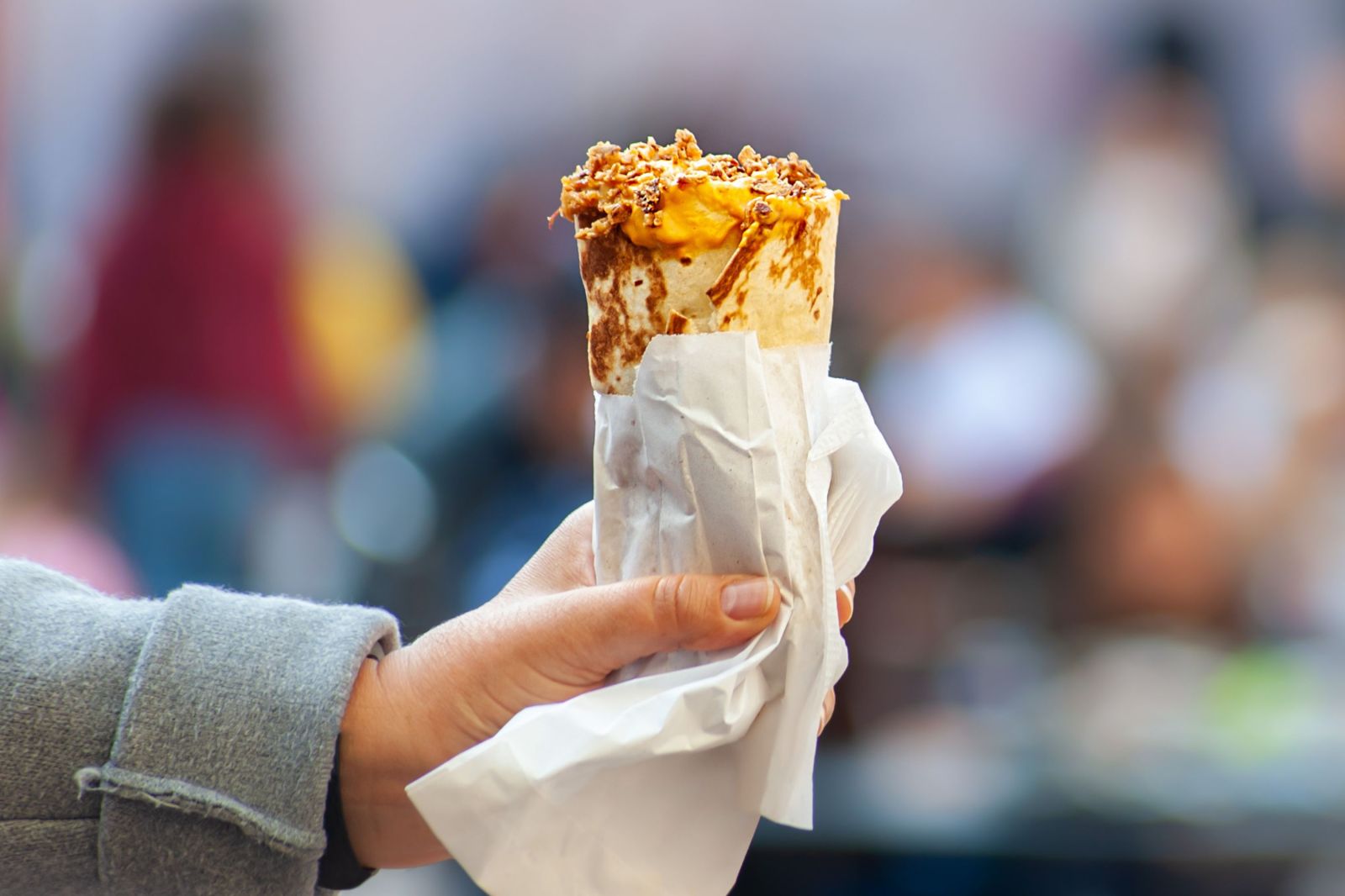
The debate over the rising cost of living has shifted online, centering around an unexpected item: the burrito. This debate illustrates a broader concern about how much it costs to eat out and buy groceries. Both grocery and restaurant prices have risen substantially in the last decade, despite a recent decrease in inflation. Food costs have become a major concern for many American households, highlighting the issue of affordability.
The Argument
The discussion began with conservative commentator Matt Walsh, who expressed his frustration on X about high grocery prices. Walsh’s post, viewed over 4 million times, argued that addressing this issue should be a priority for elected leaders. The conversation then moved towards the costs of eating out.
Andrew Kolvet, a representative for Turning Point USA, shared a college student’s view that a burrito shouldn’t cost $20. He pointed to inflation during the pandemic and under the Biden administration as reasons for high prices, leaving consumers with the feeling that basic items are overpriced.
In response, Joel Berry, managing editor of The Babylon Bee, highlighted the difference between eating out and home-cooked meals. He noted that making burritos for his family of eight cost less than $20. This sparked responses, including from Walsh, who emphasized the undeniable rise in grocery prices over the past decade.
Walsh’s response, seen by 11 million users, stressed the importance of addressing this issue beyond simple cooking solutions, as grocery prices have increased by more than 30 percent in the last ten years.
The Rising Cost of Food
Former President Trump claimed in Nevada that the cost of various goods, including groceries, had decreased during his tenure. However, data from the Bureau of Labor Statistics (BLS) shows grocery prices have risen by approximately 35 percent since 2016, while restaurant and other food service expenses increased by 51 percent.
The most significant price hikes occurred during and after the coronavirus pandemic. Grocery prices increased by 11.4 percent in 2022, with a subsequent 5 percent rise in 2023. Although inflation has slowed, prices remain elevated. Groceries were 2.7 percent more expensive in June 2026 compared to the previous year, and food away from home rose by 3.4 percent.
The USDA anticipates a further rise in grocery prices by 2.7 percent and restaurant prices by 3.5 percent in 2026. Certain items have seen even more significant increases, such as beef and veal, which rose 11.8 percent, and fresh lettuce, which saw a 32.1 percent increase.
Public Perception of Food Prices
Many Americans feel that grocery costs exceed their budget. A Washington Post-Ipsos poll from July 2026 revealed that 65 percent of respondents found groceries unaffordable. This sentiment was shared across income levels, affecting 82 percent of those earning under $50,000, 70 percent earning between $50,000 and $100,000, and 56 percent of those with incomes over $100,000.
Similarly, an AP-NORC survey from August 2025 showed that 53 percent of adults viewed grocery expenses as a significant stressor, with another 33 percent seeing them as a minor one.
The Trump Administration’s Approach
The Trump administration implemented several measures to address living costs, including deregulation, supporting agriculture, modifying tariffs, and antitrust enforcement. In January 2025, Trump ordered federal agencies to seek ’emergency price relief,’ aiming to reduce food and fuel expenses.
One approach targeted egg prices specifically. In February 2025, the Department of Agriculture unveiled a $1 billion strategy to combat avian influenza and stabilize egg prices. As a result, egg prices were 27.9 percent lower in June 2026 compared to the previous year.
The administration also focused on competition within the food industry, creating task forces to investigate potential anti-competitive practices. Trump also removed certain agricultural products from tariffs enacted in 2025, impacting goods such as coffee, cocoa, and beef in an effort to ease cost pressures.