
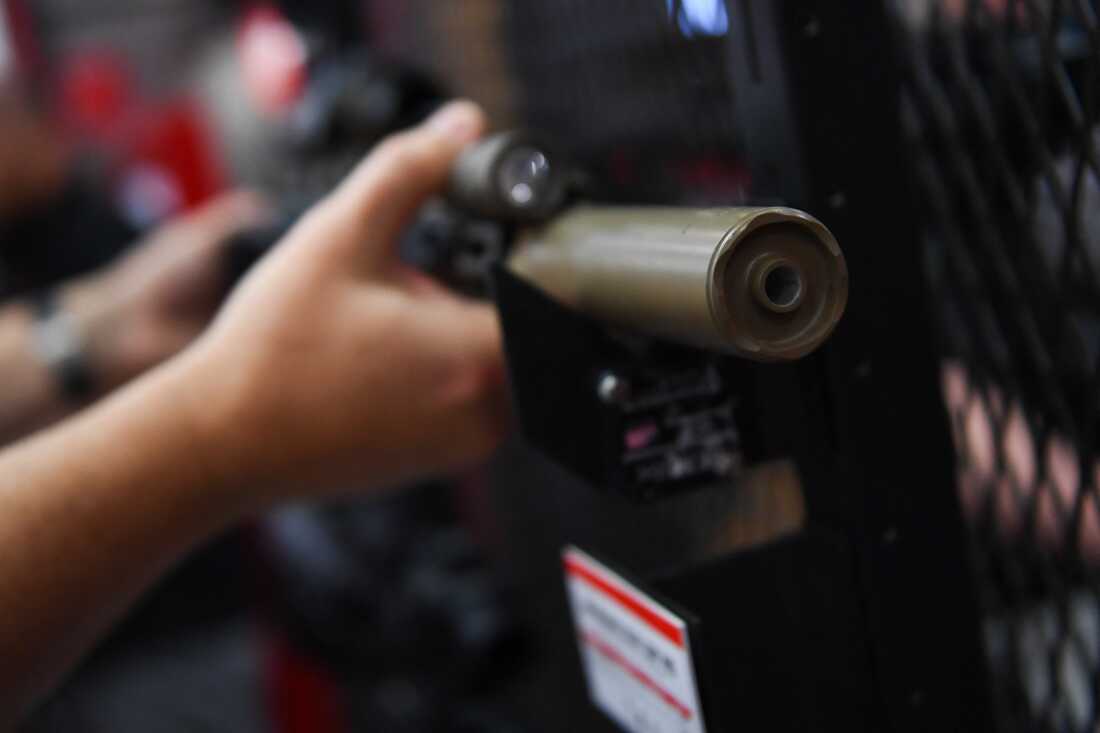
A SureFire firearm sound suppressor, often called a silencer, was showcased during the National Rifle Association (NRA) Annual Meeting in Houston, Texas, on May 28, 2022. Recently, a court decision reduced restrictions on buying suppressors.
Gun rights groups are marking this as a win after a federal ruling lifted curbs on the purchase of silencers and specific firearms. Judge James Wesley Hendrix from the Northern District of Texas nullified key provisions of the nearly century-old National Firearms Act (NFA) across more than twelve states. Hendrix allowed the Justice Department (DOJ) a week to file an emergency appeal before the decision was implemented, which the department did not pursue. While the DOJ has over a month for a non-emergency appeal, its action is uncertain.
The DOJ has sought to reinstate gun rights for persons with felony records, except for violent crimes, including domestic violence and gang-related offenses, based on a recently published rule. Following the Texas ruling, some Americans can now buy and sell silencers and weapons without federal registration, photo submissions, or fingerprinting. Gun rights advocates celebrate this decision as monumental. Erich Pratt, senior VP of Gun Owners of America, emphasized, “This marks one of the greatest Second Amendment achievements in the past century,” something the organization desired since its 1976 founding. Nonetheless, this decision results in a complex set of regulations, as it affects only the plaintiffs in the Texas case.
Historical Context
Born from Prohibition-era gang violence, the National Firearms Act (NFA) of the 1930s regulated specific rifles, shotguns, and suppressors. Passed in 1934, the NFA aimed to control weapons seen as hazardous by imposing a $200 tax on their manufacture and transfer, requiring owners to register them. This tax remained until 2025 when Congress passed the One Big Beautiful Bill Act, reducing the tax to $0 for transferring and manufacturing certain shotguns, rifles, and silencers. Subsequently, some states and gun rights associations, like Gun Owners of America, sued the federal government, arguing that, without a tax, the constitutional foundation for other NFA stipulations dissolved. Judge Hendrix, backing this view, wrote, “By nullifying the taxes for most NFA firearms, Congress removed the constitutional basis previously supporting these measures, which now stand unjustified.” Gun control proponents argue the ruling endangers public safety, unleashing these weapons onto streets and communities.
Impact and Legal Ambiguity
This decision is not blanket, applying solely to Texas case plaintiffs, including the Silencer Shop Foundation, Gun Owners of America, and related entities and members in involved states. The judgment affects particular short-barreled shotguns, rifles, and suppressors, along with a specific category known as “any other weapons,” covering unusual, concealable firearms like pen guns or umbrella guns. Gun Owners of America notes that some states might still mandate additional rules and federal registration forms under the Gun Control Act. Due to these legal uncertainties, Erich Pratt advises consulting an attorney before bypassing registration.
Future Developments
Two cases challenging the NFA remain in progress in Missouri and Kentucky, where the DOJ has defended the act. While the DOJ hasn’t indicated future appeal plans, its statement affirms respect for Second Amendment rights and an assessment of the ruling’s impact. Gun rights organizations and Republican lawmakers push for a permanent nationwide application of the ruling. The Bureau of Alcohol, Tobacco, Firearms and Explosives continues to process forms per current law and policy. They advise consulting attorneys for specifics on how court decisions might affect individual situations. Despite ongoing complexities, Erich Pratt views this case as a significant advancement, stating, “Freedom is progressing. We are gradually unraveling the regulatory constraints that have bound gun owners for generations. Each victory builds upon the last one.”